SAGE

Wind Engineering Template

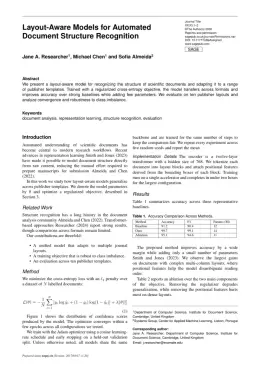
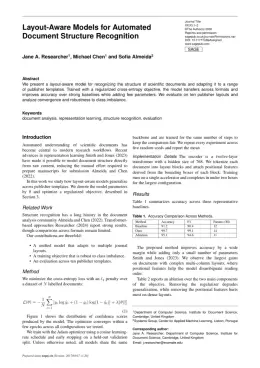
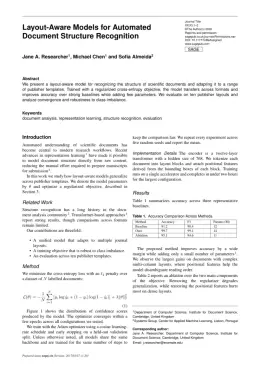
Write in a clean editor, then format for Wind Engineering in one click — DocuGuru applies the official SAGE template with author–year references and exports a submission-ready PDF plus the editable LaTeX source. Free to start.

About the Wind Engineering format

Wind Engineering is a peer-reviewed journal published by SAGE, covering Wind Energy Research and Development, Wind and Air Flow Studies, Wind Turbine Control Systems.

PublisherSAGE
Reference styleAuthor–year (Harvard)
Author–year — (Smith, 2023) in the text
Smith, A., Jones, B. and Lee, C. (2023) 'A representative article title', Wind Engineering, 12(3), pp. 45–58.

Formats any DOI in Wind Engineering style. No sign-up.

Publishes research inWind Energy Research and Development Wind and Air Flow Studies Wind Turbine Control Systems Energy Load and Power Forecasting Microgrid Control and Optimization
ISSN0309-524X
Citation impact (2-yr)1.96
h-index62
i10-index627
Total citations23,807
Top institutions publishing hereTechnical University of Denmark
Journal websiteus.sagepub.com
You getA submission-ready PDF and the editable LaTeX source — ready to submit.

Papers published in Wind Engineering per year

54
2014
53
2015
50
2016
39
2017
68
2018
82
2019
64
2020
90
2021
86
2022
67
2023
95
2024
78
2025

Citation impact of Wind Engineering by publication year

393
2014
692
2015
453
2016
588
2017
665
2018
887
2019
806
2020
890
2021
976
2022
366
2023
346
2024
81
2025

Citations each year’s papers have accumulated so far — the most recent years are still building up.

Most-cited papers in Wind Engineering

Standardizing the Performance Evaluation of Short-Term Wind Power Prediction Models

Henrik Madsen, Pierre Pinson, Georges Kariniotakis et al. · 1 Dec 2005

Short-term wind power prediction is a primary requirement for efficient large-scale integration of wind generation in power systems and electricity markets. The choice of an appropriate prediction model among the numerous available models is not trivial, and has to be based on an objective evaluation of model performance. This paper proposes a standardized protocol for…

Review of Contemporary Wind Turbine Concepts and Their Market Penetration

Anca Daniela Hansen, Florin Iov, Frede Blaabjerg et al. · 1 May 2004

The main aim of this paper is to investigate the market penetration and share of different wind turbine concepts during the years 1998–2002, a period when the increase in the wind power capacity is starting to mark an abrupt evolution (more than two GW per year). A detailed overview is performed based on suppliers market…

Suction Caisson Foundations for Offshore Wind Turbines

Byron W. Byrne, G. T. Houlsby, C. M. Martin et al. · 1 May 2002

This paper outlines a £ 1.5m, three year, research project that commenced during the middle of 2002 to determine a design framework for shallow foundations for offshore wind turbines. The shallow foundations in focus are suction-installed skirted foundations otherwise known as suction caissons (Houlsby and Byrne, 2000). There are eight distinct themes to the research…

Using Standard Deviation as a Measure of Increased Operational Reserve Requirement for Wind Power

Hannele Holttinen, Michael Milligan, Brendan Kirby et al. · 1 Jun 2008

The variability inherent in wind power production will require increased flexibility in the power system, when a significant amount of load is covered with wind power. Standard deviation (σ) of variability in load and net load (load net of wind) has been used when estimating the effect of wind power on the short term reserves…

Wind Engineering template — frequently asked questions

How do I write a paper in the Wind Engineering format?
In DocuGuru you write your manuscript in a normal editor — no LaTeX setup required — and select the Wind Engineering template. When you export, DocuGuru compiles the paper into the official SAGE format and hands you a submission-ready PDF along with the editable LaTeX source.
What reference style does Wind Engineering use?
Wind Engineering uses Author–year (Harvard) references, shown as author–year markers such as (Smith, 2023) in the text. DocuGuru formats every in-text citation and the reference list in this exact style automatically. A reference appears like this: Smith, A., Jones, B. and Lee, C. (2023) 'A representative article title', Wind Engineering, 12(3), pp. 45–58.
Do I need to know LaTeX to submit to Wind Engineering?
No. DocuGuru generates the sagej LaTeX class and compiles the PDF for you in the background, so you get a SAGE-ready Wind Engineering document without writing any LaTeX. If you do want it, the LaTeX source is included in the export.
Can I import an existing draft into the Wind Engineering template?
Yes. Paste or upload your current manuscript — Word, LaTeX, Markdown, or plain text — and DocuGuru reflows it into the Wind Engineering format with correct headings, figures, tables, and author–year citations.
Who publishes Wind Engineering?
Wind Engineering is a multidisciplinary journal published by SAGE. DocuGuru's Wind Engineering template matches SAGE's official submission format.
Can I export a submission-ready Wind Engineering PDF?
Yes — DocuGuru produces a PDF built with the official Wind Engineering template (the sagej class) that is ready to submit to SAGE, together with the matching LaTeX source files.
How much does the Wind Engineering template cost?
You can start writing in the Wind Engineering template for free. Exporting the final submission-ready Wind Engineering PDF and LaTeX source is part of DocuGuru's paid plans — see the app for current pricing.

Use the Wind Engineering template