SAGE

Therapeutic Advances in Psychopharmacology Template

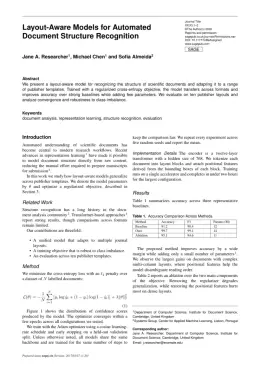
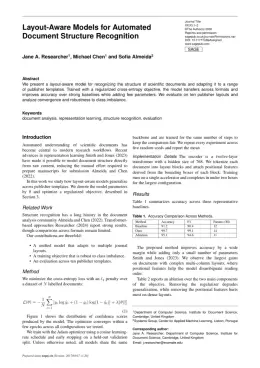
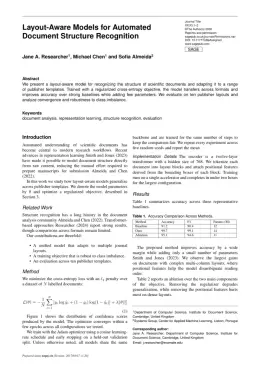
Write in a clean editor, then format for Therapeutic Advances in Psychopharmacology in one click — DocuGuru applies the official SAGE template with author–year references and exports a submission-ready PDF plus the editable LaTeX source. Free to start.

About the Therapeutic Advances in Psychopharmacology format

Therapeutic Advances in Psychopharmacology is a peer-reviewed journal published by SAGE, covering Schizophrenia research and treatment, Treatment of Major Depression, Bipolar Disorder and Treatment.

PublisherSAGE
Reference styleAuthor–year (Harvard)
Author–year — (Smith, 2023) in the text
Smith, A., Jones, B. and Lee, C. (2023) 'A representative article title', Therapeutic Advances in Psychopharmacology, 12(3), pp. 45–58.

Formats any DOI in Therapeutic Advances in Psychopharmacology style. No sign-up.

Publishes research inSchizophrenia research and treatment Treatment of Major Depression Bipolar Disorder and Treatment Tryptophan and brain disorders Electroconvulsive Therapy Studies
ISSN2045-1253
Citation impact (2-yr)2.33
h-index61
i10-index319
Total citations16,139
Article processing charge$2,300
Open accessYes
Top institutions publishing hereKing's College London
Journal websiteus.sagepub.com
You getA submission-ready PDF and the editable LaTeX source — ready to submit.

Papers published in Therapeutic Advances in Psychopharmacology per year

28
2014
49
2015
49
2016
26
2017
24
2018
29
2019
56
2020
49
2021
45
2022
35
2023
35
2024
38
2025

Citation impact of Therapeutic Advances in Psychopharmacology by publication year

1K
2014
945
2015
1.7K
2016
937
2017
1.4K
2018
1K
2019
2.3K
2020
1.1K
2021
679
2022
705
2023
187
2024
46
2025

Citations each year’s papers have accumulated so far — the most recent years are still building up.

Most-cited papers in Therapeutic Advances in Psychopharmacology

Cannabis, a complex plant: different compounds and different effects on individuals

Zerrin Atakan · 5 Sep 2012

Cannabis is a complex plant, with major compounds such as delta-9-tetrahydrocannabinol and cannabidiol, which have opposing effects. The discovery of its compounds has led to the further discovery of an important neurotransmitter system called the endocannabinoid system. This system is widely distributed in the brain and in the body, and is considered to be responsible…

Epidemiology and risk factors for bipolar disorder

Tobias Rowland, Steven Marwaha · 26 Apr 2018

Bipolar disorder is a multifactorial illness with uncertain aetiology. Knowledge of potential risk factors enables clinicians to identify patients who are more likely to develop bipolar disorder, which directs further investigation, follow up and caution when prescribing. Ideally, identifying directly causative factors for bipolar disorder would enable intervention on an individual or population level to…

New psychoactive substances: a review and updates

Abu Shafi, Alex J. Berry, Harry Sumnall et al. · 1 Jan 2020

New psychoactive substances (NPS) are a heterogeneous group of substances. They are associated with a number of health and social harms on an individual and societal level. NPS toxicity and dependence syndromes are recognised in primary care, emergency departments, psychiatric inpatient and community care settings. One pragmatic classification system is to divide NPS into one…

The role of long-acting injectable antipsychotics in schizophrenia: a critical appraisal

Sofia Brissos, Miguel Ruíz-Veguilla, David Taylor et al. · 2 Jul 2014

Despite their widespread use, long-acting injectable (LAI) antipsychotics (APs) are often regarded with some negativity because of the assumption of punishment, control and insufficient evolution towards psychosocial development of patients. However, LAI APs have proved effective in schizophrenia and other severe psychotic disorders because they assure stable blood levels, leading to a reduction of the…

The acute efficacy of antipsychotics in schizophrenia: a review of recent meta-analyses

Peter Haddad, Christoph U. Correll · 8 Oct 2018

Schizophrenia is the eighth leading cause of disability worldwide in people aged 15–44 years. Before antidopaminergic antipsychotics were introduced in the 1950s, no effective medications existed for the treatment of schizophrenia. This review summarizes key meta-analytic findings regarding antipsychotic efficacy in the acute treatment of schizophrenia, including clozapine in treatment-resistant patients. In the most comprehensive…

Therapeutic Advances in Psychopharmacology template — frequently asked questions

How do I write a paper in the Therapeutic Advances in Psychopharmacology format?
In DocuGuru you write your manuscript in a normal editor — no LaTeX setup required — and select the Therapeutic Advances in Psychopharmacology template. When you export, DocuGuru compiles the paper into the official SAGE format and hands you a submission-ready PDF along with the editable LaTeX source.
What reference style does Therapeutic Advances in Psychopharmacology use?
Therapeutic Advances in Psychopharmacology uses Author–year (Harvard) references, shown as author–year markers such as (Smith, 2023) in the text. DocuGuru formats every in-text citation and the reference list in this exact style automatically. A reference appears like this: Smith, A., Jones, B. and Lee, C. (2023) 'A representative article title', Therapeutic Advances in Psychopharmacology, 12(3), pp. 45–58.
Do I need to know LaTeX to submit to Therapeutic Advances in Psychopharmacology?
No. DocuGuru generates the sagej LaTeX class and compiles the PDF for you in the background, so you get a SAGE-ready Therapeutic Advances in Psychopharmacology document without writing any LaTeX. If you do want it, the LaTeX source is included in the export.
Can I import an existing draft into the Therapeutic Advances in Psychopharmacology template?
Yes. Paste or upload your current manuscript — Word, LaTeX, Markdown, or plain text — and DocuGuru reflows it into the Therapeutic Advances in Psychopharmacology format with correct headings, figures, tables, and author–year citations.
Who publishes Therapeutic Advances in Psychopharmacology?
Therapeutic Advances in Psychopharmacology is a multidisciplinary journal published by SAGE. DocuGuru's Therapeutic Advances in Psychopharmacology template matches SAGE's official submission format.
Can I export a submission-ready Therapeutic Advances in Psychopharmacology PDF?
Yes — DocuGuru produces a PDF built with the official Therapeutic Advances in Psychopharmacology template (the sagej class) that is ready to submit to SAGE, together with the matching LaTeX source files.
How much does the Therapeutic Advances in Psychopharmacology template cost?
You can start writing in the Therapeutic Advances in Psychopharmacology template for free. Exporting the final submission-ready Therapeutic Advances in Psychopharmacology PDF and LaTeX source is part of DocuGuru's paid plans — see the app for current pricing.

Use the Therapeutic Advances in Psychopharmacology template