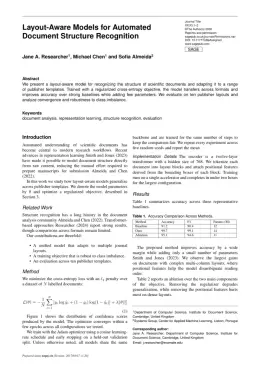
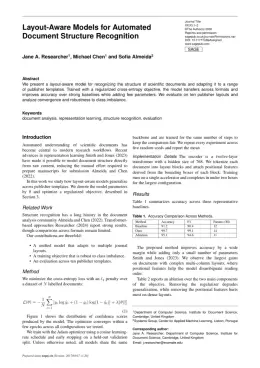
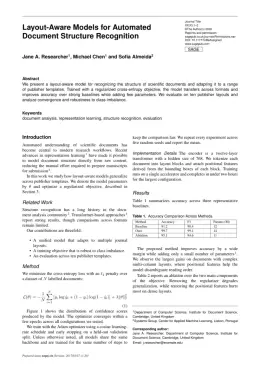
SAGE

Therapeutic Advances in Neurological Disorders Template

Write in a clean editor, then format for Therapeutic Advances in Neurological Disorders in one click — DocuGuru applies the official SAGE template with author–year references and exports a submission-ready PDF plus the editable LaTeX source. Free to start.

About the Therapeutic Advances in Neurological Disorders format

Therapeutic Advances in Neurological Disorders is a peer-reviewed journal published by SAGE, covering Multiple Sclerosis Research Studies, Peripheral Neuropathies and Disorders, Acute Ischemic Stroke Management.

PublisherSAGE
Reference styleAuthor–year (Harvard)
Author–year — (Smith, 2023) in the text
Smith, A., Jones, B. and Lee, C. (2023) 'A representative article title', Therapeutic Advances in Neurological Disorders, 12(3), pp. 45–58.

Formats any DOI in Therapeutic Advances in Neurological Disorders style. No sign-up.

Publishes research inMultiple Sclerosis Research Studies Peripheral Neuropathies and Disorders Acute Ischemic Stroke Management Polyomavirus and related diseases Neurological disorders and treatments
ISSN1756-2856
Citation impact (2-yr)3.94
h-index91
i10-index651
Total citations34,052
Article processing charge$2,300
Open accessYes
Top institutions publishing hereRuhr University Bochum
Journal websiteus.sagepub.com
You getA submission-ready PDF and the editable LaTeX source — ready to submit.

Papers published in Therapeutic Advances in Neurological Disorders per year

18
2014
37
2015
51
2016
28
2017
73
2018
76
2019
77
2020
106
2021
80
2022
94
2023
102
2024
134
2025

Citation impact of Therapeutic Advances in Neurological Disorders by publication year

744
2014
1.9K
2015
1.6K
2016
1.7K
2017
3.7K
2018
3.1K
2019
2.4K
2020
3.2K
2021
1.6K
2022
1.2K
2023
718
2024
364
2025

Citations each year’s papers have accumulated so far — the most recent years are still building up.

Most-cited papers in Therapeutic Advances in Neurological Disorders

Current and future treatments for Alzheimer’s disease

Konstantina G. Yiannopoulou, Sokratis G. Papageorgiou · 15 Oct 2012

Alzheimer's dementia (AD) is increasingly being recognized as one of the most important medical and social problems in older people in industrialized and non-industrialized nations. To date, only symptomatic treatments exist for this disease, all trying to counterbalance the neurotransmitter disturbance. Three cholinesterase inhibitors (CIs) are currently available and have been approved for the treatment…

Sex and gender issues in multiple sclerosis

Hanne F. Harbo, Ralf Gold, Mar Tintoré · 13 May 2013

Multiple sclerosis (MS) is universally found to be more prevalent in women than men. This has led to extensive studies of differences in the immune system or nervous system between women and men, which might be caused by the effects of gonadal hormones, genetic differences, and different environmental exposures and modern lifestyle in men and…

The cognitive impact of antiepileptic drugs

Clare M. Eddy, Hugh Rickards, Andrea E. Cavanna · 13 Sep 2011

Effective treatment of epilepsy depends on medication compliance across a lifetime, and studies indicate that drug tolerability is a significant limiting factor in medication maintenance. Available antiepileptic drugs (AEDs) have the potential to exert detrimental effects on cognitive function and therefore compromise patient wellbeing. On the other hand, some agents may serve to enhance cognitive…

Humoral immune response to COVID-19 mRNA vaccine in patients with multiple sclerosis treated with high-efficacy disease-modifying therapies

Anat Achiron, Mathilda Mandel, Sapir Dreyer-Alster et al. · 1 Jan 2021

BACKGROUND AND AIMS: The National Multiple Sclerosis Society and other expert organizations recommended that all patients with multiple sclerosis (MS) should be vaccinated against COVID-19. However, the effect of disease-modifying therapies (DMTs) on the efficacy to mount an appropriate immune response is unknown. We aimed to characterize humoral immunity in mRNA-COVID-19 MS vaccinees treated with…

Assessment scales in dementia

Bart Sheehan · 29 Aug 2012

Dementia involves progressive and often remorseless decline in cognition, function, behaviour and care needs. Assessment in dementia relies on collateral as well as patient-derived information. Many assessment scales have been developed over decades for use in dementia research and care. These scales are used to reduce uncertainty in decision making, for example in screening for…

Therapeutic Advances in Neurological Disorders template — frequently asked questions

How do I write a paper in the Therapeutic Advances in Neurological Disorders format?
In DocuGuru you write your manuscript in a normal editor — no LaTeX setup required — and select the Therapeutic Advances in Neurological Disorders template. When you export, DocuGuru compiles the paper into the official SAGE format and hands you a submission-ready PDF along with the editable LaTeX source.
What reference style does Therapeutic Advances in Neurological Disorders use?
Therapeutic Advances in Neurological Disorders uses Author–year (Harvard) references, shown as author–year markers such as (Smith, 2023) in the text. DocuGuru formats every in-text citation and the reference list in this exact style automatically. A reference appears like this: Smith, A., Jones, B. and Lee, C. (2023) 'A representative article title', Therapeutic Advances in Neurological Disorders, 12(3), pp. 45–58.
Do I need to know LaTeX to submit to Therapeutic Advances in Neurological Disorders?
No. DocuGuru generates the sagej LaTeX class and compiles the PDF for you in the background, so you get a SAGE-ready Therapeutic Advances in Neurological Disorders document without writing any LaTeX. If you do want it, the LaTeX source is included in the export.
Can I import an existing draft into the Therapeutic Advances in Neurological Disorders template?
Yes. Paste or upload your current manuscript — Word, LaTeX, Markdown, or plain text — and DocuGuru reflows it into the Therapeutic Advances in Neurological Disorders format with correct headings, figures, tables, and author–year citations.
Who publishes Therapeutic Advances in Neurological Disorders?
Therapeutic Advances in Neurological Disorders is a multidisciplinary journal published by SAGE. DocuGuru's Therapeutic Advances in Neurological Disorders template matches SAGE's official submission format.
Can I export a submission-ready Therapeutic Advances in Neurological Disorders PDF?
Yes — DocuGuru produces a PDF built with the official Therapeutic Advances in Neurological Disorders template (the sagej class) that is ready to submit to SAGE, together with the matching LaTeX source files.
How much does the Therapeutic Advances in Neurological Disorders template cost?
You can start writing in the Therapeutic Advances in Neurological Disorders template for free. Exporting the final submission-ready Therapeutic Advances in Neurological Disorders PDF and LaTeX source is part of DocuGuru's paid plans — see the app for current pricing.

Use the Therapeutic Advances in Neurological Disorders template