SAGE

The Journal of Strain Analysis for Engineering Design Template

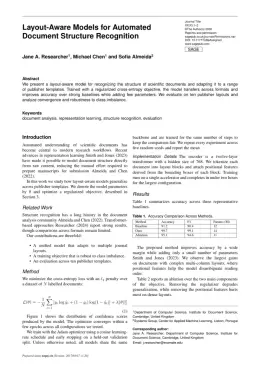
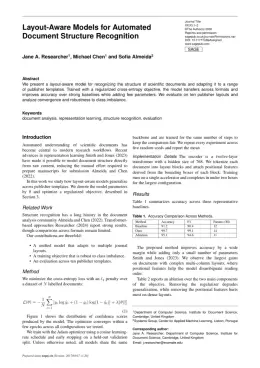
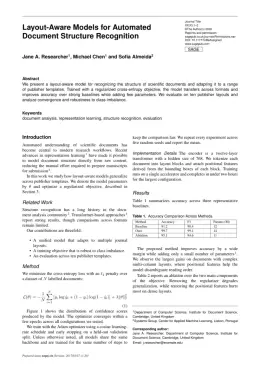
Write in a clean editor, then format for The Journal of Strain Analysis for Engineering Design in one click — DocuGuru applies the official SAGE template with author–year references and exports a submission-ready PDF plus the editable LaTeX source. Free to start.

About the The Journal of Strain Analysis for Engineering Design format

The Journal of Strain Analysis for Engineering Design is a peer-reviewed journal published by SAGE, covering Fatigue and fracture mechanics, Mechanical stress and fatigue analysis, Metal Forming Simulation Techniques.

PublisherSAGE
Reference styleAuthor–year (Harvard)
Author–year — (Smith, 2023) in the text
Smith, A., Jones, B. and Lee, C. (2023) 'A representative article title', The Journal of Strain Analysis for Engineering Design, 12(3), pp. 45–58.

Formats any DOI in The Journal of Strain Analysis for Engineering Design style. No sign-up.

Publishes research inFatigue and fracture mechanics Mechanical stress and fatigue analysis Metal Forming Simulation Techniques Structural Load-Bearing Analysis Composite Structure Analysis and Optimization
ISSN0309-3247
Citation impact (2-yr)2.56
h-index72
i10-index969
Total citations35,224
Top institutions publishing hereUniversity of Nottingham
Journal websiteus.sagepub.com
You getA submission-ready PDF and the editable LaTeX source — ready to submit.

Papers published in The Journal of Strain Analysis for Engineering Design per year

48
2014
57
2015
47
2016
46
2017
60
2018
42
2019
53
2020
62
2021
29
2022
32
2023
50
2024
36
2025

Citation impact of The Journal of Strain Analysis for Engineering Design by publication year

529
2014
802
2015
702
2016
431
2017
908
2018
466
2019
576
2020
464
2021
175
2022
194
2023
193
2024
81
2025

Citations each year’s papers have accumulated so far — the most recent years are still building up.

Most-cited papers in The Journal of Strain Analysis for Engineering Design

The location of defects in structures from measurements of natural frequencies

P. Cawley, Robert Adams · 1 Apr 1979

A method of non-destructively assessing the integrity of structures using measurements of the structural natural frequencies is described. It is shown how measurements made at a single point in the structure can be used to detect, locate and quantify damage. The scheme presented uses finite-element analysis, since this method may be used on any structure.…

1,424 citations Cite SaveGo to paper →
Methods and applications of digital volume correlation

Brian K. Bay · 1 Aug 2008

Digital volume correlation, an experimental method for volumetric strain measurement, has experienced a growth in technique development and application since its introduction in 1999. This has largely been the result of more accessible volumetric imaging methods and greater speed and capacity of computational facilities. This paper reviews recent work using the method and presents examples…

Far-field high-energy diffraction microscopy: a tool for intergranular orientation and strain analysis

Joel V. Bernier, Nathan R. Barton, Ulrich Lienert et al. · 29 Jul 2011

The far-field high-energy diffraction microscopy technique is presented in the context of high-energy synchrotron x-ray diffraction. For each grain in an illuminated polycrystalline volume, the volume-averaged lattice orientations, lattice strain tensors, and centre-of-mass (COM) coordinates may be determined to a high degree of precision: better than 0.05°, 1 × 10 −4 , and 0.1 pixel,…

High-temperature strain field measurement using digital image correlation

B. M. B. Grant, H.J. Stone, Philip J. Withers et al. · 1 May 2009

A method is presented for obtaining good images of sample surfaces at high temperatures, suitable for strain measurement, by digital image correlation (DIC) without the use of surface markers or speckles. This is accomplished by suppressing black-body radiation through the use of filters and blue illumination. Using only relatively low levels of illumination the method…

Numerical and experimental uniaxial loading on in-plane auxetic honeycombs

Fabrizio Scarpa, Panayiotis Panayiotou, G.R. Tomlinson · 1 Jul 2000

Auxetic honeycombs show in-plane negative Poisson's ratio properties; they expand in all directions when pulled in only one, and contract when compressed. This characteristic is due to the reentrant shape of the honeycomb unit cell. The cell convoluteness gives a geometric stiffening effect that affects the linear elastic properties of the whole cellular solid. In…

The Journal of Strain Analysis for Engineering Design template — frequently asked questions

How do I write a paper in the The Journal of Strain Analysis for Engineering Design format?
In DocuGuru you write your manuscript in a normal editor — no LaTeX setup required — and select the The Journal of Strain Analysis for Engineering Design template. When you export, DocuGuru compiles the paper into the official SAGE format and hands you a submission-ready PDF along with the editable LaTeX source.
What reference style does The Journal of Strain Analysis for Engineering Design use?
The Journal of Strain Analysis for Engineering Design uses Author–year (Harvard) references, shown as author–year markers such as (Smith, 2023) in the text. DocuGuru formats every in-text citation and the reference list in this exact style automatically. A reference appears like this: Smith, A., Jones, B. and Lee, C. (2023) 'A representative article title', The Journal of Strain Analysis for Engineering Design, 12(3), pp. 45–58.
Do I need to know LaTeX to submit to The Journal of Strain Analysis for Engineering Design?
No. DocuGuru generates the sagej LaTeX class and compiles the PDF for you in the background, so you get a SAGE-ready The Journal of Strain Analysis for Engineering Design document without writing any LaTeX. If you do want it, the LaTeX source is included in the export.
Can I import an existing draft into the The Journal of Strain Analysis for Engineering Design template?
Yes. Paste or upload your current manuscript — Word, LaTeX, Markdown, or plain text — and DocuGuru reflows it into the The Journal of Strain Analysis for Engineering Design format with correct headings, figures, tables, and author–year citations.
Who publishes The Journal of Strain Analysis for Engineering Design?
The Journal of Strain Analysis for Engineering Design is a multidisciplinary journal published by SAGE. DocuGuru's The Journal of Strain Analysis for Engineering Design template matches SAGE's official submission format.
Can I export a submission-ready The Journal of Strain Analysis for Engineering Design PDF?
Yes — DocuGuru produces a PDF built with the official The Journal of Strain Analysis for Engineering Design template (the sagej class) that is ready to submit to SAGE, together with the matching LaTeX source files.
How much does the The Journal of Strain Analysis for Engineering Design template cost?
You can start writing in the The Journal of Strain Analysis for Engineering Design template for free. Exporting the final submission-ready The Journal of Strain Analysis for Engineering Design PDF and LaTeX source is part of DocuGuru's paid plans — see the app for current pricing.

Use the The Journal of Strain Analysis for Engineering Design template