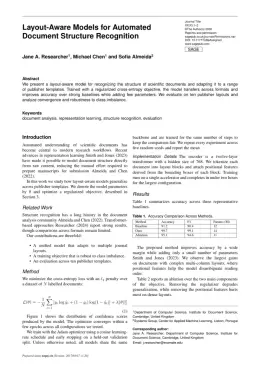
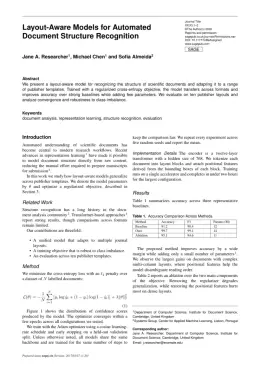
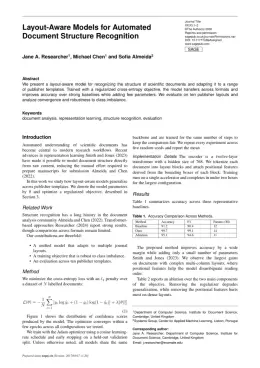
About the Studies in Indian Politics format
Studies in Indian Politics is a peer-reviewed journal published by SAGE, covering South Asian Studies and Conflicts, Southeast Asian Sociopolitical Studies, Politics and Conflicts in Afghanistan, Pakistan, and Middle East.
| Publisher | SAGE |
|---|
| Reference style | Author–year (Harvard) Author–year — (Smith, 2023) in the text
Smith, A., Jones, B. and Lee, C. (2023) 'A representative article title', Studies in Indian Politics, 12(3), pp. 45–58.
Formats any DOI in Studies in Indian Politics style. No sign-up.
|
|---|
| Publishes research in | South Asian Studies and Conflicts Southeast Asian Sociopolitical Studies Politics and Conflicts in Afghanistan, Pakistan, and Middle East Social and Economic Development in India Indian History and Philosophy |
|---|
| ISSN | 2321-0230 |
|---|
| Citation impact (2-yr) | 0.66 |
|---|
| h-index | 19 |
|---|
| i10-index | 47 |
|---|
| Total citations | 1,536 |
|---|
| Top institutions publishing here | Jawaharlal Nehru University |
|---|
| Journal website | us.sagepub.com |
|---|
| You get | A submission-ready PDF and the editable LaTeX source — ready to submit. |
|---|
Papers published in Studies in Indian Politics per year
Citation impact of Studies in Indian Politics by publication year
Citations each year’s papers have accumulated so far — the most recent years are still building up.
Most-cited papers in Studies in Indian Politics
Gujarat Elections: The Sub-Text of Modi’s ‘Hattrick’—High Tech Populism and the ‘Neo-middle Class’
Christophe Jaffrelot · 1 Jun 2013
This article, while it will pay attention to the opposition parties—the Congress and the GPP—intends, in its first part, to scrutinize the mainstays of Narendra Modi’s election campaign with special references to high tech populism, his banalization of Hindutva, his notion of Gujarati patriotism and his defence of what he calls the ‘neo-middle class’. The…
The Rise of the Second Dominant Party System in India: BJP’s New Social Coalition in 2019
Pradeep Chhibber, Rahul Verma · 1 Dec 2019
The social coalition that supported the Bharatiya Janata Party in 2019 mirrored the demographic profile of the Hindu society. The party made substantial gains among the lower castes, the poor, rural voters, and less educated. How did BJP manage to attract these new voters? We argue that the immediate context of 2019 elections along with…
Studying Indian Politics with Large-scale Data: Indian Election Data 1961–Today
Francesca R. Jensenius, Gilles Verniers · 20 Nov 2017
There has been a major shift in how Indian politics is studied, as large-scale data has become easier to access and analyze. In this research note, we describe some useful techniques and tools used for creating and merging large-scale datasets. We also introduce two datasets: constituency-level datasets of Indian State Elections and General Elections from…
Hindu Nationalism and Right-wing Ecology: RSS, Modi and Motherland Post-2014
Mukul Sharma · 1 Jun 2023
This article analyses the environmental politics of Hindu nationalism in India after 2014, which is deeply enmeshed with aggressive nationalism. Taking as its case study articles, newspaper reports and visuals published in the Organiser, a leading magazine of the Rashtriya Swayamsevak Sangh (RSS), it focuses on four ubiquitous environmental themes—imagination of a great Hindu motherland;…
The BJP’s Welfare Schemes: Did They Make a Difference in the 2019 Elections?
Rajeshwari Deshpande, Louise Tillin, K. K. Kailash · 20 Nov 2019
In this article, we use data from the 2019 NES post-poll survey to assess the impact of BJP’s welfare schemes on voting behaviour. We demonstrate that compared to earlier elections, voters are more likely to give credit to the central government as opposed to state governments or local politicians for welfare schemes. This centralization is…