SAGE

Social Currents Template

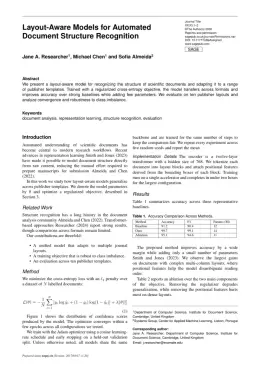
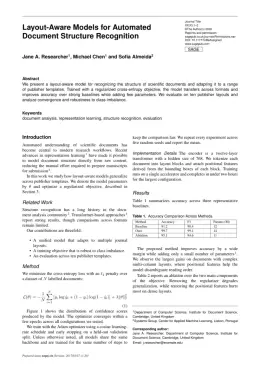
Write in a clean editor, then format for Social Currents in one click — DocuGuru applies the official SAGE template with author–year references and exports a submission-ready PDF plus the editable LaTeX source. Free to start.

About the Social Currents format

Social Currents is a peer-reviewed journal published by SAGE, covering Employment and Welfare Studies, LGBTQ Health, Identity, and Policy, Social and Intergroup Psychology.

PublisherSAGE
Reference styleAuthor–year (Harvard)
Author–year — (Smith, 2023) in the text
Smith, A., Jones, B. and Lee, C. (2023) 'A representative article title', Social Currents, 12(3), pp. 45–58.

Formats any DOI in Social Currents style. No sign-up.

Publishes research inEmployment and Welfare Studies LGBTQ Health, Identity, and Policy Social and Intergroup Psychology Social and Cultural Dynamics Work-Family Balance Challenges
ISSN2329-4965
Citation impact (2-yr)2.14
h-index38
i10-index154
Total citations5,759
Top institutions publishing hereNorth Carolina State University
Journal websiteus.sagepub.com
You getA submission-ready PDF and the editable LaTeX source — ready to submit.

Papers published in Social Currents per year

23
2014
41
2015
25
2016
38
2017
29
2018
25
2019
37
2020
29
2021
35
2022
27
2023
22
2024
23
2025

Citation impact of Social Currents by publication year

855
2014
905
2015
452
2016
1.3K
2017
573
2018
377
2019
383
2020
393
2021
220
2022
134
2023
101
2024
17
2025

Citations each year’s papers have accumulated so far — the most recent years are still building up.

Most-cited papers in Social Currents

Predatory Inclusion and Education Debt: Rethinking the Racial Wealth Gap

Louise Seamster, Raphaël Charron‐Chénier · 3 Jan 2017

Analyses of the recent surge in racial wealth inequality have tended to focus on changes in asset holdings. Debt patterns, by contrast, have remained relatively unexplored. Using 2001 to 2013 data from the Survey of Consumer Finances, we show that after peaking in 2007, racial inequalities for most debt types returned to prefinancial crisis levels.…

Wealth Inequality and Carbon Emissions in High-income Countries

Kyle W. Knight, Juliet B. Schor, Andrew K. Jorgenson · 27 Apr 2017

This study contributes to the emerging literature on connections between climate change and economic inequality by investigating the relationship between domestic wealth inequality and consumption-based carbon emissions for 26 high-income countries from 2000 to 2010. Results of the two-way fixed effects longitudinal models indicate that the effect of wealth inequality, measured as the wealth share…

The Relational Generation of Workplace Inequalities

Donald Tomaskovic‐Devey · 1 Feb 2014

In this article, I outline a dynamic, relational theory of workplace inequalities. I begin with the basic model offered by Charles Tilly in Durable Inequality that categorical distinctions, such as gender or education, are mapped, exaggerated, and naturalized within organizational divisions of labor. This argument is attractive in the generality and simplicity of its causal…

Contemporary Religion and the Cisgendering of Reality

J. E. Sumerau, Ryan T. Cragun, Lain A. B. Mathers · 16 Sep 2015

This article outlines a generic process in the reproduction of inequality we name cisgendering reality. Based on 114 responses from transgender Mormons and systematic reviews of religious, transgender, and inequalities scholarship, we demonstrate how contemporary American religions cisgender reality by (1) erasing, (2) marking, and (3) punishing transgender experience in ways that reproduce conceptions of…

Structural Topic Modeling For Social Scientists: A Brief Case Study with Social Movement Studies Literature, 2005–2017

Nathan C. Lindstedt · 2 May 2019

Sociologists frequently make use of language as data in their research using methodologies including open-ended surveys, in-depth interviews, and content analyses. Unfortunately, the ability of researchers to analyze the growing amount of these data declines as the costs and time associated with the research process increases. Topic modeling is a computer-assisted technique that can help…

Social Currents template — frequently asked questions

How do I write a paper in the Social Currents format?
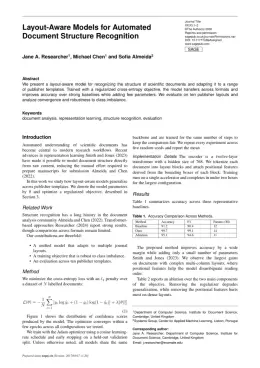
In DocuGuru you write your manuscript in a normal editor — no LaTeX setup required — and select the Social Currents template. When you export, DocuGuru compiles the paper into the official SAGE format and hands you a submission-ready PDF along with the editable LaTeX source.
What reference style does Social Currents use?
Social Currents uses Author–year (Harvard) references, shown as author–year markers such as (Smith, 2023) in the text. DocuGuru formats every in-text citation and the reference list in this exact style automatically. A reference appears like this: Smith, A., Jones, B. and Lee, C. (2023) 'A representative article title', Social Currents, 12(3), pp. 45–58.
Do I need to know LaTeX to submit to Social Currents?
No. DocuGuru generates the sagej LaTeX class and compiles the PDF for you in the background, so you get a SAGE-ready Social Currents document without writing any LaTeX. If you do want it, the LaTeX source is included in the export.
Can I import an existing draft into the Social Currents template?
Yes. Paste or upload your current manuscript — Word, LaTeX, Markdown, or plain text — and DocuGuru reflows it into the Social Currents format with correct headings, figures, tables, and author–year citations.
Who publishes Social Currents?
Social Currents is a multidisciplinary journal published by SAGE. DocuGuru's Social Currents template matches SAGE's official submission format.
Can I export a submission-ready Social Currents PDF?
Yes — DocuGuru produces a PDF built with the official Social Currents template (the sagej class) that is ready to submit to SAGE, together with the matching LaTeX source files.
How much does the Social Currents template cost?
You can start writing in the Social Currents template for free. Exporting the final submission-ready Social Currents PDF and LaTeX source is part of DocuGuru's paid plans — see the app for current pricing.
Use the Social Currents template