SAGE

SIMULATION Template

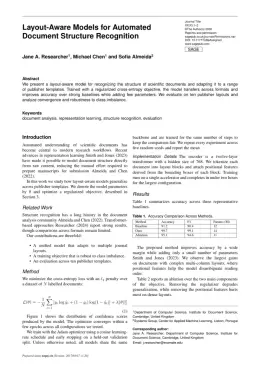
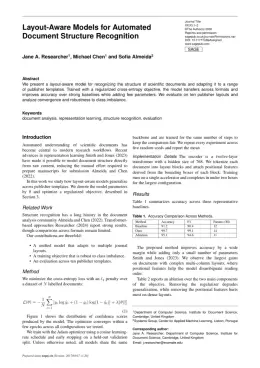
Write in a clean editor, then format for SIMULATION in one click — DocuGuru applies the official SAGE template with author–year references and exports a submission-ready PDF plus the editable LaTeX source. Free to start.

About the SIMULATION format

SIMULATION is a peer-reviewed journal published by SAGE, covering Simulation Techniques and Applications, Distributed and Parallel Computing Systems, Social Work Education and Practice.

PublisherSAGE
Reference styleAuthor–year (Harvard)
Author–year — (Smith, 2023) in the text
Smith, A., Jones, B. and Lee, C. (2023) 'A representative article title', SIMULATION, 12(3), pp. 45–58.

Formats any DOI in SIMULATION style. No sign-up.

Publishes research inSimulation Techniques and Applications Distributed and Parallel Computing Systems Social Work Education and Practice Community Development and Social Impact Business Process Modeling and Analysis
ISSN0037-5497
Citation impact (2-yr)2.46
h-index77
i10-index1,188
Total citations54,200
Top institutions publishing hereUniversity of Arizona
Journal websitesim.sagepub.com
You getA submission-ready PDF and the editable LaTeX source — ready to submit.

Papers published in SIMULATION per year

88
2014
94
2015
91
2016
119
2017
87
2018
61
2019
49
2020
63
2021
74
2022
56
2023
83
2024
42
2025

Citation impact of SIMULATION by publication year

941
2014
1.1K
2015
1.3K
2016
1.7K
2017
1K
2018
737
2019
482
2020
600
2021
565
2022
327
2023
327
2024
38
2025

Citations each year’s papers have accumulated so far — the most recent years are still building up.

Most-cited papers in SIMULATION

A New Heuristic Optimization Algorithm: Harmony Search

Zong Woo Geem, Joong Hoon Kim, G. V. Loganathan · 1 Feb 2001

Many optimization problems in various fields have been solved using diverse optimization al gorithms. Traditional optimization techniques such as linear programming (LP), non-linear programming (NLP), and dynamic program ming (DP) have had major roles in solving these problems. However, their drawbacks generate demand for other types of algorithms, such as heuristic optimization approaches (simulated annealing,…

6,244 citations Cite SaveGo to paper →
MASON: A Multiagent Simulation Environment

Sean Luke, Claudio Cioffi‐Revilla, Liviu Panait et al. · 1 Jul 2005

MASON is a fast, easily extensible, discrete-event multi-agent simulation toolkit in Java, designed to serve as the basis for a wide range of multi-agent simulation tasks ranging from swarm robotics to machine learning to social complexity environments. MASON carefully delineates between model and visualization, allowing models to be dynamically detached from or attached to visualizers,…

1,014 citations Cite SaveGo to paper →
Constrained Optimization Via Genetic Algorithms

Abdollah Homaifar, Charlene X. Qi, Steven H.-Y. Lai · 1 Apr 1994

This paper presents an application of genetic algorithms (GAs) to nonlinear constrained optimization. GAs are general purpose optimization algorithms which apply the rules of natural genetics to explore a given search space. When GAs are applied to nonlinear constrained problems, constraint handling becomes an important issue. The proposed search algorithm is realized by GAs which…

Agent-based Simulation Platforms: Review and Development Recommendations

Steven F. Railsback, Steven L. Lytinen, Stephen Jackson · 1 Sep 2006

Five software platforms for scientific agent-based models (ABMs) were reviewed by implementing example models in each. NetLogo is the highest-level platform, providing a simple yet powerful programming language, built-in graphical interfaces, and comprehensive documentation. It is designed primarily for ABMs of mobile individuals with local interactions in a grid space, but not necessarily clumsy for…

Sketchpad a Man-Machine Graphical Communication System

Ivan E. Sutherland · 1 May 1964

The Sketchpad system makes it possible for a man and a computer to converse rapidly through the medium of line drawings. Heretofore, most interaction between man and computers has been slowed down by the need to reduce all communication to written statements that can be typed; in the past, we have been writing letters to…

SIMULATION template — frequently asked questions

How do I write a paper in the SIMULATION format?
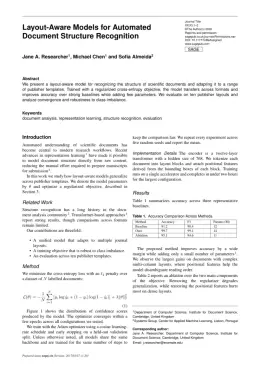
In DocuGuru you write your manuscript in a normal editor — no LaTeX setup required — and select the SIMULATION template. When you export, DocuGuru compiles the paper into the official SAGE format and hands you a submission-ready PDF along with the editable LaTeX source.
What reference style does SIMULATION use?
SIMULATION uses Author–year (Harvard) references, shown as author–year markers such as (Smith, 2023) in the text. DocuGuru formats every in-text citation and the reference list in this exact style automatically. A reference appears like this: Smith, A., Jones, B. and Lee, C. (2023) 'A representative article title', SIMULATION, 12(3), pp. 45–58.
Do I need to know LaTeX to submit to SIMULATION?
No. DocuGuru generates the sagej LaTeX class and compiles the PDF for you in the background, so you get a SAGE-ready SIMULATION document without writing any LaTeX. If you do want it, the LaTeX source is included in the export.
Can I import an existing draft into the SIMULATION template?
Yes. Paste or upload your current manuscript — Word, LaTeX, Markdown, or plain text — and DocuGuru reflows it into the SIMULATION format with correct headings, figures, tables, and author–year citations.
Who publishes SIMULATION?
SIMULATION is a multidisciplinary journal published by SAGE. DocuGuru's SIMULATION template matches SAGE's official submission format.
Can I export a submission-ready SIMULATION PDF?
Yes — DocuGuru produces a PDF built with the official SIMULATION template (the sagej class) that is ready to submit to SAGE, together with the matching LaTeX source files.
How much does the SIMULATION template cost?
You can start writing in the SIMULATION template for free. Exporting the final submission-ready SIMULATION PDF and LaTeX source is part of DocuGuru's paid plans — see the app for current pricing.
Use the SIMULATION template