SAGE

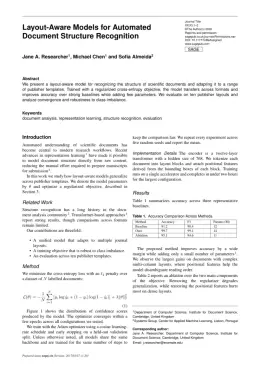
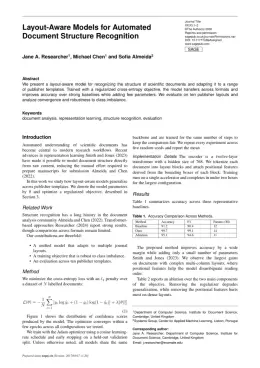
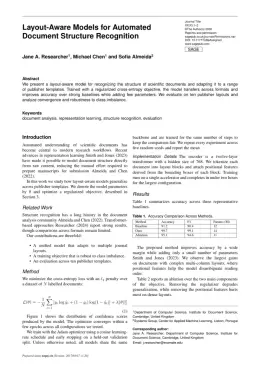
Second language Research Template

Write in a clean editor, then format for Second language Research in one click — DocuGuru applies the official SAGE template with author–year references and exports a submission-ready PDF plus the editable LaTeX source. Free to start.

About the Second language Research format

Second language Research is a peer-reviewed journal published by SAGE, covering Neurobiology of Language and Bilingualism, Syntax, Semantics, Linguistic Variation, EFL/ESL Teaching and Learning.

PublisherSAGE
Reference styleAuthor–year (Harvard)
Author–year — (Smith, 2023) in the text
Smith, A., Jones, B. and Lee, C. (2023) 'A representative article title', Second language Research, 12(3), pp. 45–58.

Formats any DOI in Second language Research style. No sign-up.

Publishes research inNeurobiology of Language and Bilingualism Syntax, Semantics, Linguistic Variation EFL/ESL Teaching and Learning Second Language Acquisition and Learning Language Development and Disorders
ISSN0267-6583
Citation impact (2-yr)1.86
h-index104
i10-index531
Total citations43,223
Top institutions publishing hereUniversity of Illinois Urbana-Champaign
Journal websitewww.uk.sagepub.com
You getA submission-ready PDF and the editable LaTeX source — ready to submit.

Papers published in Second language Research per year

48
2014
27
2015
32
2016
29
2017
27
2018
46
2019
56
2020
79
2021
37
2022
34
2023
24
2024
36
2025

Citation impact of Second language Research by publication year

1.6K
2014
641
2015
1.8K
2016
1.3K
2017
710
2018
987
2019
920
2020
764
2021
327
2022
129
2023
106
2024
38
2025

Citations each year’s papers have accumulated so far — the most recent years are still building up.

Most-cited papers in Second language Research

L2 cognitive states and the Full Transfer/Full Access model

Bonnie D. Schwartz, Rex A. Sprouse · 1 Jan 1996

This article is a defence of the Full Transfer/Full Access (FT/FA) model. FT/FA hypothesizes that the initial state of L2 acquisition is the final state of L1 acquisition (Full Transfer) and that failure to assign a representation to input data will force subsequent restructurings, drawing from options of UG (Full Access). We illustrate the FT/FA…

1,731 citations Cite SaveGo to paper →
Anaphora resolution in near-native speakers of Italian

Antonella Sorace, Francesca Filiaci · 1 Jul 2006

This study presents data from an experiment on the interpretation of intrasentential anaphora in Italian by native Italian speakers and by English speakers who have learned Italian as adults and have reached a near-native level of proficiency in this language. The two groups of speakers were presented with complex sentences consisting of a main clause…

Missing Surface Inflection or Impairment in second language acquisition? Evidence from tense and agreement

Philippe Prévost, Lydia White · 1 Apr 2000

In this article, two accounts of the variable use of inflection in adult second language (L2) acquisition are examined. The Missing Surface Inflection Hypothesis (MSIH) proposes that L2 learners have unconscious knowledge of the functional projections and features underlying tense and agreement. However, learners sometimes have a problem with realization of surface morphology, such that…

The partial availability of Universal Grammar in second language acquisition: the ‘failed functional features hypothesis’

Roger Hawkins, Cecilia Yuet-hung Chan · 1 Jul 1997

A number of studies in the research literature have proposed that Universal Grammar (UG) is partially available to adult second language learners. Attempts to provide a syntactic characterization of that partial availability have only recently begun to appear, however. In this article we will argue that speakers of Chinese (a language without wh-operator movement in…

The Basic Variety (or: Couldn't natural languages be much simpler?)

Wolfgang Klein, Clive Perdue · 1 Oct 1997

In this article, we discuss the implications of the fact that adult second language learners (outside the classroom) universally develop a well-structured, efficient and simple form of language–the Basic Variety (BV). Three questions are asked as to (1) the structural properties of the BV, (2) the status of these properties and (3) why some structural…

Second language Research template — frequently asked questions

How do I write a paper in the Second language Research format?
In DocuGuru you write your manuscript in a normal editor — no LaTeX setup required — and select the Second language Research template. When you export, DocuGuru compiles the paper into the official SAGE format and hands you a submission-ready PDF along with the editable LaTeX source.
What reference style does Second language Research use?
Second language Research uses Author–year (Harvard) references, shown as author–year markers such as (Smith, 2023) in the text. DocuGuru formats every in-text citation and the reference list in this exact style automatically. A reference appears like this: Smith, A., Jones, B. and Lee, C. (2023) 'A representative article title', Second language Research, 12(3), pp. 45–58.
Do I need to know LaTeX to submit to Second language Research?
No. DocuGuru generates the sagej LaTeX class and compiles the PDF for you in the background, so you get a SAGE-ready Second language Research document without writing any LaTeX. If you do want it, the LaTeX source is included in the export.
Can I import an existing draft into the Second language Research template?
Yes. Paste or upload your current manuscript — Word, LaTeX, Markdown, or plain text — and DocuGuru reflows it into the Second language Research format with correct headings, figures, tables, and author–year citations.
Who publishes Second language Research?
Second language Research is a multidisciplinary journal published by SAGE. DocuGuru's Second language Research template matches SAGE's official submission format.
Can I export a submission-ready Second language Research PDF?
Yes — DocuGuru produces a PDF built with the official Second language Research template (the sagej class) that is ready to submit to SAGE, together with the matching LaTeX source files.
How much does the Second language Research template cost?
You can start writing in the Second language Research template for free. Exporting the final submission-ready Second language Research PDF and LaTeX source is part of DocuGuru's paid plans — see the app for current pricing.

Use the Second language Research template