SAGE

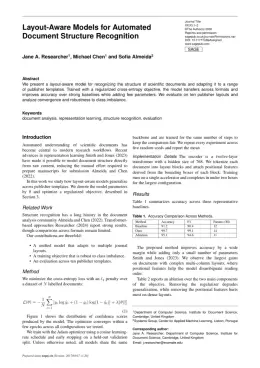
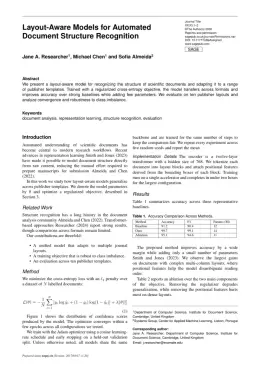
Research and Practice for Persons with Severe Disabilities Template

Write in a clean editor, then format for Research and Practice for Persons with Severe Disabilities in one click — DocuGuru applies the official SAGE template with author–year references and exports a submission-ready PDF plus the editable LaTeX source. Free to start.

About the Research and Practice for Persons with Severe Disabilities format

Research and Practice for Persons with Severe Disabilities is a peer-reviewed journal published by SAGE, covering Disability Education and Employment, Family and Disability Support Research, Behavioral and Psychological Studies.

PublisherSAGE
Reference styleAuthor–year (Harvard)
Author–year — (Smith, 2023) in the text
Smith, A., Jones, B. and Lee, C. (2023) 'A representative article title', Research and Practice for Persons with Severe Disabilities, 12(3), pp. 45–58.

Formats any DOI in Research and Practice for Persons with Severe Disabilities style. No sign-up.

Publishes research inDisability Education and Employment Family and Disability Support Research Behavioral and Psychological Studies Autism Spectrum Disorder Research Assistive Technology in Communication and Mobility
ISSN1540-7969
Citation impact (2-yr)1.3
h-index75
i10-index394
Total citations20,237
Top institutions publishing hereUniversity of Kansas
Journal websiteus.sagepub.com
You getA submission-ready PDF and the editable LaTeX source — ready to submit.

Papers published in Research and Practice for Persons with Severe Disabilities per year

38
2014
31
2015
24
2016
25
2017
22
2018
33
2019
25
2020
24
2021
20
2022
16
2023
28
2024
46
2025

Citation impact of Research and Practice for Persons with Severe Disabilities by publication year

906
2014
1.1K
2015
715
2016
715
2017
522
2018
782
2019
340
2020
320
2021
245
2022
104
2023
83
2024
20
2025

Citations each year’s papers have accumulated so far — the most recent years are still building up.

Most-cited papers in Research and Practice for Persons with Severe Disabilities

Stress Levels and Adaptability in Parents of Toddlers with and without Autism Spectrum Disorders

Mary J. Baker-Ericzén, Lauren Brookman‐Frazee, Aubyn C. Stahmer · 1 Dec 2005

The toddler years can be a particularly stressful time for all parents, however, parents of children with disabilities may experience additional sources of stress. Recent literature on early education for children with disabilities promotes inclusion with typical peers with increases in the availability of inclusive programs. However, little is known about early intervention inclusion programs…

Self-Determination and Individuals with Severe Disabilities: Re-Examining Meanings and Misinterpretations

Michael L. Wehmeyer · 1 Jul 2005

Although some progress has been made, the belief that students with severe cognitive and multiple disabilities will not or cannot become self-determined remains a barrier for many such students. This article revisits topics that were identified in Wehmeyer (1998) as contributing to this problem, with a particular focus on definitional issues pertaining to self-determination and…

Why Aren’t Students with Severe Disabilities Being Placed in General Education Classrooms: Examining the Relations Among Classroom Placement, Learner Outcomes, and Other Factors

Martin Agran, Lewis Jackson, Jennifer A. Kurth et al. · 8 Oct 2019

Placement decisions for students with severe disabilities have often been based less on the students’ unique learning needs but more on beliefs and presumptions about student learning, entrenched school district policies that restrict program delivery options, and other variables unrelated to student needs. In light of the benefits associated with inclusive practices for students with…

Marital Adjustment in Parents of Children with Disabilities: A Historical Review and Meta-Analysis

Don Risdal, George Singer · 1 Jun 2004

This report uses meta-analytic methods to reexamine a body of research literature on comparative levels of divorce and marital satisfaction/discord in parents of children with and without developmental disabilities in light of new assumptions about variability in family adjustment, including successful family adaptation and longterm resilience. A historical review of the literature on the impacts…

Toward a Technology of “Nonaversive” Behavioral Support

Robert H. Horner, Glen Dunlap, Robert L. Koegel et al. · 1 Mar 2005

Nonaversive behavior management is an approach to supporting people with undesirable behaviors that integrates technology and values. Although this approach has attracted numerous proponents, more adequate definition and empirical documentation are still needed. This article presents an introduction to the nonaversive approach. Important definitions are suggested, and three fundamental elements are presented: (a) an emerging…

Research and Practice for Persons with Severe Disabilities template — frequently asked questions

How do I write a paper in the Research and Practice for Persons with Severe Disabilities format?
In DocuGuru you write your manuscript in a normal editor — no LaTeX setup required — and select the Research and Practice for Persons with Severe Disabilities template. When you export, DocuGuru compiles the paper into the official SAGE format and hands you a submission-ready PDF along with the editable LaTeX source.
What reference style does Research and Practice for Persons with Severe Disabilities use?
Research and Practice for Persons with Severe Disabilities uses Author–year (Harvard) references, shown as author–year markers such as (Smith, 2023) in the text. DocuGuru formats every in-text citation and the reference list in this exact style automatically. A reference appears like this: Smith, A., Jones, B. and Lee, C. (2023) 'A representative article title', Research and Practice for Persons with Severe Disabilities, 12(3), pp. 45–58.
Do I need to know LaTeX to submit to Research and Practice for Persons with Severe Disabilities?
No. DocuGuru generates the sagej LaTeX class and compiles the PDF for you in the background, so you get a SAGE-ready Research and Practice for Persons with Severe Disabilities document without writing any LaTeX. If you do want it, the LaTeX source is included in the export.
Can I import an existing draft into the Research and Practice for Persons with Severe Disabilities template?
Yes. Paste or upload your current manuscript — Word, LaTeX, Markdown, or plain text — and DocuGuru reflows it into the Research and Practice for Persons with Severe Disabilities format with correct headings, figures, tables, and author–year citations.
Who publishes Research and Practice for Persons with Severe Disabilities?
Research and Practice for Persons with Severe Disabilities is a multidisciplinary journal published by SAGE. DocuGuru's Research and Practice for Persons with Severe Disabilities template matches SAGE's official submission format.
Can I export a submission-ready Research and Practice for Persons with Severe Disabilities PDF?
Yes — DocuGuru produces a PDF built with the official Research and Practice for Persons with Severe Disabilities template (the sagej class) that is ready to submit to SAGE, together with the matching LaTeX source files.
How much does the Research and Practice for Persons with Severe Disabilities template cost?
You can start writing in the Research and Practice for Persons with Severe Disabilities template for free. Exporting the final submission-ready Research and Practice for Persons with Severe Disabilities PDF and LaTeX source is part of DocuGuru's paid plans — see the app for current pricing.

Use the Research and Practice for Persons with Severe Disabilities template