SAGE

Psychology of Music Template

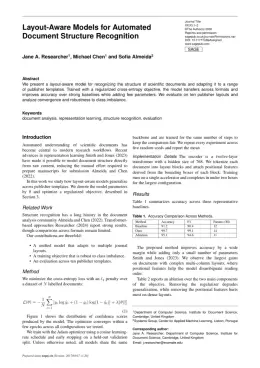
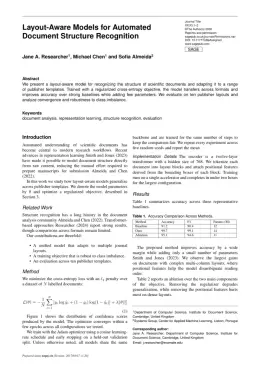
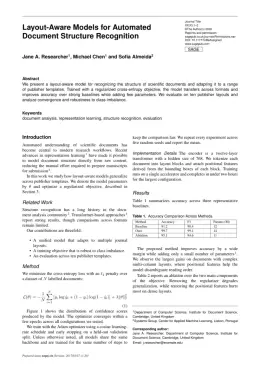
Write in a clean editor, then format for Psychology of Music in one click — DocuGuru applies the official SAGE template with author–year references and exports a submission-ready PDF plus the editable LaTeX source. Free to start.

About the Psychology of Music format

Psychology of Music is a peer-reviewed journal published by SAGE, covering Neuroscience and Music Perception, Diverse Music Education Insights, Music Therapy and Health.

PublisherSAGE
Reference styleAuthor–year (Harvard)
Author–year — (Smith, 2023) in the text
Smith, A., Jones, B. and Lee, C. (2023) 'A representative article title', Psychology of Music, 12(3), pp. 45–58.

Formats any DOI in Psychology of Music style. No sign-up.

Publishes research inNeuroscience and Music Perception Diverse Music Education Insights Music Therapy and Health Music and Audio Processing Music Technology and Sound Studies
ISSN0305-7356
Citation impact (2-yr)1.96
h-index122
i10-index1,037
Total citations66,533
Top institutions publishing hereUniversity of Sheffield
Journal websitewww.sagepub.com
You getA submission-ready PDF and the editable LaTeX source — ready to submit.

Papers published in Psychology of Music per year

66
2014
75
2015
70
2016
97
2017
80
2018
72
2019
83
2020
109
2021
103
2022
57
2023
70
2024
83
2025

Citation impact of Psychology of Music by publication year

1.9K
2014
2.2K
2015
2.6K
2016
3.1K
2017
2.1K
2018
1.4K
2019
1.4K
2020
1.4K
2021
857
2022
308
2023
262
2024
75
2025

Citations each year’s papers have accumulated so far — the most recent years are still building up.

Most-cited papers in Psychology of Music

Music Structure and Emotional Response: Some Empirical Findings

John Sloboda · 1 Oct 1991

Eighty-three music listeners completed a questionnaire in which thev provided information about the occurrence of a range of physical reactions while listening to music. Shivers down the spine, laughter, tears and lump in the throat were reported by over 80(% of respondents. Respondents were asked to locate specific musical passages that reliably evoked such responses.…

The role of music in adolescents' mood regulation

Suvi Saarikallio, Jaakko Erkkilä · 13 Nov 2006

The aim of this study was the exploration and theoretical clarification of the role of music in adolescents' mood regulation. The phenomenon was approached through an inductive theory construction. The data were gathered from eight adolescents by means of group interviews and follow-up forms, and were then analysed using constructive grounded theory methods. The analysis…

A comparison of the discrete and dimensional models of emotion in music

Tuomas Eerola, Jonna K. Vuoskoski · 27 Aug 2010

The primary aim of the present study was to systematically compare perceived emotions in music using two different theoretical frameworks: the discrete emotion model, and the dimensional model of affect. A secondary aim was to introduce a new, improved set of stimuli for the study of music-mediated emotions. A large pilot study established a set…

Emotional Expression in Music Performance: Between the Performer's Intention and the Listener's Experience

Alf Gabrielsson, Patrik N. Juslin · 1 Apr 1996

Nine professional musicians were instructed to perform short melodies using various instruments - the violin, electric guitar, flute, and singing voice - so as to communicate specific emotional characters to listeners. The performances were first validated by having listeners rating the emotional expression and then analysed with regard to their physical characteristics, e.g. tempo, dynamics,…

Emotional responses to music: experience, expression, and physiology

Lars‐Olov Lundqvist, Fredrik Carlsson, Per Hilmersson et al. · 12 Aug 2008

A crucial issue in research on music and emotion is whether music evokes genuine emotional responses in listeners (the emotivist position) or whether listeners merely perceive emotions expressed by the music (the cognitivist position). To investigate this issue, we measured self-reported emotion, facial muscle activity, and autonomic activity in 32 participants while they listened to…

Psychology of Music template — frequently asked questions

How do I write a paper in the Psychology of Music format?
In DocuGuru you write your manuscript in a normal editor — no LaTeX setup required — and select the Psychology of Music template. When you export, DocuGuru compiles the paper into the official SAGE format and hands you a submission-ready PDF along with the editable LaTeX source.
What reference style does Psychology of Music use?
Psychology of Music uses Author–year (Harvard) references, shown as author–year markers such as (Smith, 2023) in the text. DocuGuru formats every in-text citation and the reference list in this exact style automatically. A reference appears like this: Smith, A., Jones, B. and Lee, C. (2023) 'A representative article title', Psychology of Music, 12(3), pp. 45–58.
Do I need to know LaTeX to submit to Psychology of Music?
No. DocuGuru generates the sagej LaTeX class and compiles the PDF for you in the background, so you get a SAGE-ready Psychology of Music document without writing any LaTeX. If you do want it, the LaTeX source is included in the export.
Can I import an existing draft into the Psychology of Music template?
Yes. Paste or upload your current manuscript — Word, LaTeX, Markdown, or plain text — and DocuGuru reflows it into the Psychology of Music format with correct headings, figures, tables, and author–year citations.
Who publishes Psychology of Music?
Psychology of Music is a multidisciplinary journal published by SAGE. DocuGuru's Psychology of Music template matches SAGE's official submission format.
Can I export a submission-ready Psychology of Music PDF?
Yes — DocuGuru produces a PDF built with the official Psychology of Music template (the sagej class) that is ready to submit to SAGE, together with the matching LaTeX source files.
How much does the Psychology of Music template cost?
You can start writing in the Psychology of Music template for free. Exporting the final submission-ready Psychology of Music PDF and LaTeX source is part of DocuGuru's paid plans — see the app for current pricing.

Use the Psychology of Music template