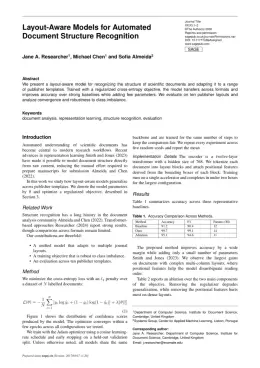
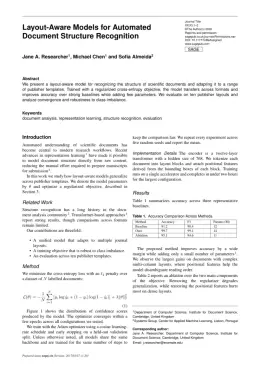
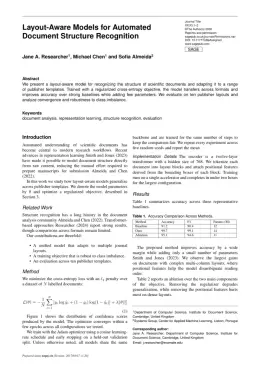
SAGE

Psychology and Developing Societies Template

Write in a clean editor, then format for Psychology and Developing Societies in one click — DocuGuru applies the official SAGE template with author–year references and exports a submission-ready PDF plus the editable LaTeX source. Free to start.

About the Psychology and Developing Societies format

Psychology and Developing Societies is a peer-reviewed journal published by SAGE, covering Cultural Differences and Values, Community Health and Development, Social Representations and Identity.

PublisherSAGE
Reference styleAuthor–year (Harvard)
Author–year — (Smith, 2023) in the text
Smith, A., Jones, B. and Lee, C. (2023) 'A representative article title', Psychology and Developing Societies, 12(3), pp. 45–58.

Formats any DOI in Psychology and Developing Societies style. No sign-up.

Publishes research inCultural Differences and Values Community Health and Development Social Representations and Identity Academic and Historical Perspectives in Psychology Social and Intergroup Psychology
ISSN0971-3336
Citation impact (2-yr)0.78
h-index40
i10-index190
Total citations6,954
Top institutions publishing hereUniversity of Allahabad
Journal websiteus.sagepub.com
You getA submission-ready PDF and the editable LaTeX source — ready to submit.

Papers published in Psychology and Developing Societies per year

12
2014
14
2015
15
2016
16
2017
13
2018
14
2019
17
2020
15
2021
14
2022
16
2023
10
2024
6
2025

Citation impact of Psychology and Developing Societies by publication year

229
2014
212
2015
220
2016
95
2017
101
2018
126
2019
154
2020
101
2021
54
2022
86
2023
12
2024
2
2025

Citations each year’s papers have accumulated so far — the most recent years are still building up.

Most-cited papers in Psychology and Developing Societies

Body, Psyche, and Culture: The Relationship between Disgust and Morality

Jonathan Haidt, Paul Rozin, Clark McCauley et al. · 1 Mar 1997

"Core disgust" is a food related emotion that is rooted in evolution but is also a cultural product. Seven categories of disgust elicitors have been observed in an American sample. These include food, animals, body products, sexual de viance, body-envelope violations, poor hygiene, and contact with death. In addition, social concerns such as interpersonal contamination…

Changing Methodologies: A Co-constructivist Study of Goal Orientations in Social Interactions

Angela Uchôa Branco, Jaan Valsiner · 1 Mar 1997

In psychology the need for methodological innovation along the lines of the co-constructionist paradigm is emphasised. The model of methodology outlined is a cyclical research process in which goal-oriented thinking and interven tional procedures are used by the investigator in interaction with investigated phenomena. Traditional psychology's concern with variables has led to a sepa ration…

Moderating Influence of Emotional Intelligence on the Link Between Academic Self-efficacy and Achievement of University Students

D. A. Adeyemo · 1 Dec 2007

The study examined the moderating influence of emotional intelligence on the link between academic self-efficacy and achievement among university students. The participants in the study were 300 undergraduate students at the University of Ibadan, Ibadan, Nigeria. Their age ranged between 16.5 years and 30 years with mean age of 19.4 years. Two valid and reliable…

Acculturative Stress and Acculturation A ttitudes Among Indian Immigran ts to the United Sta tes

Ahalya Krishnan, John W. Berry · 1 Sep 1992

The paper investigates the relationship between acculturation experience and accultura tive stress among a group of 76 Asian Indian immigrants living in mid-western United States using Berry et al. 's(1987) model. The most preferred acculturation attitude was found to be one of Integration. Acculturative stress had significant positive relationships with attitudes of Separation and Marginalisation…

Understanding and Managing Multiculturalism: Some Possible Implica tions of Research in Canada

John W. Berry · 1 Mar 1991

This paper outlines the nature of multiculturalism in Canada and examines such psychological constructs as security, contact, similarity and prejudice that have been used to study it. It reviews empirical findings involving the dominant and acculturating groups and weighs the problems and prospects for the policy of multiculturalism in Canada. The implications of this work…

Psychology and Developing Societies template — frequently asked questions

How do I write a paper in the Psychology and Developing Societies format?
In DocuGuru you write your manuscript in a normal editor — no LaTeX setup required — and select the Psychology and Developing Societies template. When you export, DocuGuru compiles the paper into the official SAGE format and hands you a submission-ready PDF along with the editable LaTeX source.
What reference style does Psychology and Developing Societies use?
Psychology and Developing Societies uses Author–year (Harvard) references, shown as author–year markers such as (Smith, 2023) in the text. DocuGuru formats every in-text citation and the reference list in this exact style automatically. A reference appears like this: Smith, A., Jones, B. and Lee, C. (2023) 'A representative article title', Psychology and Developing Societies, 12(3), pp. 45–58.
Do I need to know LaTeX to submit to Psychology and Developing Societies?
No. DocuGuru generates the sagej LaTeX class and compiles the PDF for you in the background, so you get a SAGE-ready Psychology and Developing Societies document without writing any LaTeX. If you do want it, the LaTeX source is included in the export.
Can I import an existing draft into the Psychology and Developing Societies template?
Yes. Paste or upload your current manuscript — Word, LaTeX, Markdown, or plain text — and DocuGuru reflows it into the Psychology and Developing Societies format with correct headings, figures, tables, and author–year citations.
Who publishes Psychology and Developing Societies?
Psychology and Developing Societies is a multidisciplinary journal published by SAGE. DocuGuru's Psychology and Developing Societies template matches SAGE's official submission format.
Can I export a submission-ready Psychology and Developing Societies PDF?
Yes — DocuGuru produces a PDF built with the official Psychology and Developing Societies template (the sagej class) that is ready to submit to SAGE, together with the matching LaTeX source files.
How much does the Psychology and Developing Societies template cost?
You can start writing in the Psychology and Developing Societies template for free. Exporting the final submission-ready Psychology and Developing Societies PDF and LaTeX source is part of DocuGuru's paid plans — see the app for current pricing.

Use the Psychology and Developing Societies template