SAGE

Progress in Rubber Plastics and Recycling Technology Template

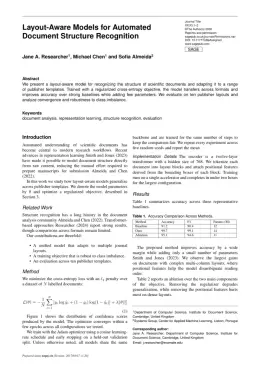
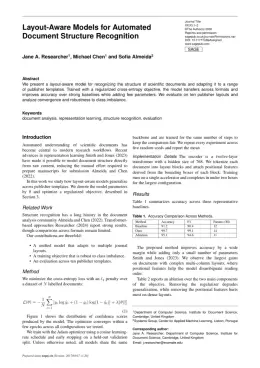
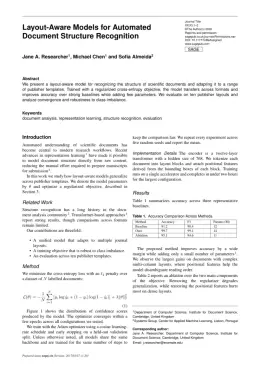
Write in a clean editor, then format for Progress in Rubber Plastics and Recycling Technology in one click — DocuGuru applies the official SAGE template with author–year references and exports a submission-ready PDF plus the editable LaTeX source. Free to start.

About the Progress in Rubber Plastics and Recycling Technology format

Progress in Rubber Plastics and Recycling Technology is a peer-reviewed journal published by SAGE, covering Polymer Nanocomposites and Properties, Polymer crystallization and properties, biodegradable polymer synthesis and properties.

PublisherSAGE
Reference styleAuthor–year (Harvard)
Author–year — (Smith, 2023) in the text
Smith, A., Jones, B. and Lee, C. (2023) 'A representative article title', Progress in Rubber Plastics and Recycling Technology, 12(3), pp. 45–58.

Formats any DOI in Progress in Rubber Plastics and Recycling Technology style. No sign-up.

Publishes research inPolymer Nanocomposites and Properties Polymer crystallization and properties biodegradable polymer synthesis and properties Natural Fiber Reinforced Composites Recycling and Waste Management Techniques
ISSN1477-7606
Citation impact (2-yr)3.08
h-index27
i10-index150
Total citations4,208
Top institutions publishing hereCochin University of Science and Technology
Journal websiteus.sagepub.com
You getA submission-ready PDF and the editable LaTeX source — ready to submit.

Papers published in Progress in Rubber Plastics and Recycling Technology per year

16
2014
17
2015
17
2016
19
2017
19
2018
20
2019
17
2020
21
2021
26
2022
29
2023
33
2024
14
2025

Citation impact of Progress in Rubber Plastics and Recycling Technology by publication year

124
2014
321
2015
316
2016
194
2017
216
2018
370
2019
356
2020
221
2021
173
2022
159
2023
175
2024
18
2025

Citations each year’s papers have accumulated so far — the most recent years are still building up.

Most-cited papers in Progress in Rubber Plastics and Recycling Technology

Biodegradation of Low Density Polyethylene (Ldpe) by Mangrove Fungi from the Red Sea Coast

Fuád Ameén, Mohammed Moslem, Sarfaraz Hadi et al. · 1 May 2015

Forty five fungal isolates belonging to 13 genera were derived from tidal water, floating debris, and sediment collected from mangrove stands on the Red Sea coast of Saudi Arabia. Six of these isolates and their consortium were found to be able to grow in association with low density polyethylene (LDPE) film under in vitro conditions…

Application of Polymer Based Composite Materials in Transportation

Anna G. Koniuszewska, J. W. Kaczmar · 1 Feb 2016

The purpose of this paper is to present the latest applications of fibre-reinforced polymer matrix composites described on exemplary applications. It contains the description of various examples, which were classified into the following categories: aerospace, automotive, marine, military and sport and leisure industry.

Rubber–rubber blends: A critical review

Abitha Vayyaprontavida Kaliyathan, KM Varghese, A. Sreekumaran Nair et al. · 26 Dec 2019

The blending of different rubbers is one of the effective methods to achieve required performance properties in their final products. This article reviews the thermodynamic considerations of rubber–rubber blends and their filled systems. Factors affecting the rubber blend morphology (i.e. distribution mechanism of fillers, curatives and other compounding ingredients) and preparation techniques for rubber–rubber blends…

Current options for characterizing, sorting, and recycling polymeric waste

Daniel José da Silva, Hélio Wiebeck · 15 Apr 2020

Several researches and technologies on polymer recycling have been driven and justified by the uncontrolled and crescent polymer waste generation in the world. Herein, a critical and concise review on the recent and well-established recycling practices for polymer waste is presented, taking into account not only thermoplastics (or plastics) but also thermosets and elastomers. Moreover,…

Recycling of Expanded Polystyrene from Packaging

María Dolores Samper, David García Sanoguera, F. Parres et al. · 1 May 2010

Expanded polystyrene (EPS) is a commonly used polymer in the packaging industry. The great importance of EPS recovery is related to the material's short service life and the high volume of EPS waste. The aim of the present work was to reduce the volume of waste by its mechanical milling and crushing and subsequent reintroduction…

Progress in Rubber Plastics and Recycling Technology template — frequently asked questions

How do I write a paper in the Progress in Rubber Plastics and Recycling Technology format?
In DocuGuru you write your manuscript in a normal editor — no LaTeX setup required — and select the Progress in Rubber Plastics and Recycling Technology template. When you export, DocuGuru compiles the paper into the official SAGE format and hands you a submission-ready PDF along with the editable LaTeX source.
What reference style does Progress in Rubber Plastics and Recycling Technology use?
Progress in Rubber Plastics and Recycling Technology uses Author–year (Harvard) references, shown as author–year markers such as (Smith, 2023) in the text. DocuGuru formats every in-text citation and the reference list in this exact style automatically. A reference appears like this: Smith, A., Jones, B. and Lee, C. (2023) 'A representative article title', Progress in Rubber Plastics and Recycling Technology, 12(3), pp. 45–58.
Do I need to know LaTeX to submit to Progress in Rubber Plastics and Recycling Technology?
No. DocuGuru generates the sagej LaTeX class and compiles the PDF for you in the background, so you get a SAGE-ready Progress in Rubber Plastics and Recycling Technology document without writing any LaTeX. If you do want it, the LaTeX source is included in the export.
Can I import an existing draft into the Progress in Rubber Plastics and Recycling Technology template?
Yes. Paste or upload your current manuscript — Word, LaTeX, Markdown, or plain text — and DocuGuru reflows it into the Progress in Rubber Plastics and Recycling Technology format with correct headings, figures, tables, and author–year citations.
Who publishes Progress in Rubber Plastics and Recycling Technology?
Progress in Rubber Plastics and Recycling Technology is a multidisciplinary journal published by SAGE. DocuGuru's Progress in Rubber Plastics and Recycling Technology template matches SAGE's official submission format.
Can I export a submission-ready Progress in Rubber Plastics and Recycling Technology PDF?
Yes — DocuGuru produces a PDF built with the official Progress in Rubber Plastics and Recycling Technology template (the sagej class) that is ready to submit to SAGE, together with the matching LaTeX source files.
How much does the Progress in Rubber Plastics and Recycling Technology template cost?
You can start writing in the Progress in Rubber Plastics and Recycling Technology template for free. Exporting the final submission-ready Progress in Rubber Plastics and Recycling Technology PDF and LaTeX source is part of DocuGuru's paid plans — see the app for current pricing.

Use the Progress in Rubber Plastics and Recycling Technology template