SAGE

Progress in Reaction Kinetics and Mechanism Template

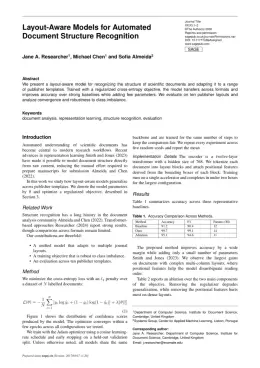
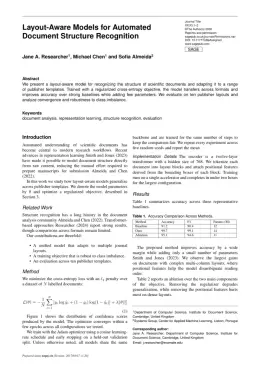
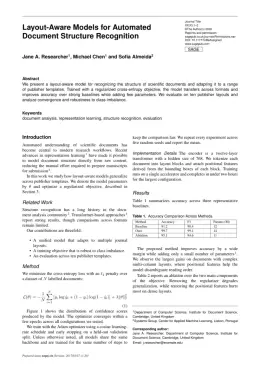
Write in a clean editor, then format for Progress in Reaction Kinetics and Mechanism in one click — DocuGuru applies the official SAGE template with author–year references and exports a submission-ready PDF plus the editable LaTeX source. Free to start.

About the Progress in Reaction Kinetics and Mechanism format

Progress in Reaction Kinetics and Mechanism is a peer-reviewed journal published by SAGE, covering Metal complexes synthesis and properties, Advanced Chemical Physics Studies, Catalytic Processes in Materials Science.

PublisherSAGE
Reference styleAuthor–year (Harvard)
Author–year — (Smith, 2023) in the text
Smith, A., Jones, B. and Lee, C. (2023) 'A representative article title', Progress in Reaction Kinetics and Mechanism, 12(3), pp. 45–58.

Formats any DOI in Progress in Reaction Kinetics and Mechanism style. No sign-up.

Publishes research inMetal complexes synthesis and properties Advanced Chemical Physics Studies Catalytic Processes in Materials Science Free Radicals and Antioxidants Chemical Reaction Mechanisms
Papers published last year≈25
ISSN0079-6743
Citation impact (2-yr)5.37
h-index29
i10-index111
Total citations4,294
Open accessYes
Top institutions publishing hereFerdowsi University of Mashhad
Journal websiteus.sagepub.com
You getA submission-ready PDF and the editable LaTeX source — ready to submit.

Most-cited papers in Progress in Reaction Kinetics and Mechanism

Radical Pairs in Solution

Jonathan Woodward · 1 Sep 2002

Radical pairs (RPs) are important reaction intermediates generated whenever two radicals encounter one another, a bond is cleaved homolytically or electron transfer between non-radical species takes place. The concept of a radical pair as a reaction intermediate is introduced and developed through simple pictorial analogies, indicating how RP behaviour is governed by interplay of spin…

Understanding the rate-limiting step adsorption kinetics onto biomaterials for mechanism adsorption control

Sahmoune Mohamed Nasser, Moussa Abbas, M. Trari · 1 Jan 2024

Biomaterials are a class of porous materials that have been widely exploited over the past two decades. However, the implications of controlling adsorption by rate-limiting steps are still not adequately established. Identifying the rate-limiting step is a promising approach for the design of adsorption systems. In this review, we study in detail the rate-limiting step…

Mechanism and Phenomenology of an Oscillating Chemical Reaction

Annette F. Taylor · 1 Dec 2002

Chemical reactions, which are far from equilibrium, are capable of displaying oscillations in species concentrations and hence in colour, electrode potential, pH and/or temperature. The oscillations arise from the interplay between positive and negative kinetic feedback. Mechanisms for such reactions are presented, along with the rich phenomenology that these systems exhibit, from complex oscillations and…

Kinetic Isotope Effects as Probes for Hydrogen Tunneling, Coupled Motion and Dynamics Contributions to Enzyme Catalysis

Amnon Kohen · 1 Jun 2003

Since the early days of enzymology attempts have been made to deconvolute the various contributions of physical phenomena to enzyme catalysis. Here we present experimental and theoretical studies that examine the possible role of hydrogen tunneling, coupled motion, and enzyme dynamics in catalysis. In this review, we first introduce basic concepts of enzyme catalysis from…

S-Nitrosothiols: Materials, Reactivity and Mechanisms

Konrad Szaciłowski, Zofia Stasicka · 1 Mar 2001

The article provides a comprehensive view of S-nitrosothiols, chemical behaviour, the pathways leading to their synthesis, their spectral properties, analytical methods of detection and determination, chemical and photochemical reactivity, kinetic aspects and suggested mechanisms. The structure parameters of S-nitrosothiols and the parent thiols are analysed with respect to their effect on the strengthening or weakening…

Progress in Reaction Kinetics and Mechanism template — frequently asked questions

How do I write a paper in the Progress in Reaction Kinetics and Mechanism format?
In DocuGuru you write your manuscript in a normal editor — no LaTeX setup required — and select the Progress in Reaction Kinetics and Mechanism template. When you export, DocuGuru compiles the paper into the official SAGE format and hands you a submission-ready PDF along with the editable LaTeX source.
What reference style does Progress in Reaction Kinetics and Mechanism use?
Progress in Reaction Kinetics and Mechanism uses Author–year (Harvard) references, shown as author–year markers such as (Smith, 2023) in the text. DocuGuru formats every in-text citation and the reference list in this exact style automatically. A reference appears like this: Smith, A., Jones, B. and Lee, C. (2023) 'A representative article title', Progress in Reaction Kinetics and Mechanism, 12(3), pp. 45–58.
Do I need to know LaTeX to submit to Progress in Reaction Kinetics and Mechanism?
No. DocuGuru generates the sagej LaTeX class and compiles the PDF for you in the background, so you get a SAGE-ready Progress in Reaction Kinetics and Mechanism document without writing any LaTeX. If you do want it, the LaTeX source is included in the export.
Can I import an existing draft into the Progress in Reaction Kinetics and Mechanism template?
Yes. Paste or upload your current manuscript — Word, LaTeX, Markdown, or plain text — and DocuGuru reflows it into the Progress in Reaction Kinetics and Mechanism format with correct headings, figures, tables, and author–year citations.
Who publishes Progress in Reaction Kinetics and Mechanism?
Progress in Reaction Kinetics and Mechanism is a multidisciplinary journal published by SAGE. DocuGuru's Progress in Reaction Kinetics and Mechanism template matches SAGE's official submission format.
Can I export a submission-ready Progress in Reaction Kinetics and Mechanism PDF?
Yes — DocuGuru produces a PDF built with the official Progress in Reaction Kinetics and Mechanism template (the sagej class) that is ready to submit to SAGE, together with the matching LaTeX source files.
How much does the Progress in Reaction Kinetics and Mechanism template cost?
You can start writing in the Progress in Reaction Kinetics and Mechanism template for free. Exporting the final submission-ready Progress in Reaction Kinetics and Mechanism PDF and LaTeX source is part of DocuGuru's paid plans — see the app for current pricing.

Use the Progress in Reaction Kinetics and Mechanism template