SAGE

Progress in Environmental Geography Template

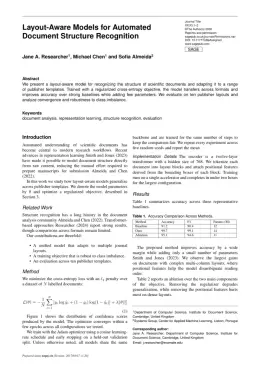
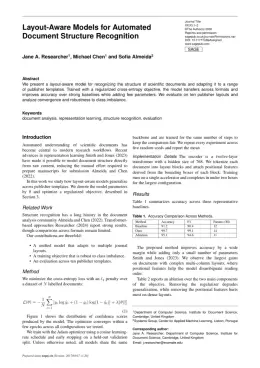
Write in a clean editor, then format for Progress in Environmental Geography in one click — DocuGuru applies the official SAGE template with author–year references and exports a submission-ready PDF plus the editable LaTeX source. Free to start.

About the Progress in Environmental Geography format

Progress in Environmental Geography is a peer-reviewed journal published by SAGE, covering Geographies of human-animal interactions, Water Governance and Infrastructure, Sustainability and Climate Change Governance.

PublisherSAGE
Reference styleAuthor–year (Harvard)
Author–year — (Smith, 2023) in the text
Smith, A., Jones, B. and Lee, C. (2023) 'A representative article title', Progress in Environmental Geography, 12(3), pp. 45–58.

Formats any DOI in Progress in Environmental Geography style. No sign-up.

Publishes research inGeographies of human-animal interactions Water Governance and Infrastructure Sustainability and Climate Change Governance Climate Change, Adaptation, Migration Environmental Justice and Health Disparities
ISSN2753-9687
Citation impact (2-yr)3.78
h-index16
i10-index25
Total citations884
Top institutions publishing hereUniversity of Cambridge
Journal websitejournals.sagepub.com
You getA submission-ready PDF and the editable LaTeX source — ready to submit.

Papers published in Progress in Environmental Geography per year

1
2021
8
2022
17
2023
20
2024
30
2025

Citation impact of Progress in Environmental Geography by publication year

3
2021
334
2022
253
2023
187
2024
71
2025

Citations each year’s papers have accumulated so far — the most recent years are still building up.

Most-cited papers in Progress in Environmental Geography

Digital ecologies: Materialities, encounters, governance

Jonathon Turnbull, Adam Searle, Oscar Hartman Davies et al. · 26 Dec 2022

Digital technologies increasingly mediate relations between humans and nonhumans in a range of contexts including environmental governance, surveillance, and entertainment. Combining approaches from more-than-human and digital geographies, we proffer ‘digital ecologies’ as an analytical framework for examining digitally-mediated human–nonhuman entanglement. We identify entanglement as a compelling basis from which to articulate and critique digitally-mediated relations…

Reworking the political in digital forests: The cosmopolitics of socio-technical worlds

Jennifer Gabrys, Michelle Westerlaken, Danilo Urzedo et al. · 12 Aug 2022

Forests are increasingly central to policies and initiatives to address global environmental change. Digital technologies have become crucial components of these projects as the tools and systems that would monitor and manage forests for storing carbon, preserving biodiversity, and providing ecosystem services. Historically, technologies have been instrumental in forming forests as spaces of conservation, extraction,…

Waterscapes and hydrosocial territories: Thinking space in political ecologies of water

Silvia Flaminio, Gaële Rouillé-Kielo, Selin Le Visage · 3 Jul 2022

Over the past two decades, ‘waterscape’ and ‘hydrosocial territory’ have gained momentum in political ecologies of water. These concepts explore the material outcomes of the interplay of social and biophysical processes by building on two different core concepts of geography (‘landscape’ and ‘territory’). Relying on a quantitative and qualitative analysis of a corpus comprising 113…

An emerging governmentality of climate change loss and damage

Guy Jackson, Alicia N’Guetta, Salvatore Paolo De Rosa et al. · 11 Jan 2023

Loss and damage is the “third pillar” of international climate governance alongside mitigation and adaptation. When mitigation and adaptation fail, losses and damages occur. Scholars have been reacting to international political discourse centred around governing actual or potential severe losses and damages from climate change. Large gaps exist in relation to understanding the underlying power…

Between monitoring and surveillance: Geographies of emerging drone technologies in contemporary conservation

Naomi Millner, B. J. Newport, Chris Sandbrook et al. · 4 Feb 2024

Conservation has employed technologies for monitoring and visual capture since its inception in the nineteenth century. Since then, the capacities of conservation technologies have developed considerably, affording a wide range of data relating to ecological change and biodiversity loss. However, new technologies introduce fresh ethical and political issues into environmental protection, especially as they can…

Progress in Environmental Geography template — frequently asked questions

How do I write a paper in the Progress in Environmental Geography format?
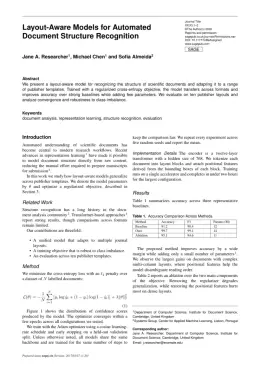
In DocuGuru you write your manuscript in a normal editor — no LaTeX setup required — and select the Progress in Environmental Geography template. When you export, DocuGuru compiles the paper into the official SAGE format and hands you a submission-ready PDF along with the editable LaTeX source.
What reference style does Progress in Environmental Geography use?
Progress in Environmental Geography uses Author–year (Harvard) references, shown as author–year markers such as (Smith, 2023) in the text. DocuGuru formats every in-text citation and the reference list in this exact style automatically. A reference appears like this: Smith, A., Jones, B. and Lee, C. (2023) 'A representative article title', Progress in Environmental Geography, 12(3), pp. 45–58.
Do I need to know LaTeX to submit to Progress in Environmental Geography?
No. DocuGuru generates the sagej LaTeX class and compiles the PDF for you in the background, so you get a SAGE-ready Progress in Environmental Geography document without writing any LaTeX. If you do want it, the LaTeX source is included in the export.
Can I import an existing draft into the Progress in Environmental Geography template?
Yes. Paste or upload your current manuscript — Word, LaTeX, Markdown, or plain text — and DocuGuru reflows it into the Progress in Environmental Geography format with correct headings, figures, tables, and author–year citations.
Who publishes Progress in Environmental Geography?
Progress in Environmental Geography is a multidisciplinary journal published by SAGE. DocuGuru's Progress in Environmental Geography template matches SAGE's official submission format.
Can I export a submission-ready Progress in Environmental Geography PDF?
Yes — DocuGuru produces a PDF built with the official Progress in Environmental Geography template (the sagej class) that is ready to submit to SAGE, together with the matching LaTeX source files.
How much does the Progress in Environmental Geography template cost?
You can start writing in the Progress in Environmental Geography template for free. Exporting the final submission-ready Progress in Environmental Geography PDF and LaTeX source is part of DocuGuru's paid plans — see the app for current pricing.
Use the Progress in Environmental Geography template