SAGE

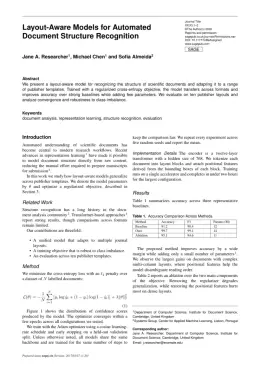
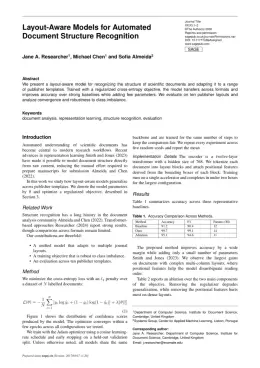
Nuclear Receptor Signaling Template

Write in a clean editor, then format for Nuclear Receptor Signaling in one click — DocuGuru applies the official SAGE template with author–year references and exports a submission-ready PDF plus the editable LaTeX source. Free to start.

About the Nuclear Receptor Signaling format

Nuclear Receptor Signaling is a peer-reviewed journal published by SAGE, covering Estrogen and related hormone effects, Retinoids in leukemia and cellular processes, Genomics and Chromatin Dynamics.

PublisherSAGE
Reference styleAuthor–year (Harvard)
Author–year — (Smith, 2023) in the text
Smith, A., Jones, B. and Lee, C. (2023) 'A representative article title', Nuclear Receptor Signaling, 12(3), pp. 45–58.

Formats any DOI in Nuclear Receptor Signaling style. No sign-up.

Publishes research inEstrogen and related hormone effects Retinoids in leukemia and cellular processes Genomics and Chromatin Dynamics RNA Research and Splicing Receptor Mechanisms and Signaling
ISSN1550-7629
h-index45
i10-index90
Total citations8,780
Top institutions publishing hereBaylor College of Medicine
Journal websitewww.nursa.org
You getA submission-ready PDF and the editable LaTeX source — ready to submit.

Papers published in Nuclear Receptor Signaling per year

13
2007
10
2008
12
2009
5
2010
2
2011
4
2012
1
2013
6
2014
6
2015
2
2016
3
2018
2
2020

Citation impact of Nuclear Receptor Signaling by publication year

1.1K
2007
1.7K
2008
2K
2009
898
2010
28
2011
282
2012
88
2013
143
2014
313
2015
57
2016
85
2018
4
2020

Citations each year’s papers have accumulated so far — the most recent years are still building up.

Most-cited papers in Nuclear Receptor Signaling

Retinoid-Related Orphan Receptors (RORs): Critical Roles in Development, Immunity, Circadian Rhythm, and Cellular Metabolism

Anton M. Jetten · 1 Jan 2009

The last few years have witnessed a rapid increase in our knowledge of the retinoid-related orphan receptors RORalpha, -beta, and -gamma (NR1F1-3), their mechanism of action, physiological functions, and their potential role in several pathologies. The characterization of ROR-deficient mice and gene expression profiling in particular have provided great insights into the critical functions of…

Quantitative real-time PCR protocol for analysis of nuclear receptor signaling pathways

Angie L. Bookout, David J. Mangelsdorf · 1 Jan 2003

A major goal of the Nuclear Receptor Signaling Atlas (NURSA) is to elucidate the biochemical and physiological roles of nuclear receptors in vivo. Characterizing the tissue expression pattern of individual receptors and their target genes in whole animals under various pharmacological conditions and genotypes is an essential component of this aim. Here we describe a…

The NR4A Subgroup: Immediate Early Response Genes with Pleiotropic Physiological Roles

Megan Maxwell, George E.O. Muscat · 1 Jan 2006

The nuclear hormone receptor (NR) superfamily includes the orphan NR4A subgroup, comprised of Nur77 (NR4A1), Nurr1 (NR4A2) and NOR-1 (NR4A3). These NRs are classified as early response genes, are induced by a diverse range of signals, including fatty acids, stress, growth factors, cytokines, peptide hormones, phorbol esters, neurotransmitters, and physical stimuli (for example magnetic fields,…

PPARα: Energy Combustion, Hypolipidemia, Inflammation and Cancer

Sean R. Pyper, Navin Viswakarma, Songtao Yu et al. · 1 Jan 2010

The peroxisome proliferator-activated receptor alpha (PPARalpha, or NR1C1) is a nuclear hormone receptor activated by a structurally diverse array of synthetic chemicals known as peroxisome proliferators. Endogenous activation of PPARalpha in liver has also been observed in certain gene knockout mouse models of lipid metabolism, implying the existence of enzymes that either generate (synthesize) or…

Function of retinoic acid receptors during embryonic development

Manuel Mark, Norbert B. Ghyselinck, Pierre Chambon · 1 Jan 2009

Retinoids, the active metabolites of vitamin A, regulate complex gene networks involved in vertebrate morphogenesis, growth, cellular differentiation and homeostasis. Studies performed in vitro, using either acellular systems or transfected cells, have shown that retinoid actions are mediated through heterodimers between the RAR and RXR nuclear receptors. However, in vitro studies indicate what is possible,…

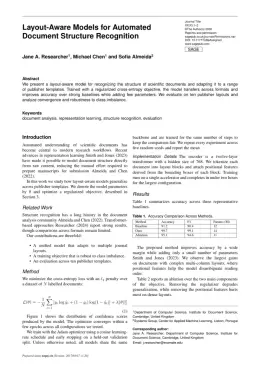
Nuclear Receptor Signaling template — frequently asked questions

How do I write a paper in the Nuclear Receptor Signaling format?
In DocuGuru you write your manuscript in a normal editor — no LaTeX setup required — and select the Nuclear Receptor Signaling template. When you export, DocuGuru compiles the paper into the official SAGE format and hands you a submission-ready PDF along with the editable LaTeX source.
What reference style does Nuclear Receptor Signaling use?
Nuclear Receptor Signaling uses Author–year (Harvard) references, shown as author–year markers such as (Smith, 2023) in the text. DocuGuru formats every in-text citation and the reference list in this exact style automatically. A reference appears like this: Smith, A., Jones, B. and Lee, C. (2023) 'A representative article title', Nuclear Receptor Signaling, 12(3), pp. 45–58.
Do I need to know LaTeX to submit to Nuclear Receptor Signaling?
No. DocuGuru generates the sagej LaTeX class and compiles the PDF for you in the background, so you get a SAGE-ready Nuclear Receptor Signaling document without writing any LaTeX. If you do want it, the LaTeX source is included in the export.
Can I import an existing draft into the Nuclear Receptor Signaling template?
Yes. Paste or upload your current manuscript — Word, LaTeX, Markdown, or plain text — and DocuGuru reflows it into the Nuclear Receptor Signaling format with correct headings, figures, tables, and author–year citations.
Who publishes Nuclear Receptor Signaling?
Nuclear Receptor Signaling is a multidisciplinary journal published by SAGE. DocuGuru's Nuclear Receptor Signaling template matches SAGE's official submission format.
Can I export a submission-ready Nuclear Receptor Signaling PDF?
Yes — DocuGuru produces a PDF built with the official Nuclear Receptor Signaling template (the sagej class) that is ready to submit to SAGE, together with the matching LaTeX source files.
How much does the Nuclear Receptor Signaling template cost?
You can start writing in the Nuclear Receptor Signaling template for free. Exporting the final submission-ready Nuclear Receptor Signaling PDF and LaTeX source is part of DocuGuru's paid plans — see the app for current pricing.
Use the Nuclear Receptor Signaling template