SAGE

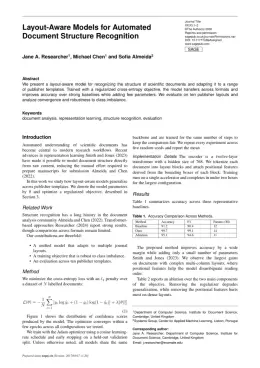
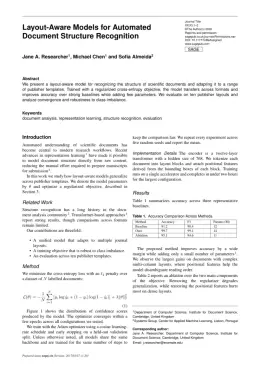
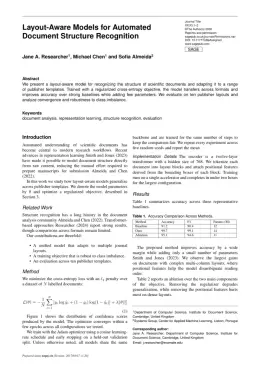
Musicae Scientiae Template

Write in a clean editor, then format for Musicae Scientiae in one click — DocuGuru applies the official SAGE template with author–year references and exports a submission-ready PDF plus the editable LaTeX source. Free to start.

About the Musicae Scientiae format

Musicae Scientiae is a peer-reviewed journal published by SAGE, covering Neuroscience and Music Perception, Diverse Music Education Insights, Music and Audio Processing.

PublisherSAGE
Reference styleAuthor–year (Harvard)
Author–year — (Smith, 2023) in the text
Smith, A., Jones, B. and Lee, C. (2023) 'A representative article title', Musicae Scientiae, 12(3), pp. 45–58.

Formats any DOI in Musicae Scientiae style. No sign-up.

Publishes research inNeuroscience and Music Perception Diverse Music Education Insights Music and Audio Processing Music Therapy and Health Music Technology and Sound Studies
ISSN1029-8649
Citation impact (2-yr)1.48
h-index75
i10-index438
Total citations23,720
Top institutions publishing hereUniversity of Jyväskylä
Journal websitewww.sagepub.com
You getA submission-ready PDF and the editable LaTeX source — ready to submit.

Papers published in Musicae Scientiae per year

32
2014
33
2015
52
2016
46
2017
51
2018
32
2019
31
2020
36
2021
28
2022
38
2023
44
2024
27
2025

Citation impact of Musicae Scientiae by publication year

1.2K
2014
884
2015
1.3K
2016
1.2K
2017
818
2018
686
2019
579
2020
467
2021
343
2022
253
2023
108
2024
29
2025

Citations each year’s papers have accumulated so far — the most recent years are still building up.

Most-cited papers in Musicae Scientiae

Musicality and the intrinsic motive pulse: evidence from human psychobiology and infant communication

Colwyn Trevarthen · 1 Sep 1999

Musicality in human motives, the psycho-biological source of music, is described as a talent inherent in the unique way human beings move, and hence experience their world, their bodies and one another. It originates in the brain images of moving and feeling that generate and guide behaviour in time, with goal-defining purposefulness and creativity. Intelligent…

Emotion perceived and emotion felt: Same or different?

Alf Gabrielsson · 1 Sep 2001

A distinction is made between emotion perception, that is, to perceive emotional expression in music without necessarily being affected oneself, and emotion induction, that is, listeners’ emotional response to music. This distinction is not always observed, neither in everyday conversation about emotions, nor in scientific papers. Empirical studies of emotion perception are briefly reviewed with…

Functions of Music in Everyday Life: An Exploratory Study Using the Experience Sampling Method

John Sloboda, Susan O’Neill, Antonia Ivaldi · 1 Mar 2001

The aim of this exploratory study was to (a) test the viability of the Experience Sampling Method (ESM) as a means of identifying unfolding episodes of everyday musical experience, (b) examine the consistency of situations where music listening occurs by comparing the findings of previous studies involving retrospective data, and (c) investigate the extent to…

Mothers and infants and communicative musicality

Stephen Malloch · 1 Sep 1999

Using music as a model, mother/infant vocalisations are examined using computer-based acoustic analysis. Past research is summarised which demonstrates the importance of both parties in the mother-infant dyad. Methods are then introduced for analysing pulse, quality and narrative in mother/infant vocalisations. These three elements comprise “communicative musicality”: those attributes of human communication, which are particularly…

Emotion induction through music: A review of the musical mood induction procedure

Daniel Västfjäll · 1 Sep 2001

This article reviews research showing that music can alter peoples’ moods and emotions. The so called “musical mood induction procedure” (MMIP) relies on music to produce changes in experienced affective processes. The fact that music can have this effect on subjective experience has been utilized to study the effect of mood on cognitive processes and…

Musicae Scientiae template — frequently asked questions

How do I write a paper in the Musicae Scientiae format?
In DocuGuru you write your manuscript in a normal editor — no LaTeX setup required — and select the Musicae Scientiae template. When you export, DocuGuru compiles the paper into the official SAGE format and hands you a submission-ready PDF along with the editable LaTeX source.
What reference style does Musicae Scientiae use?
Musicae Scientiae uses Author–year (Harvard) references, shown as author–year markers such as (Smith, 2023) in the text. DocuGuru formats every in-text citation and the reference list in this exact style automatically. A reference appears like this: Smith, A., Jones, B. and Lee, C. (2023) 'A representative article title', Musicae Scientiae, 12(3), pp. 45–58.
Do I need to know LaTeX to submit to Musicae Scientiae?
No. DocuGuru generates the sagej LaTeX class and compiles the PDF for you in the background, so you get a SAGE-ready Musicae Scientiae document without writing any LaTeX. If you do want it, the LaTeX source is included in the export.
Can I import an existing draft into the Musicae Scientiae template?
Yes. Paste or upload your current manuscript — Word, LaTeX, Markdown, or plain text — and DocuGuru reflows it into the Musicae Scientiae format with correct headings, figures, tables, and author–year citations.
Who publishes Musicae Scientiae?
Musicae Scientiae is a multidisciplinary journal published by SAGE. DocuGuru's Musicae Scientiae template matches SAGE's official submission format.
Can I export a submission-ready Musicae Scientiae PDF?
Yes — DocuGuru produces a PDF built with the official Musicae Scientiae template (the sagej class) that is ready to submit to SAGE, together with the matching LaTeX source files.
How much does the Musicae Scientiae template cost?
You can start writing in the Musicae Scientiae template for free. Exporting the final submission-ready Musicae Scientiae PDF and LaTeX source is part of DocuGuru's paid plans — see the app for current pricing.

Use the Musicae Scientiae template