
513 citations
Cite
SaveGo to paper →
SAGE
Journal of Visual Impairment & Blindness Template
Write in a clean editor, then format for Journal of Visual Impairment & Blindness in one click — DocuGuru applies the official SAGE template with author–year references and exports a submission-ready PDF plus the editable LaTeX source. Free to start.
About the Journal of Visual Impairment & Blindness format
Journal of Visual Impairment & Blindness is a peer-reviewed journal published by SAGE, covering Tactile and Sensory Interactions, Digital Accessibility for Disabilities, Human auditory perception and evaluation.
| Publisher | SAGE |
|---|---|
| Reference style | Author–year (Harvard) Author–year — (Smith, 2023) in the text Smith, A., Jones, B. and Lee, C. (2023) 'A representative article title', Journal of Visual Impairment & Blindness, 12(3), pp. 45–58.
Formats any DOI in Journal of Visual Impairment & Blindness style. No sign-up. |
| Publishes research in | Tactile and Sensory Interactions Digital Accessibility for Disabilities Human auditory perception and evaluation Diverse Scientific and Economic Studies Ophthalmology and Visual Impairment Studies |
| ISSN | 0145-482X |
| Citation impact (2-yr) | 0.65 |
| h-index | 74 |
| i10-index | 1,301 |
| Total citations | 46,346 |
| Top institutions publishing here | American Foundation for the Blind |
| Journal website | us.sagepub.com |
| You get | A submission-ready PDF and the editable LaTeX source — ready to submit. |
Papers published in Journal of Visual Impairment & Blindness per year
Citation impact of Journal of Visual Impairment & Blindness by publication year
Citations each year’s papers have accumulated so far — the most recent years are still building up.
Most-cited papers in Journal of Visual Impairment & Blindness
353 citations
Cite
SaveGo to paper →
Evaluating the cognitive status of individuals who are visually impaired is limited by the design of the test that is used. This article presents data on the sensitivity and specificity of the version of the Montreal Cognitive Assessment for people who are visually impaired. The original validation data were reanalyzed, excluding the five visual items.…
242 citations
Cite
SaveGo to paper →
165 citations
Cite
SaveGo to paper →
This survey of 25 visually impaired children aged 10–12 and their parents investigated the value the parents placed on their children's physical activity and the barriers to physical activity that the children faced. The results revealed that as vision loss increased, parents’ expectations for their children's ability to be physically active decreased, as did the…
164 citations
Cite
SaveGo to paper →
Related journal templates
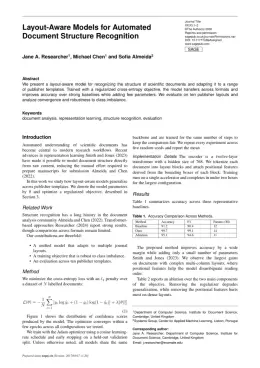
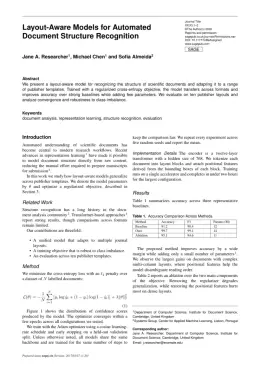
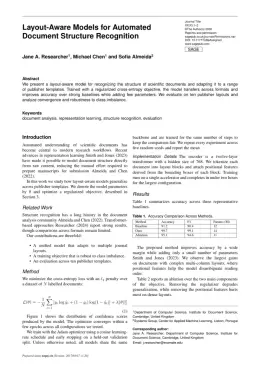
Journal of Visual Impairment & Blindness template — frequently asked questions
How do I write a paper in the Journal of Visual Impairment & Blindness format?
In DocuGuru you write your manuscript in a normal editor — no LaTeX setup required — and select the Journal of Visual Impairment & Blindness template. When you export, DocuGuru compiles the paper into the official SAGE format and hands you a submission-ready PDF along with the editable LaTeX source.
What reference style does Journal of Visual Impairment & Blindness use?
Journal of Visual Impairment & Blindness uses Author–year (Harvard) references, shown as author–year markers such as (Smith, 2023) in the text. DocuGuru formats every in-text citation and the reference list in this exact style automatically. A reference appears like this: Smith, A., Jones, B. and Lee, C. (2023) 'A representative article title', Journal of Visual Impairment & Blindness, 12(3), pp. 45–58.
Do I need to know LaTeX to submit to Journal of Visual Impairment & Blindness?
No. DocuGuru generates the sagej LaTeX class and compiles the PDF for you in the background, so you get a SAGE-ready Journal of Visual Impairment & Blindness document without writing any LaTeX. If you do want it, the LaTeX source is included in the export.
Can I import an existing draft into the Journal of Visual Impairment & Blindness template?
Yes. Paste or upload your current manuscript — Word, LaTeX, Markdown, or plain text — and DocuGuru reflows it into the Journal of Visual Impairment & Blindness format with correct headings, figures, tables, and author–year citations.
Who publishes Journal of Visual Impairment & Blindness?
Journal of Visual Impairment & Blindness is a multidisciplinary journal published by SAGE. DocuGuru's Journal of Visual Impairment & Blindness template matches SAGE's official submission format.
Can I export a submission-ready Journal of Visual Impairment & Blindness PDF?
Yes — DocuGuru produces a PDF built with the official Journal of Visual Impairment & Blindness template (the sagej class) that is ready to submit to SAGE, together with the matching LaTeX source files.
How much does the Journal of Visual Impairment & Blindness template cost?
You can start writing in the Journal of Visual Impairment & Blindness template for free. Exporting the final submission-ready Journal of Visual Impairment & Blindness PDF and LaTeX source is part of DocuGuru's paid plans — see the app for current pricing.