SAGE

Journal of Rehabilitation and Assistive Technologies Engineering Template

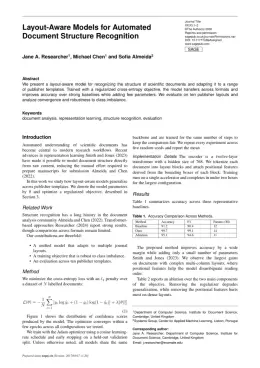
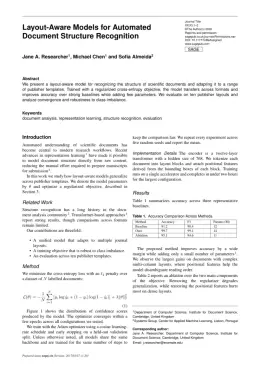
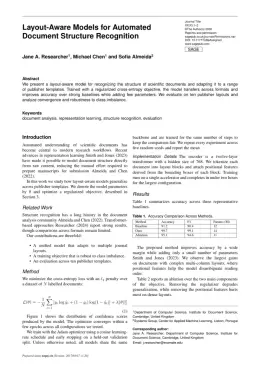
Write in a clean editor, then format for Journal of Rehabilitation and Assistive Technologies Engineering in one click — DocuGuru applies the official SAGE template with author–year references and exports a submission-ready PDF plus the editable LaTeX source. Free to start.

About the Journal of Rehabilitation and Assistive Technologies Engineering format

Journal of Rehabilitation and Assistive Technologies Engineering is a peer-reviewed journal published by SAGE, covering Stroke Rehabilitation and Recovery, Prosthetics and Rehabilitation Robotics, Muscle activation and electromyography studies.

PublisherSAGE
Reference styleAuthor–year (Harvard)
Author–year — (Smith, 2023) in the text
Smith, A., Jones, B. and Lee, C. (2023) 'A representative article title', Journal of Rehabilitation and Assistive Technologies Engineering, 12(3), pp. 45–58.

Formats any DOI in Journal of Rehabilitation and Assistive Technologies Engineering style. No sign-up.

Publishes research inStroke Rehabilitation and Recovery Prosthetics and Rehabilitation Robotics Muscle activation and electromyography studies Balance, Gait, and Falls Prevention Cerebral Palsy and Movement Disorders
ISSN2055-6683
Citation impact (2-yr)2.07
h-index35
i10-index133
Total citations4,387
Open accessYes
Top institutions publishing hereUniversity of Toronto
Journal websiteus.sagepub.com
You getA submission-ready PDF and the editable LaTeX source — ready to submit.

Papers published in Journal of Rehabilitation and Assistive Technologies Engineering per year

1
2014
3
2015
21
2016
30
2017
42
2018
31
2019
37
2020
32
2021
40
2022
26
2023
29
2024
30
2025

Citation impact of Journal of Rehabilitation and Assistive Technologies Engineering by publication year

0
2014
30
2015
330
2016
714
2017
690
2018
745
2019
697
2020
373
2021
504
2022
128
2023
103
2024
38
2025

Citations each year’s papers have accumulated so far — the most recent years are still building up.

Most-cited papers in Journal of Rehabilitation and Assistive Technologies Engineering

Head-mounted eye gaze tracking devices: An overview of modern devices and recent advances

Matteo Cognolato, Manfredo Atzori, Henning Müller · 1 Jan 2018

An increasing number of wearable devices performing eye gaze tracking have been released in recent years. Such devices can lead to unprecedented opportunities in many applications. However, staying updated regarding the continuous advances and gathering the technical features that allow to choose the best device for a specific application is not trivial. The last eye…

Wearable technologies for active living and rehabilitation: Current research challenges and future opportunities

Mary M Rodgers, Gad Alon, Vinay M. Pai et al. · 1 Jan 2019

This paper presents some recent developments in the field of wearable sensors and systems that are relevant to rehabilitation and provides examples of systems with evidence supporting their effectiveness for rehabilitation. A discussion of current challenges and future developments for selected systems is followed by suggestions for future directions needed to advance towards wider deployment…

Designing wearable technologies for users with disabilities: Accessibility, usability, and connectivity factors

Nathan W. Moon, Paul Baker, Kenneth Goughnour · 1 Jan 2019

The increasing availability of wearable devices (wearables), "smart" home, and other next-generation wirelessly connected devices for work, home, and leisure presents opportunities and challenges for users with disabilities. As augmentative tools for engagement, control, and information, these technologies should not only be usable, but also be accessible and inclusive for people with disabilities. In order…

Virtual reality to promote wellbeing in persons with dementia: A scoping review

Lora Appel, Suad Ali, Tanya Narag et al. · 1 Jan 2021

Virtual Reality (VR) technologies have increasingly been considered potentially valuable tools in dementia-related research and could serve as non-pharmacological therapy to improve quality of life (QoL) and wellbeing for persons with dementia (PwD). In this scoping review, we summarize peer-reviewed articles published up to Jan-21, 2021, on the use of VR to promote wellbeing in…

Preliminary design and control of a soft exosuit for assisting elbow movements and hand grasping in activities of daily living

Michele Xiloyannis, Leonardo Cappello, Khanh D Binh et al. · 1 Jan 2017

The development of a portable assistive device to aid patients affected by neuromuscular disorders has been the ultimate goal of assistive robots since the late 1960s. Despite significant advances in recent decades, traditional rigid exoskeletons are constrained by limited portability, safety, ergonomics, autonomy and, most of all, cost. In this study, we present the design…

Journal of Rehabilitation and Assistive Technologies Engineering template — frequently asked questions

How do I write a paper in the Journal of Rehabilitation and Assistive Technologies Engineering format?
In DocuGuru you write your manuscript in a normal editor — no LaTeX setup required — and select the Journal of Rehabilitation and Assistive Technologies Engineering template. When you export, DocuGuru compiles the paper into the official SAGE format and hands you a submission-ready PDF along with the editable LaTeX source.
What reference style does Journal of Rehabilitation and Assistive Technologies Engineering use?
Journal of Rehabilitation and Assistive Technologies Engineering uses Author–year (Harvard) references, shown as author–year markers such as (Smith, 2023) in the text. DocuGuru formats every in-text citation and the reference list in this exact style automatically. A reference appears like this: Smith, A., Jones, B. and Lee, C. (2023) 'A representative article title', Journal of Rehabilitation and Assistive Technologies Engineering, 12(3), pp. 45–58.
Do I need to know LaTeX to submit to Journal of Rehabilitation and Assistive Technologies Engineering?
No. DocuGuru generates the sagej LaTeX class and compiles the PDF for you in the background, so you get a SAGE-ready Journal of Rehabilitation and Assistive Technologies Engineering document without writing any LaTeX. If you do want it, the LaTeX source is included in the export.
Can I import an existing draft into the Journal of Rehabilitation and Assistive Technologies Engineering template?
Yes. Paste or upload your current manuscript — Word, LaTeX, Markdown, or plain text — and DocuGuru reflows it into the Journal of Rehabilitation and Assistive Technologies Engineering format with correct headings, figures, tables, and author–year citations.
Who publishes Journal of Rehabilitation and Assistive Technologies Engineering?
Journal of Rehabilitation and Assistive Technologies Engineering is a multidisciplinary journal published by SAGE. DocuGuru's Journal of Rehabilitation and Assistive Technologies Engineering template matches SAGE's official submission format.
Can I export a submission-ready Journal of Rehabilitation and Assistive Technologies Engineering PDF?
Yes — DocuGuru produces a PDF built with the official Journal of Rehabilitation and Assistive Technologies Engineering template (the sagej class) that is ready to submit to SAGE, together with the matching LaTeX source files.
How much does the Journal of Rehabilitation and Assistive Technologies Engineering template cost?
You can start writing in the Journal of Rehabilitation and Assistive Technologies Engineering template for free. Exporting the final submission-ready Journal of Rehabilitation and Assistive Technologies Engineering PDF and LaTeX source is part of DocuGuru's paid plans — see the app for current pricing.
Use the Journal of Rehabilitation and Assistive Technologies Engineering template