SAGE

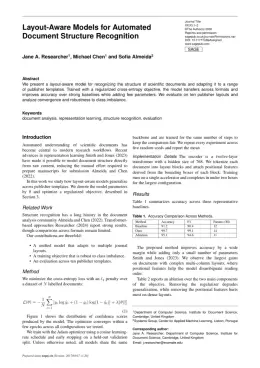
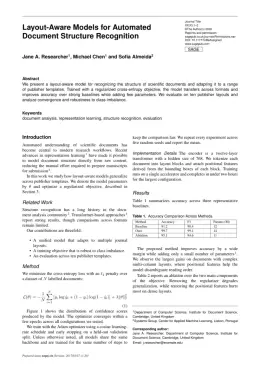
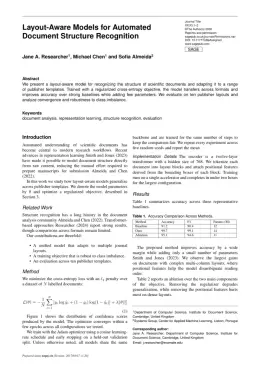
Human Systems Therapy Culture and Attachments Template

Write in a clean editor, then format for Human Systems Therapy Culture and Attachments in one click — DocuGuru applies the official SAGE template with author–year references and exports a submission-ready PDF plus the editable LaTeX source. Free to start.

About the Human Systems Therapy Culture and Attachments format

Human Systems Therapy Culture and Attachments is a peer-reviewed journal published by SAGE, covering Counseling, Therapy, and Family Dynamics, Attachment and Relationship Dynamics, Psychotherapy Techniques and Applications.

PublisherSAGE
Reference styleAuthor–year (Harvard)
Author–year — (Smith, 2023) in the text
Smith, A., Jones, B. and Lee, C. (2023) 'A representative article title', Human Systems Therapy Culture and Attachments, 12(3), pp. 45–58.

Formats any DOI in Human Systems Therapy Culture and Attachments style. No sign-up.

Publishes research inCounseling, Therapy, and Family Dynamics Attachment and Relationship Dynamics Psychotherapy Techniques and Applications Family and Disability Support Research Child Abuse and Trauma
ISSN2634-4041
Citation impact (2-yr)1.17
h-index9
i10-index8
Total citations450
Top institutions publishing hereUniversity of Plymouth
Journal websitejournals.sagepub.com
You getA submission-ready PDF and the editable LaTeX source — ready to submit.

Papers published in Human Systems Therapy Culture and Attachments per year

13
2021
12
2022
9
2023
11
2024
11
2025

Citation impact of Human Systems Therapy Culture and Attachments by publication year

136
2021
242
2022
35
2023
29
2024
3
2025

Citations each year’s papers have accumulated so far — the most recent years are still building up.

Most-cited papers in Human Systems Therapy Culture and Attachments

Towards positions of safe uncertainty

Barry Mason · 4 Mar 2022

This paper explores the place of certainty and uncertainty in therapeutic practice. It suggests that for many, there has been a theoretical shift in the field of family therapy from a first- to a second-order perspective. To remain coherent with this shift in thinking requires a shift in practice in relation to this different way…

Australian children and adolescents with gender dysphoria: Clinical presentations and challenges experienced by a multidisciplinary team and gender service

Kasia Kozlowska, Georgia McClure, Catherine Chudleigh et al. · 1 Feb 2021

This prospective study examines the clinical characteristics of children ( n = 79; 8.42–15.92 years old; 33 biological males and 46 biological females) presenting to a newly established, multidisciplinary Gender Service in New South Wales, Australia, and the challenges faced by the clinicians providing clinical services to these patients and their families. The clinical characteristics…

Staying alive: A 21st century agenda for mental health, child protection and forensic services

P Crittenden, Andrea Landini, Susan J. Spieker · 1 Feb 2021

Mental health treatment, child protection and forensic services for criminality need major reorganisation in conceptualisation and service provision. This need results from the failure of current diagnostic methods, administrative organisations and treatment approaches to reduce the prevalence of mental illness, child maltreatment or criminal behaviour. We propose that defining these problems as individual deficits and…

Negotiating cultural relevance from within therapy conversations

Inés Sametband, Giacomo Chiara, Joaquín Gaete‐Silva et al. · 1 Sep 2023

Culturally-laden understandings permeate all social interactions, including therapy conversations, and have been referred to as cultural background(s) providing context to the task-at-hand. Historically, cultural backgrounds have been conceptualized as separated from the individual, in pictorial or essentialized ways. Therapists training for multicultural competence tend to focus solely on using a-priori knowledge of clients’ cultural background…

Evolving national guidelines for the treatment of children and adolescents with gender dysphoria: International perspectives

Kasia Kozlowska, Geoffrey Ambler, Sophie Dechêne et al. · 2 Nov 2024

From the early years of this century, many Western countries adopted the “Dutch Protocol” as a new medical pathway for treating children and adolescents with childhood-onset gender dysphoria. On this approach, gonadotrophin-releasing hormone agonists (GnRHa) were used to suppress puberty, followed by cross-sex hormones (testosterone or oestrogen). This perspective article traces—in each of the countries…

Human Systems Therapy Culture and Attachments template — frequently asked questions

How do I write a paper in the Human Systems Therapy Culture and Attachments format?
In DocuGuru you write your manuscript in a normal editor — no LaTeX setup required — and select the Human Systems Therapy Culture and Attachments template. When you export, DocuGuru compiles the paper into the official SAGE format and hands you a submission-ready PDF along with the editable LaTeX source.
What reference style does Human Systems Therapy Culture and Attachments use?
Human Systems Therapy Culture and Attachments uses Author–year (Harvard) references, shown as author–year markers such as (Smith, 2023) in the text. DocuGuru formats every in-text citation and the reference list in this exact style automatically. A reference appears like this: Smith, A., Jones, B. and Lee, C. (2023) 'A representative article title', Human Systems Therapy Culture and Attachments, 12(3), pp. 45–58.
Do I need to know LaTeX to submit to Human Systems Therapy Culture and Attachments?
No. DocuGuru generates the sagej LaTeX class and compiles the PDF for you in the background, so you get a SAGE-ready Human Systems Therapy Culture and Attachments document without writing any LaTeX. If you do want it, the LaTeX source is included in the export.
Can I import an existing draft into the Human Systems Therapy Culture and Attachments template?
Yes. Paste or upload your current manuscript — Word, LaTeX, Markdown, or plain text — and DocuGuru reflows it into the Human Systems Therapy Culture and Attachments format with correct headings, figures, tables, and author–year citations.
Who publishes Human Systems Therapy Culture and Attachments?
Human Systems Therapy Culture and Attachments is a multidisciplinary journal published by SAGE. DocuGuru's Human Systems Therapy Culture and Attachments template matches SAGE's official submission format.
Can I export a submission-ready Human Systems Therapy Culture and Attachments PDF?
Yes — DocuGuru produces a PDF built with the official Human Systems Therapy Culture and Attachments template (the sagej class) that is ready to submit to SAGE, together with the matching LaTeX source files.
How much does the Human Systems Therapy Culture and Attachments template cost?
You can start writing in the Human Systems Therapy Culture and Attachments template for free. Exporting the final submission-ready Human Systems Therapy Culture and Attachments PDF and LaTeX source is part of DocuGuru's paid plans — see the app for current pricing.

Use the Human Systems Therapy Culture and Attachments template