SAGE

Hand Template

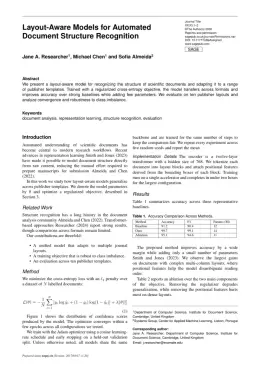
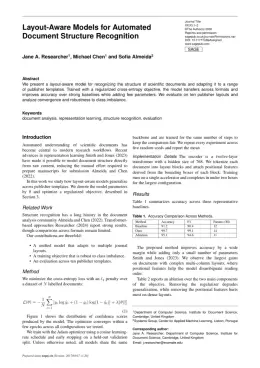
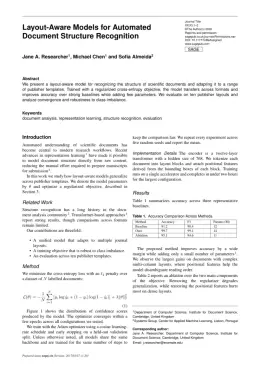
Write in a clean editor, then format for Hand in one click — DocuGuru applies the official SAGE template with author–year references and exports a submission-ready PDF plus the editable LaTeX source. Free to start.

About the Hand format

Hand is a peer-reviewed journal published by SAGE, covering Orthopedic Surgery and Rehabilitation, Elbow and Forearm Trauma Treatment, Peripheral Nerve Disorders.

PublisherSAGE
Reference styleAuthor–year (Harvard)
Author–year — (Smith, 2023) in the text
Smith, A., Jones, B. and Lee, C. (2023) 'A representative article title', Hand, 12(3), pp. 45–58.

Formats any DOI in Hand style. No sign-up.

Publishes research inOrthopedic Surgery and Rehabilitation Elbow and Forearm Trauma Treatment Peripheral Nerve Disorders Bone fractures and treatments Nerve Injury and Rehabilitation
ISSN1558-9447
Citation impact (2-yr)1.48
h-index65
i10-index1,087
Total citations36,855
Top institutions publishing hereMassachusetts General Hospital
Journal websiteus.sagepub.com
You getA submission-ready PDF and the editable LaTeX source — ready to submit.

Papers published in Hand per year

142
2014
56
2015
519
2016
166
2017
167
2018
169
2019
177
2020
171
2021
221
2022
152
2023
170
2024
166
2025

Citation impact of Hand by publication year

3.4K
2014
1.1K
2015
3.7K
2016
3.1K
2017
2.9K
2018
2.3K
2019
1.6K
2020
1.4K
2021
1.2K
2022
592
2023
525
2024
107
2025

Citations each year’s papers have accumulated so far — the most recent years are still building up.

Most-cited papers in Hand

The Epidemiology of Upper Extremity Injuries Presenting to the Emergency Department in the United States

Daan Ootes, Kaj T. A. Lambers, David Ring · 13 Dec 2011

BACKGROUND: The epidemiology of upper extremity injuries presenting to emergency departments in the USA is not well studied. The purpose of this investigation was to estimate the incidence rates of upper extremity injuries presenting to emergency departments. METHODS: The National Electronic Injury Surveillance System (NEISS)-a database of emergency department visits based on a sample of…

Limitations of Conduits in Peripheral Nerve Repairs

Amy M. Moore, Rahul Kasukurthi, Christina K. Magill et al. · 9 Jan 2009

Nerve conduits have emerged as alternatives to autologous nerve grafts, but their use in large-diameter nerve deficits remains untested. We report four patients who underwent repair of large-diameter nerves using absorbable nerve conduits and discuss the failed clinical outcomes. The reported cases demonstrate the importance of evaluating the length, diameter, and function of nerves undergoing…

Early Clinical Outcomes with the Use of Decellularized Nerve Allograft for Repair of Sensory Defects within the Hand

Furkan Erol Karabekmez, Ahmet Duymaz, Steven L. Moran · 2 May 2009

Nerve conduits have become an established option for repair of sensory deficits of up to 2 cm. More recently, decellularized nerve allograft has also been advocated as an option for nerve repair; however, no clinical studies have examined its efficacy for the treatment of sensory nerve defects. The aim of this study was to examine…

Metacarpal Fractures: Treatment and Complications

Kathleen M. Kollitz, Warren C. Hammert, Nicholas B. Vedder et al. · 15 Oct 2013

Metacarpal fractures comprise between 18-44 % of all hand fractures. Non-thumb metacarpals account for around 88 % of all metacarpal fractures, with the fifth finger most commonly involved [19]. The majority of metacarpal fractures are isolated injuries, which are simple, closed, and stable. While many metacarpal fractures do well without surgery, there is a paucity…

A Detailed Cost and Efficiency Analysis of Performing Carpal Tunnel Surgery in the Main Operating Room versus the Ambulatory Setting in Canada

Martin LeBlanc, Janice Lalonde, Donald H. Lalonde · 29 May 2007

BACKGROUND: Our goals were to analyze cost and efficiency of performing carpal tunnel release (CTR) in the main operating room (OR) versus the ambulatory setting, and to document the venue of carpal tunnel surgery practices by plastic surgeons in Canada. METHOD: A detailed analysis of the salaries of nonphysician personnel and materials involved in CTR…

Hand template — frequently asked questions

How do I write a paper in the Hand format?
In DocuGuru you write your manuscript in a normal editor — no LaTeX setup required — and select the Hand template. When you export, DocuGuru compiles the paper into the official SAGE format and hands you a submission-ready PDF along with the editable LaTeX source.
What reference style does Hand use?
Hand uses Author–year (Harvard) references, shown as author–year markers such as (Smith, 2023) in the text. DocuGuru formats every in-text citation and the reference list in this exact style automatically. A reference appears like this: Smith, A., Jones, B. and Lee, C. (2023) 'A representative article title', Hand, 12(3), pp. 45–58.
Do I need to know LaTeX to submit to Hand?
No. DocuGuru generates the sagej LaTeX class and compiles the PDF for you in the background, so you get a SAGE-ready Hand document without writing any LaTeX. If you do want it, the LaTeX source is included in the export.
Can I import an existing draft into the Hand template?
Yes. Paste or upload your current manuscript — Word, LaTeX, Markdown, or plain text — and DocuGuru reflows it into the Hand format with correct headings, figures, tables, and author–year citations.
Who publishes Hand?
Hand is a multidisciplinary journal published by SAGE. DocuGuru's Hand template matches SAGE's official submission format.
Can I export a submission-ready Hand PDF?
Yes — DocuGuru produces a PDF built with the official Hand template (the sagej class) that is ready to submit to SAGE, together with the matching LaTeX source files.
How much does the Hand template cost?
You can start writing in the Hand template for free. Exporting the final submission-ready Hand PDF and LaTeX source is part of DocuGuru's paid plans — see the app for current pricing.

Use the Hand template