SAGE

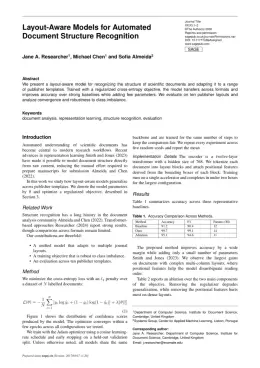
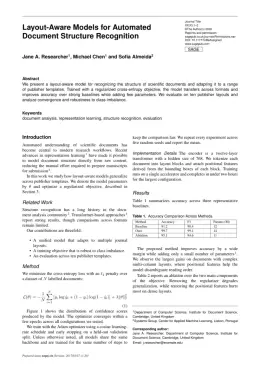
Genes & Cancer Template

Write in a clean editor, then format for Genes & Cancer in one click — DocuGuru applies the official SAGE template with author–year references and exports a submission-ready PDF plus the editable LaTeX source. Free to start.

About the Genes & Cancer format

Genes & Cancer is a peer-reviewed journal published by SAGE, covering Cancer-related Molecular Pathways, Ubiquitin and proteasome pathways, Epigenetics and DNA Methylation.

PublisherSAGE
Reference styleAuthor–year (Harvard)
Author–year — (Smith, 2023) in the text
Smith, A., Jones, B. and Lee, C. (2023) 'A representative article title', Genes & Cancer, 12(3), pp. 45–58.

Formats any DOI in Genes & Cancer style. No sign-up.

Publishes research inCancer-related Molecular Pathways Ubiquitin and proteasome pathways Epigenetics and DNA Methylation RNA modifications and cancer Microtubule and mitosis dynamics
ISSN1947-6019
Citation impact (2-yr)1.25
h-index97
i10-index475
Total citations39,099
Open accessYes
Top institutions publishing hereThe University of Texas MD Anderson Cancer Center
You getA submission-ready PDF and the editable LaTeX source — ready to submit.

Papers published in Genes & Cancer per year

52
2014
52
2015
38
2016
47
2017
24
2018
15
2019
13
2020
11
2021
10
2022
7
2023
5
2024
6
2025

Citation impact of Genes & Cancer by publication year

1.8K
2014
1.1K
2015
793
2016
1.3K
2017
1K
2018
253
2019
152
2020
177
2021
127
2022
68
2023
12
2024
3
2025

Citations each year’s papers have accumulated so far — the most recent years are still building up.

Most-cited papers in Genes & Cancer

Vascular Endothelial Growth Factor (VEGF) and Its Receptor (VEGFR) Signaling in Angiogenesis: A Crucial Target for Anti- and Pro-Angiogenic Therapies

Masaaki Shibuya · 3 Oct 2011

The vascular endothelial growth factor (VEGF) and its receptor (VEGFR) have been shown to play major roles not only in physiological but also in most pathological angiogenesis, such as cancer. VEGF belongs to the PDGF supergene family characterized by 8 conserved cysteines and functions as a homodimer structure. VEGF-A regulates angiogenesis and vascular permeability by…

1,760 citations Cite SaveGo to paper →
Hypoxia-Induced Angiogenesis: Good and Evil

Bryan L. Krock, N. Skuli, M. Celeste Simon · 27 Sep 2011

The vascular network delivers oxygen (O(2)) and nutrients to all cells within the body. It is therefore not surprising that O(2) availability serves as a primary regulator of this complex organ. Most transcriptional responses to low O(2) are mediated by hypoxia-inducible factors (HIFs), highly conserved transcription factors that control the expression of numerous angiogenic, metabolic,…

1,183 citations Cite SaveGo to paper →
Mutations in the p53 Tumor Suppressor Gene: Important Milestones at the Various Steps of Tumorigenesis

Noa Rivlin, Ran Brosh, Moshe Oren et al. · 1 Apr 2011

Inactivation of the p53 tumor suppressor is a frequent event in tumorigenesis. In most cases, the p53 gene is mutated, giving rise to a stable mutant protein whose accumulation is regarded as a hallmark of cancer cells. Mutant p53 proteins not only lose their tumor suppressive activities but often gain additional oncogenic functions that endow…

1,039 citations Cite SaveGo to paper →
Ras in Cancer and Developmental Diseases

Alberto Fernández‐Medarde, Eugenio Santos · 1 Mar 2011

Somatic, gain-of-function mutations in ras genes were the first specific genetic alterations identified in human cancer about 3 decades ago. Studies during the last quarter century have characterized the Ras proteins as essential components of signaling networks controlling cellular proliferation, differentiation, or survival. The oncogenic mutations of the H-ras, N-ras, or K-ras genes frequently found…

DNA Methylation: Superior or Subordinate in the Epigenetic Hierarchy?

Bilian Jin, Y. Li, Keith D. Robertson · 31 Jan 2011

Epigenetic modifications are heritable changes in gene expression not encoded by the DNA sequence. In the past decade, great strides have been made in characterizing epigenetic changes during normal development and in disease states like cancer. However, the epigenetic landscape has grown increasingly complicated, encompassing DNA methylation, the histone code, noncoding RNA, and nucleosome positioning,…

Genes & Cancer template — frequently asked questions

How do I write a paper in the Genes & Cancer format?
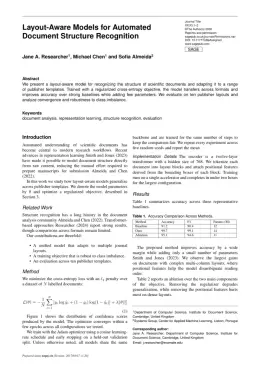
In DocuGuru you write your manuscript in a normal editor — no LaTeX setup required — and select the Genes & Cancer template. When you export, DocuGuru compiles the paper into the official SAGE format and hands you a submission-ready PDF along with the editable LaTeX source.
What reference style does Genes & Cancer use?
Genes & Cancer uses Author–year (Harvard) references, shown as author–year markers such as (Smith, 2023) in the text. DocuGuru formats every in-text citation and the reference list in this exact style automatically. A reference appears like this: Smith, A., Jones, B. and Lee, C. (2023) 'A representative article title', Genes & Cancer, 12(3), pp. 45–58.
Do I need to know LaTeX to submit to Genes & Cancer?
No. DocuGuru generates the sagej LaTeX class and compiles the PDF for you in the background, so you get a SAGE-ready Genes & Cancer document without writing any LaTeX. If you do want it, the LaTeX source is included in the export.
Can I import an existing draft into the Genes & Cancer template?
Yes. Paste or upload your current manuscript — Word, LaTeX, Markdown, or plain text — and DocuGuru reflows it into the Genes & Cancer format with correct headings, figures, tables, and author–year citations.
Who publishes Genes & Cancer?
Genes & Cancer is a multidisciplinary journal published by SAGE. DocuGuru's Genes & Cancer template matches SAGE's official submission format.
Can I export a submission-ready Genes & Cancer PDF?
Yes — DocuGuru produces a PDF built with the official Genes & Cancer template (the sagej class) that is ready to submit to SAGE, together with the matching LaTeX source files.
How much does the Genes & Cancer template cost?
You can start writing in the Genes & Cancer template for free. Exporting the final submission-ready Genes & Cancer PDF and LaTeX source is part of DocuGuru's paid plans — see the app for current pricing.
Use the Genes & Cancer template