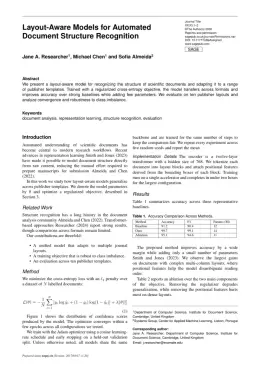
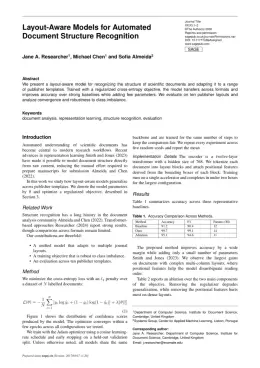
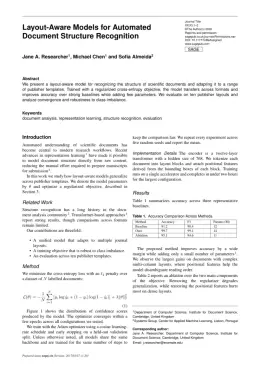
About the Feminist Theory format
Feminist Theory is a peer-reviewed journal published by SAGE, covering Gender, Feminism, and Media, Gender Politics and Representation, Historical Gender and Feminism Studies.
| Publisher | SAGE |
|---|
| Reference style | Author–year (Harvard) Author–year — (Smith, 2023) in the text
Smith, A., Jones, B. and Lee, C. (2023) 'A representative article title', Feminist Theory, 12(3), pp. 45–58.
Formats any DOI in Feminist Theory style. No sign-up.
|
|---|
| Publishes research in | Gender, Feminism, and Media Gender Politics and Representation Historical Gender and Feminism Studies Posthumanist Ethics and Activism Feminism, Gender, and Sexuality Studies |
|---|
| ISSN | 1464-7001 |
|---|
| Citation impact (2-yr) | 1.8 |
|---|
| h-index | 67 |
|---|
| i10-index | 320 |
|---|
| Total citations | 24,324 |
|---|
| Top institutions publishing here | Lancaster University |
|---|
| Journal website | fty.sagepub.com |
|---|
| You get | A submission-ready PDF and the editable LaTeX source — ready to submit. |
|---|
Papers published in Feminist Theory per year
Citation impact of Feminist Theory by publication year
Citations each year’s papers have accumulated so far — the most recent years are still building up.
Most-cited papers in Feminist Theory
Intersectionality as buzzword
Kathy Davis · 4 Mar 2008
Since its inception, the concept of `intersectionality' — the interaction of multiple identities and experiences of exclusion and subordination — has been heralded as one of the most important contributions to feminist scholarship. Despite its popularity, there has been considerable confusion concerning what the concept actually means and how it can or should be applied…
A phenomenology of whiteness
Sara Ahmed · 1 Aug 2007
The paper suggests that we can usefully approach whiteness through the lens of phenomenology. Whiteness could be described as an ongoing and unfinished history, which orientates bodies in specific directions, affecting how they `take up' space, and what they `can do'. The paper considers how whiteness functions as a habit, even a bad habit, which…
From Hegemonic Masculinity to the Hegemony of Men
Jeff Hearn · 1 Apr 2004
This article evaluates the usefulness of the concept of hegemony in theorizing men. The discussion is located within the framework of ‘Critical Studies on Men’ (CSM), in which the centrality of power issues is recognized, rather than that of ‘Men’s Studies’, where it is frequently not. Recent uses, as in ‘hegemonic masculinity’ in the analysis…
Affective solidarity: Feminist reflexivity and political transformation
Clare Hemmings · 1 Aug 2012
This article seeks to intervene in what I perceive to be a problematic opposition in feminist theory between ontological and epistemological accounts of existence and politics, by proposing an approach that weaves together Elspeth Probyn’s conceptualisation of ‘feminist reflexivity’ with a re-reading of feminist standpoint through affect. In so doing, I develop the concept of…
Teen girls, sexual double standards and ‘sexting’: Gendered value in digital image exchange
Jessica Ringrose, Laura Harvey, Rosalind Gill et al. · 14 Nov 2013
This article explores gender inequities and sexual double standards in teens’ digital image exchange, drawing on a UK qualitative research project on youth ‘sexting’. We develop a critique of ‘postfeminist’ media cultures, suggesting teen ‘sexting’ presents specific age and gender related contradictions: teen girls are called upon to produce particular forms of ‘sexy’ self display,…