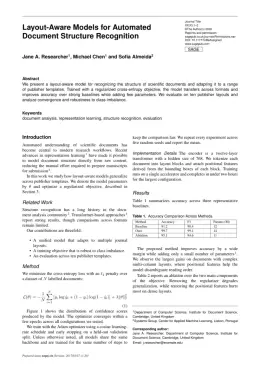
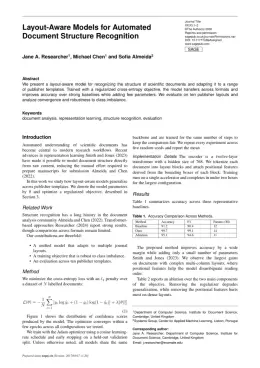
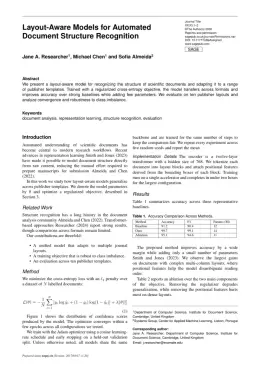
About the Evolutionary Psychology format
Evolutionary Psychology is a peer-reviewed journal published by SAGE, covering Evolutionary Psychology and Human Behavior, Evolutionary Game Theory and Cooperation, Psychology of Moral and Emotional Judgment.
| Publisher | SAGE |
|---|
| Reference style | Author–year (Harvard) Author–year — (Smith, 2023) in the text
Smith, A., Jones, B. and Lee, C. (2023) 'A representative article title', Evolutionary Psychology, 12(3), pp. 45–58.
Formats any DOI in Evolutionary Psychology style. No sign-up.
|
|---|
| Publishes research in | Evolutionary Psychology and Human Behavior Evolutionary Game Theory and Cooperation Psychology of Moral and Emotional Judgment Consumer Behavior in Brand Consumption and Identification Cultural Differences and Values |
|---|
| ISSN | 1474-7049 |
|---|
| Citation impact (2-yr) | 0.84 |
|---|
| h-index | 79 |
|---|
| i10-index | 572 |
|---|
| Total citations | 26,316 |
|---|
| Article processing charge | $800 |
|---|
| Open access | Yes |
|---|
| Top institutions publishing here | University of Nicosia |
|---|
| Journal website | www.epjournal.net |
|---|
| You get | A submission-ready PDF and the editable LaTeX source — ready to submit. |
|---|
Papers published in Evolutionary Psychology per year
Citation impact of Evolutionary Psychology by publication year
Citations each year’s papers have accumulated so far — the most recent years are still building up.
Most-cited papers in Evolutionary Psychology
Attractive Women Want it All: Good Genes, Economic Investment, Parenting Proclivities, and Emotional Commitment
David M. Buss, Todd K. Shackelford · 1 Jan 2008
The current research tests the hypothesis that women have an evolved mate value calibration adaptation that functions to raise or lower their standards in a long-term mate according to their own mate value. A woman's physical attractiveness is a cardinal component of women's mate value. We correlated observer-assessed physical attractiveness (face, body, and overall) with…
Children's Risky Play from an Evolutionary Perspective: The Anti-Phobic Effects of Thrilling Experiences
Ellen Beate Hansen Sandseter, Leif Edward Ottesen Kennair · 1 Apr 2011
This theoretical article views children's risky play from an evolutionary perspective, addressing specific evolutionary functions and especially the anti-phobic effects of risky play. According to the non-associative theory, a contemporary approach to the etiology of anxiety, children develop fears of certain stimuli (e.g., heights and strangers) that protect them from situations they are not mature…
Hand of God, Mind of Man: Punishment and Cognition in the Evolution of Cooperation
Dominic Johnson, Jesse M. Bering · 1 Jan 2006
The evolution of human cooperation remains a puzzle because cooperation persists even in conditions that rule out mainstream explanations. We present a novel solution that links two recent theories. First, Johnson & Kruger (2004) suggested that ancestral cooperation was promoted because norm violations were deterred by the threat of supernatural punishment. However, this only works…
Sex Differences in Everyday Risk-Taking Behavior in Humans
Bogusław Pawłowski, Rajinder Atwal, Robin Dunbar · 1 Jan 2008
Sexual selection theory predicts that males will tend to behave in ways that are more risky than females. We explored this in humans by studying two everyday situations (catching a bus and crossing a busy road). We show that humans are competent optimizers on such tasks, adjusting their arrival times at a bus stop so…
Natural Information Processing Systems
John Sweller, Susan Sweller · 1 Jan 2006
Natural information processing systems such as biological evolution and human cognition organize information used to govern the activities of natural entities. When dealing with biologically secondary information, these systems can be specified by five common principles that we propose underlie natural information processing systems. The principles equate: (1) human long-term memory with a genome; (2)…