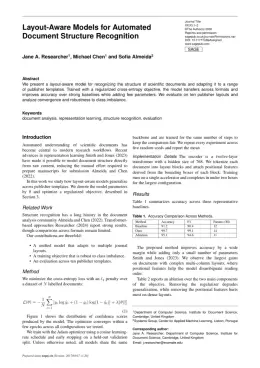
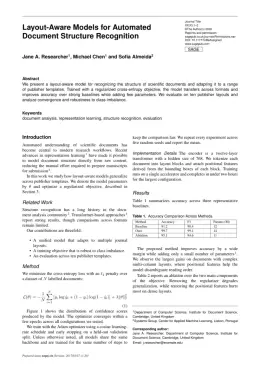
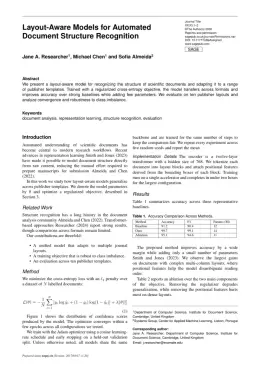
About the Evolutionary Bioinformatics format
Evolutionary Bioinformatics is a peer-reviewed journal published by SAGE, covering Genomics and Phylogenetic Studies, RNA and protein synthesis mechanisms, Genetic diversity and population structure.
| Publisher | SAGE |
|---|
| Reference style | Numbered (Vancouver) Numbered — [1], [2] in the text
1. Smith A, Jones B, Lee C. A representative article title. Evolutionary Bioinformatics. 2023;12(3):45–58.
Formats any DOI in Evolutionary Bioinformatics style. No sign-up.
|
|---|
| Publishes research in | Genomics and Phylogenetic Studies RNA and protein synthesis mechanisms Genetic diversity and population structure Bioinformatics and Genomic Networks Machine Learning in Bioinformatics |
|---|
| ISSN | 1176-9343 |
|---|
| Citation impact (2-yr) | 1.54 |
|---|
| h-index | 48 |
|---|
| i10-index | 310 |
|---|
| Total citations | 21,729 |
|---|
| Article processing charge | $2,000 |
|---|
| Open access | Yes |
|---|
| Top institutions publishing here | Chinese Academy of Sciences |
|---|
| Journal website | la-press.com |
|---|
| You get | A submission-ready PDF and the editable LaTeX source — ready to submit. |
|---|
Papers published in Evolutionary Bioinformatics per year
Citation impact of Evolutionary Bioinformatics by publication year
Citations each year’s papers have accumulated so far — the most recent years are still building up.
Most-cited papers in Evolutionary Bioinformatics
Arlequin (version 3.0): An integrated software package for population genetics data analysis
Laurent Excoffier, Guillaume Laval, Stefan Schneider · 1 Jan 2005
Arlequin ver 3.0 is a software package integrating several basic and advanced methods for population genetics data analysis, like the computation of standard genetic diversity indices, the estimation of allele and haplotype frequencies, tests of departure from linkage equilibrium, departure from selective neutrality and demographic equilibrium, estimation or parameters from past population expansions, and thorough…
Intraspecific <i>ITS</i> Variability in the Kingdom <i>Fungi</i> as Expressed in the International Sequence Databases and Its Implications for Molecular Species Identification
R. Henrik Nilsson, Erik Kristiansson, Martin Ryberg et al. · 1 Jan 2008
The internal transcribed spacer (ITS) region of the nuclear ribosomal repeat unit is the most popular locus for species identification and subgeneric phylogenetic inference in sequence-based mycological research. The region is known to show certain variability even within species, although its intraspecific variability is often held to be limited and clearly separated from interspecific variability.…
A RESTful API for Access to Phylogenetic Tools via the CIPRES Science Gateway
Mark A. Miller, Terri Schwartz, Brett E Pickett et al. · 1 Jan 2015
The CIPRES Science Gateway is a community web application that provides public access to a set of parallel tree inference and multiple sequence alignment codes run on large computational resources. These resources are made available at no charge to users by the NSF Extreme Science and Engineering Discovery Environment (XSEDE) project. Here we describe the…
Metagenomics, Metatranscriptomics, and Metabolomics Approaches for Microbiome Analysis
Vanessa Aguiar‐Pulido, Wenrui Huang, Victoria Suárez-Ulloa et al. · 1 Jan 2016
Microbiomes are ubiquitous and are found in the ocean, the soil, and in/on other living organisms. Changes in the microbiome can impact the health of the environmental niche in which they reside. In order to learn more about these communities, different approaches based on data from multiple omics have been pursued. Metagenomics produces a taxonomical…
LASER: A Maximum Likelihood Toolkit for Detecting Temporal Shifts in Diversification Rates from Molecular Phylogenies
Daniel L. Rabosky · 1 Jan 2006
Rates of species origination and extinction can vary over time during evolutionary radiations, and it is possible to reconstruct the history of diversification using molecular phylogenies of extant taxa only. Maximum likelihood methods provide a useful framework for inferring temporal variation in diversification rates. LASER is a package for the R programming environment that implements…