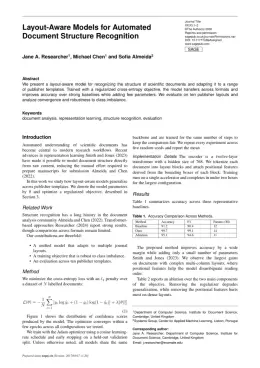
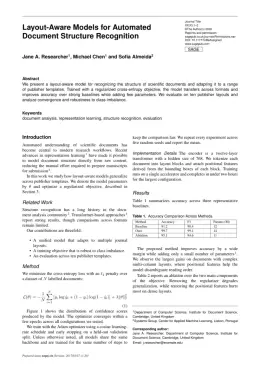
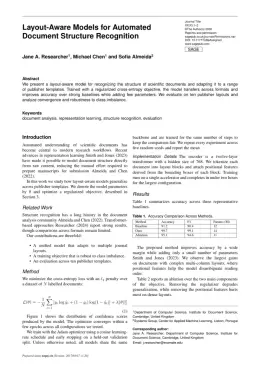
About the European Journal of Political Theory format
European Journal of Political Theory is a peer-reviewed journal published by SAGE, covering Political Philosophy and Ethics, Political Theory and Influence, Hannah Arendt's Political Philosophy.
| Publisher | SAGE |
|---|
| Reference style | Author–year (Harvard) Author–year — (Smith, 2023) in the text
Smith, A., Jones, B. and Lee, C. (2023) 'A representative article title', European Journal of Political Theory, 12(3), pp. 45–58.
Formats any DOI in European Journal of Political Theory style. No sign-up.
|
|---|
| Publishes research in | Political Philosophy and Ethics Political Theory and Influence Hannah Arendt's Political Philosophy Critical Theory and Philosophy American Constitutional Law and Politics |
|---|
| ISSN | 1474-8851 |
|---|
| Citation impact (2-yr) | 0.86 |
|---|
| h-index | 56 |
|---|
| i10-index | 315 |
|---|
| Total citations | 14,028 |
|---|
| Top institutions publishing here | University of Oxford |
|---|
| Journal website | www.sagepub.com |
|---|
| You get | A submission-ready PDF and the editable LaTeX source — ready to submit. |
|---|
Papers published in European Journal of Political Theory per year
Citation impact of European Journal of Political Theory by publication year
Citations each year’s papers have accumulated so far — the most recent years are still building up.
Most-cited papers in European Journal of Political Theory
Realism in political theory
William A. Galston · 1 Oct 2010
In recent decades, a ‘realist’ alternative to ideal theories of politics has slowly taken shape. Bringing together philosophers, political theorists, and political scientists, this countermovement seeks to reframe inquiry into politics and political norms. Among the hallmarks of this endeavor are a moral psychology that includes the passions and emotions; a robust conception of political…
Communicative Power in Habermas’s Theory of Democracy
Jeffrey Flynn · 10 Sep 2004
This article critically examines Jürgen Habermas’s theory of democracy as developed in Between Facts and Norms. In particular, it focuses on the concept of communicative power and argues that there is a crucial ambiguity in Habermas’s use of this concept. Since communicative power is the key normative resource that is supposed to counter the norm-free…
The concept of constituent power
Martin Loughlin · 23 May 2013
This article examines the meaning and significance of the concept of constituent power in constitutional thought by showing how it acts as a boundary concept with respect to three types of legal thought: normativism, decisionism and relationalism. The concept can be fully appreciated, it suggests, only by adopting a relationalist method. This relationalist method permits…
Realism, liberal moralism and a political theory of modus vivendi
John Horton · 1 Oct 2010
This article sets out some of the key features of a realist critique of liberal moralism, identifying descriptive inadequacy and normative irrelevance as the two fundamental lines of criticism. It then sketches an outline of a political theory of modus vivendi as an alternative, realist approach to political theory. On this account a modus vivendi…
Diversity and Unity
Andrea Baumeister · 19 Sep 2007
Although Habermas's sophisticated conception of constitutional patriotism successfully avoids the charge of trying to ground patriotism in a set of principles that is too thin and abstract to sustain a real sense of solidarity and belonging, his optimism regarding the prospect in modern pluralist societies of building a genuinely shared political culture is misplaced. The…