
233 citations
Cite
SaveGo to paper →
SAGE
European History Quarterly Template
Write in a clean editor, then format for European History Quarterly in one click — DocuGuru applies the official SAGE template with author–year references and exports a submission-ready PDF plus the editable LaTeX source. Free to start.
About the European History Quarterly format
European History Quarterly is a peer-reviewed journal published by SAGE, covering European history and politics, Italian Fascism and Post-war Society, Historical Geopolitical and Social Dynamics.
| Publisher | SAGE |
|---|---|
| Reference style | Author–year (Harvard) Author–year — (Smith, 2023) in the text Smith, A., Jones, B. and Lee, C. (2023) 'A representative article title', European History Quarterly, 12(3), pp. 45–58.
Formats any DOI in European History Quarterly style. No sign-up. |
| Publishes research in | European history and politics Italian Fascism and Post-war Society Historical Geopolitical and Social Dynamics Historical Studies and Socio-cultural Analysis European Political History Analysis |
| ISSN | 0265-6914 |
| Citation impact (2-yr) | 0.07 |
| h-index | 32 |
| i10-index | 148 |
| Total citations | 5,856 |
| Top institutions publishing here | University of East Anglia |
| Journal website | www.sagepub.com |
| You get | A submission-ready PDF and the editable LaTeX source — ready to submit. |
Papers published in European History Quarterly per year
Citation impact of European History Quarterly by publication year
Citations each year’s papers have accumulated so far — the most recent years are still building up.
Most-cited papers in European History Quarterly
The German terms Lebensraum and Konzentrationslager, both widely known because of their use by the Nazis, were not coined by the Hitler regime. These terms were minted many years earlier in reference to German South West Africa, now Namibia, during the first decade of the twentieth century, when Germans colonized the land and committed genocide…
183 citations
Cite
SaveGo to paper →
92 citations
Cite
SaveGo to paper →
In 1898, the loss of the last Spanish colonies of Cuba and the Philippines after the war with the United States aroused a strong national consciousness in which pessimism and hope were mixed. At that moment, many Spanish intellectuals were united not only by the idea that Spain had become a decadent country, but also…
81 citations
Cite
SaveGo to paper →
Early modern diplomatic negotiation was conducted primarily through face-to-face encounters dominated by the oral medium, generally known as audiences. Yet ambassadors were very keen to take written records of the words spoken by themselves and their counterparts. This article considers the role of oral exchange in diplomatic audiences and the reasons why participants were so…
81 citations
Cite
SaveGo to paper →
Related journal templates
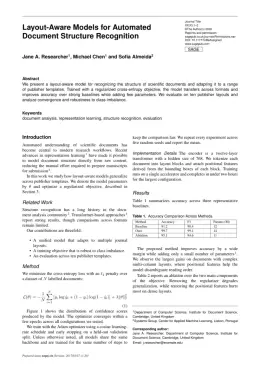
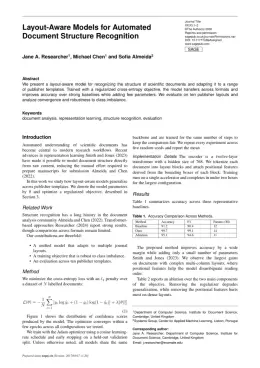
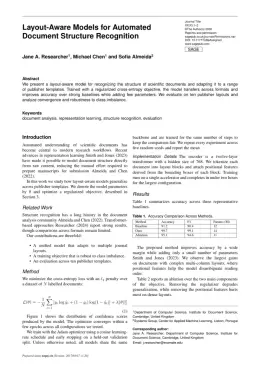
European History Quarterly template — frequently asked questions
How do I write a paper in the European History Quarterly format?
In DocuGuru you write your manuscript in a normal editor — no LaTeX setup required — and select the European History Quarterly template. When you export, DocuGuru compiles the paper into the official SAGE format and hands you a submission-ready PDF along with the editable LaTeX source.
What reference style does European History Quarterly use?
European History Quarterly uses Author–year (Harvard) references, shown as author–year markers such as (Smith, 2023) in the text. DocuGuru formats every in-text citation and the reference list in this exact style automatically. A reference appears like this: Smith, A., Jones, B. and Lee, C. (2023) 'A representative article title', European History Quarterly, 12(3), pp. 45–58.
Do I need to know LaTeX to submit to European History Quarterly?
No. DocuGuru generates the sagej LaTeX class and compiles the PDF for you in the background, so you get a SAGE-ready European History Quarterly document without writing any LaTeX. If you do want it, the LaTeX source is included in the export.
Can I import an existing draft into the European History Quarterly template?
Yes. Paste or upload your current manuscript — Word, LaTeX, Markdown, or plain text — and DocuGuru reflows it into the European History Quarterly format with correct headings, figures, tables, and author–year citations.
Who publishes European History Quarterly?
European History Quarterly is a multidisciplinary journal published by SAGE. DocuGuru's European History Quarterly template matches SAGE's official submission format.
Can I export a submission-ready European History Quarterly PDF?
Yes — DocuGuru produces a PDF built with the official European History Quarterly template (the sagej class) that is ready to submit to SAGE, together with the matching LaTeX source files.
How much does the European History Quarterly template cost?
You can start writing in the European History Quarterly template for free. Exporting the final submission-ready European History Quarterly PDF and LaTeX source is part of DocuGuru's paid plans — see the app for current pricing.