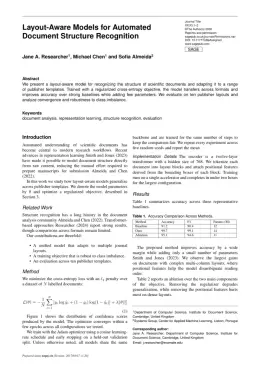
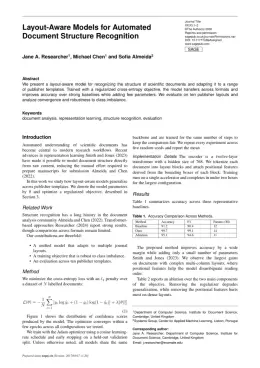
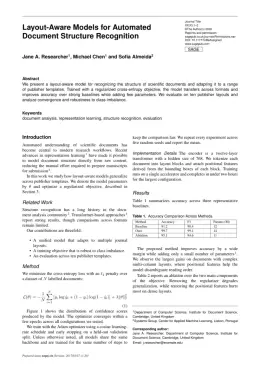
SAGE

Culture & Psychology Template

Write in a clean editor, then format for Culture & Psychology in one click — DocuGuru applies the official SAGE template with author–year references and exports a submission-ready PDF plus the editable LaTeX source. Free to start.

About the Culture & Psychology format

Culture & Psychology is a peer-reviewed journal published by SAGE, covering Social Representations and Identity, Cultural Differences and Values, Community Health and Development.

PublisherSAGE
Reference styleAuthor–year (Harvard)
Author–year — (Smith, 2023) in the text
Smith, A., Jones, B. and Lee, C. (2023) 'A representative article title', Culture & Psychology, 12(3), pp. 45–58.

Formats any DOI in Culture & Psychology style. No sign-up.

Publishes research inSocial Representations and Identity Cultural Differences and Values Community Health and Development Language, Discourse, Communication Strategies Language, Metaphor, and Cognition
ISSN1354-067X
Citation impact (2-yr)1.38
h-index76
i10-index527
Total citations26,588
Top institutions publishing hereAalborg University
Journal websitewww.sagepub.com
You getA submission-ready PDF and the editable LaTeX source — ready to submit.

Papers published in Culture & Psychology per year

33
2014
36
2015
55
2016
38
2017
35
2018
46
2019
41
2020
25
2021
66
2022
51
2023
59
2024
61
2025

Citation impact of Culture & Psychology by publication year

1.3K
2014
629
2015
1K
2016
646
2017
494
2018
536
2019
508
2020
244
2021
298
2022
218
2023
133
2024
53
2025

Citations each year’s papers have accumulated so far — the most recent years are still building up.

Most-cited papers in Culture & Psychology

The Dialogical Self: Toward a Theory of Personal and Cultural Positioning

Hubert J. M. Hermans · 1 Sep 2001

The dialogical self proposes a far-reaching decentralization of both the concept of self and the concept of culture. At the intersection between the psychology of the self in the tradition of William James and the dialogical school in the tradition of Mikhail Bakhtin, the proposed view challenges both the idea of a core, essential self…

1,451 citations Cite SaveGo to paper →
Funds of Identity: A new concept based on the Funds of Knowledge approach

Moisès Esteban‐Guitart, Luis C. Moll · 1 Mar 2014

The main purpose of this paper is to articulate a theory of human identity from a Vygotskian perspective. In doing so, we use the term “funds of identity” inspired by the “funds of knowledge” approach. We use the term funds of identity to refer to the historically accumulated, culturally developed, and socially distributed resources that…

Emotion Discourse

Derek Edwards · 1 Sep 1999

Discursive psychology is defined and illustrated in terms of how people describe and invoke emotions in everyday talk and text. Materials from counselling sessions and newspaper texts show how emotion descriptions are used in narrative accounts and explanations, both in building and in undermining the sensibility of a person’s actions. It is suggested that, rather…

Critical reflections on some recent definitions of “culture”

Gustav Jahoda · 1 Sep 2012

At the outset the historical background of attempts to define “culture” is briefly sketched. Then the definitions found in cross-cultural texts published between 2009 and 2011 are roughly divided into three categories according to where they locate “culture”, and whether they present single or multiple definitions. Each definition is critically examined, as are the relationships…

Remembering and Forgetting: Narrative as Cultural Memory

Jens Brockmeier · 1 Mar 2002

This paper has two objectives: one is to explore the dialectics of remembering and forgetting, an issue traditionally neglected in psychological memory research; the other is to question the widespread dichotomy of individual and social memory. To do so, a cultural-historical perspective is outlined that allows us to conceive of individual memory as an inextricable…

Culture & Psychology template — frequently asked questions

How do I write a paper in the Culture & Psychology format?
In DocuGuru you write your manuscript in a normal editor — no LaTeX setup required — and select the Culture & Psychology template. When you export, DocuGuru compiles the paper into the official SAGE format and hands you a submission-ready PDF along with the editable LaTeX source.
What reference style does Culture & Psychology use?
Culture & Psychology uses Author–year (Harvard) references, shown as author–year markers such as (Smith, 2023) in the text. DocuGuru formats every in-text citation and the reference list in this exact style automatically. A reference appears like this: Smith, A., Jones, B. and Lee, C. (2023) 'A representative article title', Culture & Psychology, 12(3), pp. 45–58.
Do I need to know LaTeX to submit to Culture & Psychology?
No. DocuGuru generates the sagej LaTeX class and compiles the PDF for you in the background, so you get a SAGE-ready Culture & Psychology document without writing any LaTeX. If you do want it, the LaTeX source is included in the export.
Can I import an existing draft into the Culture & Psychology template?
Yes. Paste or upload your current manuscript — Word, LaTeX, Markdown, or plain text — and DocuGuru reflows it into the Culture & Psychology format with correct headings, figures, tables, and author–year citations.
Who publishes Culture & Psychology?
Culture & Psychology is a multidisciplinary journal published by SAGE. DocuGuru's Culture & Psychology template matches SAGE's official submission format.
Can I export a submission-ready Culture & Psychology PDF?
Yes — DocuGuru produces a PDF built with the official Culture & Psychology template (the sagej class) that is ready to submit to SAGE, together with the matching LaTeX source files.
How much does the Culture & Psychology template cost?
You can start writing in the Culture & Psychology template for free. Exporting the final submission-ready Culture & Psychology PDF and LaTeX source is part of DocuGuru's paid plans — see the app for current pricing.

Use the Culture & Psychology template