SAGE

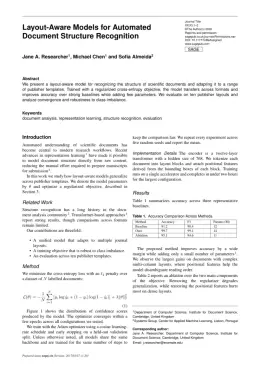
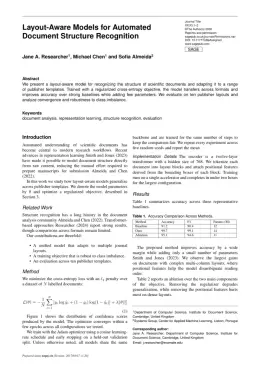
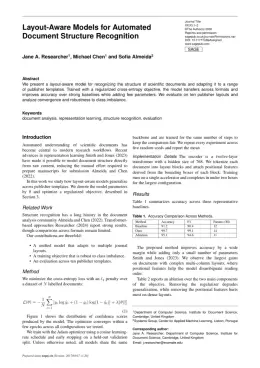
Contemporary Review of the Middle East Template

Write in a clean editor, then format for Contemporary Review of the Middle East in one click — DocuGuru applies the official SAGE template with author–year references and exports a submission-ready PDF plus the editable LaTeX source. Free to start.

About the Contemporary Review of the Middle East format

Contemporary Review of the Middle East is a peer-reviewed journal published by SAGE, covering Middle East and Rwanda Conflicts, Jewish and Middle Eastern Studies, Islamic Studies and History.

PublisherSAGE
Reference styleAuthor–year (Harvard)
Author–year — (Smith, 2023) in the text
Smith, A., Jones, B. and Lee, C. (2023) 'A representative article title', Contemporary Review of the Middle East, 12(3), pp. 45–58.

Formats any DOI in Contemporary Review of the Middle East style. No sign-up.

Publishes research inMiddle East and Rwanda Conflicts Jewish and Middle Eastern Studies Islamic Studies and History Middle East Politics and Society Turkey's Politics and Society
ISSN2347-7989
Citation impact (2-yr)0.64
h-index15
i10-index37
Total citations1,284
Top institutions publishing hereJawaharlal Nehru University
Journal websiteus.sagepub.com
You getA submission-ready PDF and the editable LaTeX source — ready to submit.

Papers published in Contemporary Review of the Middle East per year

34
2014
30
2015
37
2016
33
2017
38
2018
32
2019
41
2020
36
2021
29
2022
35
2023
34
2024
44
2025

Citation impact of Contemporary Review of the Middle East by publication year

106
2014
103
2015
185
2016
129
2017
100
2018
89
2019
263
2020
133
2021
27
2022
66
2023
39
2024
21
2025

Citations each year’s papers have accumulated so far — the most recent years are still building up.

Most-cited papers in Contemporary Review of the Middle East

Exploring Takfir, Its Origins and Contemporary Use: The Case of Takfiri Approach in Daesh’s Media

Jamileh Kadivar · 18 May 2020

Muslims have been the primary targets of Daesh’s attacks since 2014 in different countries such as Afghanistan, Iraq, and Syria. These attacks were based on its takfiri ideology. As Daesh official media and documents indicate, kufr (unbelief, infidelity) in Daesh’s approach is not limited to non-Muslims (original disbelievers), but Muslims are the most significant parts…

Clash of National Narratives and the Marginalization of Kurdish-Iranian History

Marouf Cabi · 29 Sep 2017

This article examines in a Kurdish-Iranian context the origins of Iranian and Kurdish national narratives that go back to the process of the transformation of historical consciousness in the nineteenth century. At the same time, it aims at making central to Iranian history a perception of Kurdish-Iranian history, which has largely remained both a marginalized…

Migration Policy in the Gulf Cooperation Council (GCC) States: A Critical Analysis

S. V. Aarthi, Mrutuyanjaya Sahu · 11 Aug 2021

International labor migration is the unique reality of the six Gulf Cooperation Council (GCC) member states. Despite seemingly open migration policies and reforms, the GCC states recently engaged in international and domestic policies to manage the migrant population better. Considering the dependency of Gulf states on migrant labor and the constant increase in migration to…

State-sponsored Persecution of Baha’is in the Islamic Republic of Iran

Siyamak Zabihi-Moghaddam · 27 May 2016

The largest non-Muslim minority in Iran, the Baha’i community, has been subjected to systematic religious persecution under the current Islamic regime. This article examines the nature of this persecution and the change in its pattern from a brutal and partly chaotic campaign in the aftermath of the 1979 Islamic revolution to an institutionalized process with…

Gendering ISIS and Mapping the Role of Women

Debangana Chatterjee · 27 May 2016

Apart from the strategic implications of the rise of the Islamic State of Iraq and Syria (ISIS), women’s role in the phenomenon seeks special attention and the central questions remain as follows: How is women’s role perceived in ISIS? Are they active agents or voiceless victims? The article aims to take up four fold tasks…

Contemporary Review of the Middle East template — frequently asked questions

How do I write a paper in the Contemporary Review of the Middle East format?
In DocuGuru you write your manuscript in a normal editor — no LaTeX setup required — and select the Contemporary Review of the Middle East template. When you export, DocuGuru compiles the paper into the official SAGE format and hands you a submission-ready PDF along with the editable LaTeX source.
What reference style does Contemporary Review of the Middle East use?
Contemporary Review of the Middle East uses Author–year (Harvard) references, shown as author–year markers such as (Smith, 2023) in the text. DocuGuru formats every in-text citation and the reference list in this exact style automatically. A reference appears like this: Smith, A., Jones, B. and Lee, C. (2023) 'A representative article title', Contemporary Review of the Middle East, 12(3), pp. 45–58.
Do I need to know LaTeX to submit to Contemporary Review of the Middle East?
No. DocuGuru generates the sagej LaTeX class and compiles the PDF for you in the background, so you get a SAGE-ready Contemporary Review of the Middle East document without writing any LaTeX. If you do want it, the LaTeX source is included in the export.
Can I import an existing draft into the Contemporary Review of the Middle East template?
Yes. Paste or upload your current manuscript — Word, LaTeX, Markdown, or plain text — and DocuGuru reflows it into the Contemporary Review of the Middle East format with correct headings, figures, tables, and author–year citations.
Who publishes Contemporary Review of the Middle East?
Contemporary Review of the Middle East is a multidisciplinary journal published by SAGE. DocuGuru's Contemporary Review of the Middle East template matches SAGE's official submission format.
Can I export a submission-ready Contemporary Review of the Middle East PDF?
Yes — DocuGuru produces a PDF built with the official Contemporary Review of the Middle East template (the sagej class) that is ready to submit to SAGE, together with the matching LaTeX source files.
How much does the Contemporary Review of the Middle East template cost?
You can start writing in the Contemporary Review of the Middle East template for free. Exporting the final submission-ready Contemporary Review of the Middle East PDF and LaTeX source is part of DocuGuru's paid plans — see the app for current pricing.

Use the Contemporary Review of the Middle East template