SAGE

Contact Template

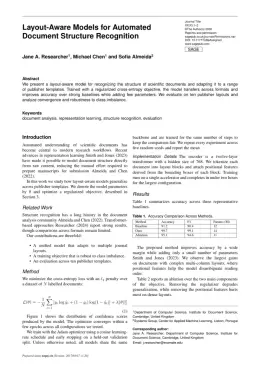
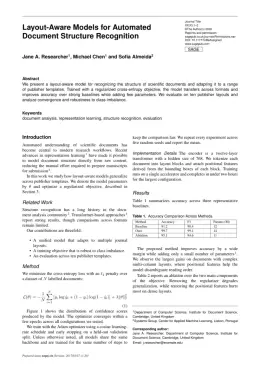
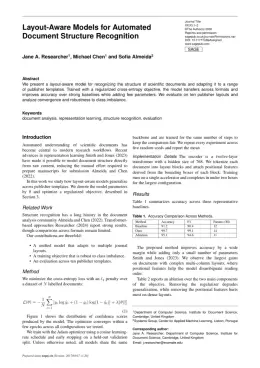
Write in a clean editor, then format for Contact in one click — DocuGuru applies the official SAGE template with author–year references and exports a submission-ready PDF plus the editable LaTeX source. Free to start.

About the Contact format

Contact is a peer-reviewed journal published by SAGE, covering Cellular transport and secretion, Endoplasmic Reticulum Stress and Disease, Lipid Membrane Structure and Behavior.

PublisherSAGE
Reference styleAuthor–year (Harvard)
Author–year — (Smith, 2023) in the text
Smith, A., Jones, B. and Lee, C. (2023) 'A representative article title', Contact, 12(3), pp. 45–58.

Formats any DOI in Contact style. No sign-up.

Publishes research inCellular transport and secretion Endoplasmic Reticulum Stress and Disease Lipid Membrane Structure and Behavior Mitochondrial Function and Pathology Lipid metabolism and biosynthesis
ISSN2515-2564
Citation impact (2-yr)2.15
h-index18
i10-index48
Total citations1,283
Article processing charge$800
Open accessYes
Top institutions publishing hereCentre National de la Recherche Scientifique
Journal websiteus.sagepub.com
You getA submission-ready PDF and the editable LaTeX source — ready to submit.

Papers published in Contact per year

12
2018
17
2019
19
2020
19
2021
19
2022
21
2023
23
2024
17
2025

Citation impact of Contact by publication year

86
2018
287
2019
212
2020
223
2021
176
2022
184
2023
85
2024
12
2025

Citations each year’s papers have accumulated so far — the most recent years are still building up.

Most-cited papers in Contact

Lipid Droplet Motility and Organelle Contacts

Marcus D. Kilwein, Michael A. Welte · 1 Jan 2019

Lipid droplets (LDs) are fat storage organelles integral to energy homeostasis and a wide range of cellular processes. LDs physically and functionally interact with many partner organelles, including the ER, mitochondria, lysosomes, and peroxisomes. Recent findings suggest that the dynamics of LD inter-organelle contacts is in part controlled by LD intracellular motility. LDs can be…

Systematic Prediction of FFAT Motifs Across Eukaryote Proteomes Identifies Nucleolar and Eisosome Proteins With the Predicted Capacity to Form Bridges to the Endoplasmic Reticulum

John A. Slee, Tim P. Levine · 1 Jan 2019

The endoplasmic reticulum (ER), the most pervasive organelle, exchanges information and material with many other organelles, but the extent of its inter-organelle connections and the proteins that form bridges are not well known. The integral ER membrane protein VAMP-associated protein (VAP) is found in multiple bridges, interacting with many proteins that contain a short linear…

Sequence Analysis and Structural Predictions of Lipid Transfer Bridges in the Repeating Beta Groove (RBG) Superfamily Reveal Past and Present Domain Variations Affecting Form, Function and Interactions of VPS13, ATG2, SHIP164, Hobbit and Tweek

Tim P. Levine · 1 Jan 2022

Lipid transfer between organelles requires proteins that shield the hydrophobic portions of lipids as they cross the cytoplasm. In the last decade a new structural form of lipid transfer protein (LTP) has been found: long hydrophobic grooves made of beta-sheet that bridge between organelles at membrane contact sites. Eukaryotes have five families of bridge-like LTPs:…

The Endoplasmic Reticulum-Mitochondria Encounter Structure Complex Coordinates Coenzyme Q Biosynthesis

Michal Eisenberg‐Bord, Hui S. Tsui, Diana Antunes et al. · 1 Jan 2019

Loss of the endoplasmic reticulum (ER)-mitochondria encounter structure (ERMES) complex that resides in contact sites between the yeast ER and mitochondria leads to impaired respiration; however, the reason for that is not clear. We find that in ERMES null mutants, there is an increase in the level of mRNAs encoding for biosynthetic enzymes of coenzyme…

What the VAP: The Expanded VAP Family of Proteins Interacting With FFAT and FFAT-Related Motifs for Interorganellar Contact

Jacques Neefjes, Birol Cabukusta · 1 Jan 2021

Membrane contact sites are formed by tether proteins that have the ability to bring two organellar membranes together. VAP proteins are a family of endoplasmic reticulum (ER)-resident tether proteins specialized in interacting with FFAT (two phenylalanines in an acidic tract) peptide motifs in other proteins. If the FFAT-motif-containing proteins reside on other organelles, VAP proteins…

Contact template — frequently asked questions

How do I write a paper in the Contact format?
In DocuGuru you write your manuscript in a normal editor — no LaTeX setup required — and select the Contact template. When you export, DocuGuru compiles the paper into the official SAGE format and hands you a submission-ready PDF along with the editable LaTeX source.
What reference style does Contact use?
Contact uses Author–year (Harvard) references, shown as author–year markers such as (Smith, 2023) in the text. DocuGuru formats every in-text citation and the reference list in this exact style automatically. A reference appears like this: Smith, A., Jones, B. and Lee, C. (2023) 'A representative article title', Contact, 12(3), pp. 45–58.
Do I need to know LaTeX to submit to Contact?
No. DocuGuru generates the sagej LaTeX class and compiles the PDF for you in the background, so you get a SAGE-ready Contact document without writing any LaTeX. If you do want it, the LaTeX source is included in the export.
Can I import an existing draft into the Contact template?
Yes. Paste or upload your current manuscript — Word, LaTeX, Markdown, or plain text — and DocuGuru reflows it into the Contact format with correct headings, figures, tables, and author–year citations.
Who publishes Contact?
Contact is a multidisciplinary journal published by SAGE. DocuGuru's Contact template matches SAGE's official submission format.
Can I export a submission-ready Contact PDF?
Yes — DocuGuru produces a PDF built with the official Contact template (the sagej class) that is ready to submit to SAGE, together with the matching LaTeX source files.
How much does the Contact template cost?
You can start writing in the Contact template for free. Exporting the final submission-ready Contact PDF and LaTeX source is part of DocuGuru's paid plans — see the app for current pricing.

Use the Contact template