SAGE

Behavior Modification Template

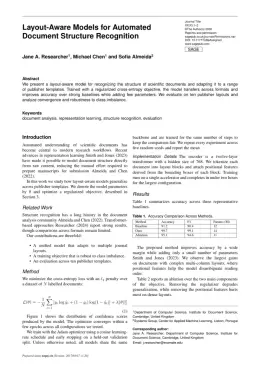
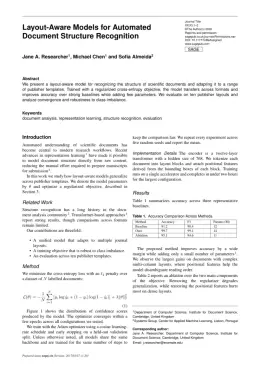
Write in a clean editor, then format for Behavior Modification in one click — DocuGuru applies the official SAGE template with author–year references and exports a submission-ready PDF plus the editable LaTeX source. Free to start.

About the Behavior Modification format

Behavior Modification is a peer-reviewed journal published by SAGE, covering Behavioral and Psychological Studies, Autism Spectrum Disorder Research, Child and Adolescent Psychosocial and Emotional Development.

PublisherSAGE
Reference styleAuthor–year (Harvard)
Author–year — (Smith, 2023) in the text
Smith, A., Jones, B. and Lee, C. (2023) 'A representative article title', Behavior Modification, 12(3), pp. 45–58.

Formats any DOI in Behavior Modification style. No sign-up.

Publishes research inBehavioral and Psychological Studies Autism Spectrum Disorder Research Child and Adolescent Psychosocial and Emotional Development Anxiety, Depression, Psychometrics, Treatment, Cognitive Processes Attention Deficit Hyperactivity Disorder
ISSN0145-4455
Citation impact (2-yr)1.89
h-index123
i10-index1,322
Total citations77,136
Top institutions publishing hereUniversity of Pittsburgh
Journal websitebmo.sagepub.com
You getA submission-ready PDF and the editable LaTeX source — ready to submit.

Papers published in Behavior Modification per year

43
2014
78
2015
38
2016
67
2017
45
2018
88
2019
36
2020
43
2021
39
2022
46
2023
20
2024
21
2025

Citation impact of Behavior Modification by publication year

1.6K
2014
2.1K
2015
2.5K
2016
1.8K
2017
1.3K
2018
1.1K
2019
603
2020
639
2021
430
2022
66
2023
75
2024
20
2025

Citations each year’s papers have accumulated so far — the most recent years are still building up.

Most-cited papers in Behavior Modification

Assessing the Clinical or Applied Importance of Behavior Change through Social Validation

Alan E. Kazdin · 1 Oct 1977

Applied behavior analysis has emphasized that the effects of treatment interventions should be evaluated in part on the basis of whether changes of clinical, social, or applied importance have been achieved. Recently, social validation has been proposed as a means of evaluating whether behavior changes achieved during treatment are clinically important. In the context of…

1,115 citations Cite SaveGo to paper →
Intercoder Reliability and Validity of WebPlotDigitizer in Extracting Graphed Data

Daniel D. Drevon, Sophie Fursa, Allura L. Malcolm · 19 Oct 2016

Quantitative synthesis of data from single-case designs (SCDs) is becoming increasingly common in psychology and education journals. Because researchers do not ordinarily report numerical data in addition to graphical displays, reliance on plot digitizing tools is often a necessary component of this research. Intercoder reliability of data extraction is a commonly overlooked, but potentially important,…

Effect Size in Single-Case Research: A Review of Nine Nonoverlap Techniques

Richard I. Parker, Kimberly J. Vannest, John L. Davis · 16 Mar 2011

With rapid advances in the analysis of data from single-case research designs, the various behavior-change indices, that is, effect sizes, can be confusing. To reduce this confusion, nine effect-size indices are described and compared. Each of these indices examines data nonoverlap between phases. Similarities and differences, both conceptual and computational, are highlighted. Seven of the…

Summarizing Single-Subject Research

Thomas E. Scruggs, Margo A. Mastropieri · 1 Jul 1998

In this article, literature concerning the quantitative synthesis (meta-analysis) of single subject research literature is reviewed. First, the general rationale for such an approach is discussed. Next, procedures for synthesizing single-subject literature are described, followed by comments and critiques of those procedures. Finally, a review is presented of the results of applications of those procedures.…

A Randomized Controlled Effectiveness Trial of Acceptance and Commitment Therapy and Cognitive Therapy for Anxiety and Depression

Evan M. Forman, James D. Herbert, Ethan Moitra et al. · 11 Oct 2007

Acceptance and commitment therapy (ACT) has a small but growing database of support. One hundred and one heterogeneous outpatients reporting moderate to severe levels of anxiety or depression were randomly assigned to traditional cognitive therapy (CT) or to ACT. To maximize external validity, the authors utilized very minimal exclusion criteria. Participants receiving CT and ACT…

Behavior Modification template — frequently asked questions

How do I write a paper in the Behavior Modification format?
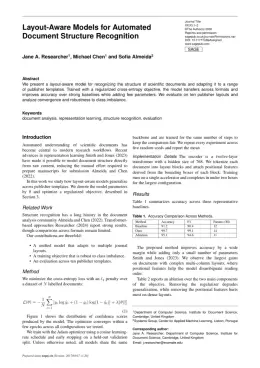
In DocuGuru you write your manuscript in a normal editor — no LaTeX setup required — and select the Behavior Modification template. When you export, DocuGuru compiles the paper into the official SAGE format and hands you a submission-ready PDF along with the editable LaTeX source.
What reference style does Behavior Modification use?
Behavior Modification uses Author–year (Harvard) references, shown as author–year markers such as (Smith, 2023) in the text. DocuGuru formats every in-text citation and the reference list in this exact style automatically. A reference appears like this: Smith, A., Jones, B. and Lee, C. (2023) 'A representative article title', Behavior Modification, 12(3), pp. 45–58.
Do I need to know LaTeX to submit to Behavior Modification?
No. DocuGuru generates the sagej LaTeX class and compiles the PDF for you in the background, so you get a SAGE-ready Behavior Modification document without writing any LaTeX. If you do want it, the LaTeX source is included in the export.
Can I import an existing draft into the Behavior Modification template?
Yes. Paste or upload your current manuscript — Word, LaTeX, Markdown, or plain text — and DocuGuru reflows it into the Behavior Modification format with correct headings, figures, tables, and author–year citations.
Who publishes Behavior Modification?
Behavior Modification is a multidisciplinary journal published by SAGE. DocuGuru's Behavior Modification template matches SAGE's official submission format.
Can I export a submission-ready Behavior Modification PDF?
Yes — DocuGuru produces a PDF built with the official Behavior Modification template (the sagej class) that is ready to submit to SAGE, together with the matching LaTeX source files.
How much does the Behavior Modification template cost?
You can start writing in the Behavior Modification template for free. Exporting the final submission-ready Behavior Modification PDF and LaTeX source is part of DocuGuru's paid plans — see the app for current pricing.
Use the Behavior Modification template