
6,682 citations
Go to paper →
Oxford University Press
Biological Journal of the Linnean Society Template
Write in a clean editor, then format for Biological Journal of the Linnean Society in one click — DocuGuru applies the official Oxford University Press template with author–year references and exports a submission-ready PDF plus the editable LaTeX source. Free to start.
About the Biological Journal of the Linnean Society format
Biological Journal of the Linnean Society is a peer-reviewed journal published by Oxford University Press, covering Plant and animal studies, Animal Behavior and Reproduction, Genetic diversity and population structure. Over its lifetime it has published 8,136 papers, which have received 296,450 citations.
| Publisher | Oxford University Press |
|---|---|
| Reference style | Author–year (OUP) Author–year — (Smith, 2023) in the text Smith, A., Jones, B. and Lee, C. (2023) 'A representative article title', Biological Journal of the Linnean Society, 12(3), pp. 45–58.
Formats any DOI in the closest standard style — Biological Journal of the Linnean Society has no published style definition, so this is an approximation. No sign-up. |
| Publishes research in | Plant and animal studies Animal Behavior and Reproduction Genetic diversity and population structure Amphibian and Reptile Biology Ecology and Vegetation Dynamics Studies |
| ISSN | 0024-4066 |
| Citation impact (2-yr) | 1.54 |
| h-index | 183 |
| i10-index | 5,153 |
| Top institutions publishing here | Centre National de la Recherche Scientifique |
| Journal website | onlinelibrary.wiley.com |
| You get | A submission-ready PDF and the editable LaTeX source — ready to submit. |
Papers published in Biological Journal of the Linnean Society per year
Citation impact of Biological Journal of the Linnean Society by publication year
Citations each year’s papers have accumulated so far — the most recent years are still building up.
Most-cited papers in Biological Journal of the Linnean Society
The genetic effects of pleistocene ice ages are approached by deduction from paleoenvironmental information, by induction from the genetic structure of populations and species, and by their combination to infer likely consequences. (1) Recent palaeoclimatic information indicate rapid global reversals and changes in ranges of species which would involve elimination with spreading from the edge.…
3,722 citations
Cite
SaveGo to paper →
Population structure is the result of both present processes and past history. Molecular markers are proving of great value in describing the former, and it is important to similarly determine the latter in order to understand their respective contributions. The study of palaeo-climates has also advanced significantly, and in particular that of the Pleistocene ice…
2,855 citations
Cite
SaveGo to paper →
The importance and abundance of cryptic species among invertebrate taxa is well documented. Nowadays, taxonomic, phylogenetic and conservation biological studies frequently use molecular markers to delineate cryptic taxa. Such studies, however, often face the problem of the differential resolution of the molecular markers and techniques involved. This issue is explored in the present study of…
2,261 citations
Cite
SaveGo to paper →
Delineating species boundaries correctly is crucial to the discovery of life's diversity because it determines whether or not different individual organisms are members of the same entity. The gap in communication between the different disciplines currently involved in delimiting species is an important and overlooked problem in the so-called ‘taxonomy crisis’. To solve this problem,…
1,947 citations
Cite
SaveGo to paper →
Related journal templates


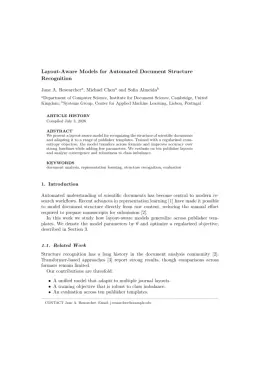
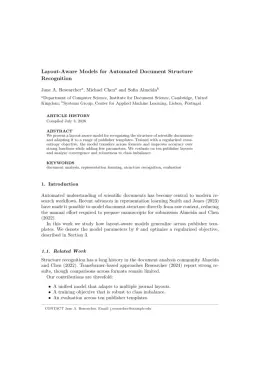
Biological Journal of the Linnean Society template — frequently asked questions
How do I write a paper in the Biological Journal of the Linnean Society format?
In DocuGuru you write your manuscript in a normal editor — no LaTeX setup required — and select the Biological Journal of the Linnean Society template. When you export, DocuGuru compiles the paper into the official Oxford University Press format and hands you a submission-ready PDF along with the editable LaTeX source.
What reference style does Biological Journal of the Linnean Society use?
Biological Journal of the Linnean Society uses Author–year (OUP) references, shown as author–year markers such as (Smith, 2023) in the text. DocuGuru formats every in-text citation and the reference list in this exact style automatically. A reference appears like this: Smith, A., Jones, B. and Lee, C. (2023) 'A representative article title', Biological Journal of the Linnean Society, 12(3), pp. 45–58.
Do I need to know LaTeX to submit to Biological Journal of the Linnean Society?
No. DocuGuru generates the oup-authoring-template LaTeX class and compiles the PDF for you in the background, so you get a Oxford University Press-ready Biological Journal of the Linnean Society document without writing any LaTeX. If you do want it, the LaTeX source is included in the export.
Can I import an existing draft into the Biological Journal of the Linnean Society template?
Yes. Paste or upload your current manuscript — Word, LaTeX, Markdown, or plain text — and DocuGuru reflows it into the Biological Journal of the Linnean Society format with correct headings, figures, tables, and author–year citations.
What is Biological Journal of the Linnean Society?
Oxford University Press journal. It is a multidisciplinary journal, published by Oxford University Press.
Can I export a submission-ready Biological Journal of the Linnean Society PDF?
Yes — DocuGuru produces a PDF built with the official Biological Journal of the Linnean Society template (the oup-authoring-template class) that is ready to submit to Oxford University Press, together with the matching LaTeX source files.
How much does the Biological Journal of the Linnean Society template cost?
You can start writing in the Biological Journal of the Linnean Society template for free. Exporting the final submission-ready Biological Journal of the Linnean Society PDF and LaTeX source is part of DocuGuru's paid plans — see the app for current pricing.