MDPI

Magnetochemistry Template

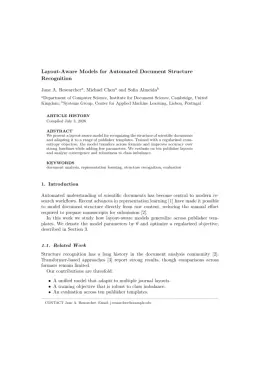
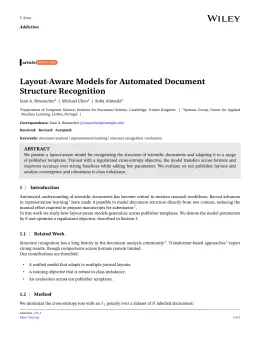
Write in a clean editor, then format for Magnetochemistry in one click — DocuGuru applies the official MDPI template with numbered references and exports a submission-ready PDF plus the editable LaTeX source. Free to start.

About the Magnetochemistry format

Magnetochemistry is a peer-reviewed journal published by MDPI, covering Magnetism in coordination complexes, Lanthanide and Transition Metal Complexes, Magnetic properties of thin films. Over its lifetime it has published 1,195 papers, which have received 13,073 citations.

PublisherMDPI
Reference styleNumbered (MDPI)
Numbered — [1], [2] in the text
1. Smith, A.; Jones, B.; Lee, C. A Representative Article Title. Magnetochemistry 2023, 12, 45–58.

Formats any DOI in Magnetochemistry style. No sign-up.

Publishes research inMagnetism in coordination complexes Lanthanide and Transition Metal Complexes Magnetic properties of thin films Characterization and Applications of Magnetic Nanoparticles Electron Spin Resonance Studies
ISSN2312-7481
Citation impact (2-yr)2.24
h-index46
i10-index334
Article processing charge$1,949
Open accessYes — indexed in DOAJ
Top institutions publishing hereCentre National de la Recherche Scientifique
Journal websitewww.mdpi.com
You getA submission-ready PDF and the editable LaTeX source — ready to submit.

Papers published in Magnetochemistry per year

5
2003
9
2015
46
2016
44
2017
57
2018
68
2019
78
2020
162
2021
199
2022
220
2023
107
2024
114
2025

Citation impact of Magnetochemistry by publication year

0
2003
111
2015
1.3K
2016
670
2017
685
2018
1.4K
2019
1.9K
2020
2K
2021
2.4K
2022
1.8K
2023
392
2024
218
2025

Citations each year’s papers have accumulated so far — the most recent years are still building up.

Most-cited papers in Magnetochemistry

Magnetite (Fe3O4) Nanoparticles in Biomedical Application: From Synthesis to Surface Functionalisation

Lokesh Srinath Ganapathe, Mohd Ambri Mohamed, Rozan Mohamad Yunus et al. · 3 Dec 2020

Nanotechnology has gained much attention for its potential application in medical science. Iron oxide nanoparticles have demonstrated a promising effect in various biomedical applications. In particular, magnetite (Fe3O4) nanoparticles are widely applied due to their biocompatibility, high magnetic susceptibility, chemical stability, innocuousness, high saturation magnetisation, and inexpensiveness. Magnetite (Fe3O4) exhibits superparamagnetism as its size shrinks…

Green Synthesis of Metal and Metal Oxide Nanoparticles: Principles of Green Chemistry and Raw Materials

L.M. Soltys, Ostap Olkhovyy, Тетяна Татарчук et al. · 31 Oct 2021

Increased request for metal and metal oxide nanoparticles nanoparticles has led to their large-scale production using high-energy methods with various toxic solvents. This cause environmental contamination, thus eco-friendly “green” synthesis methods has become necessary. An alternative way to synthesize metal nanoparticles includes using bioresources, such as plants and plant products, bacteria, fungi, yeast, algae, etc.…

Recent Advances of Magnetite (Fe3O4)-Based Magnetic Materials in Catalytic Applications

Mingyue Liu, Yuyuan Ye, Jiamin Ye et al. · 20 Apr 2023

Catalysts play a critical role in producing most industrial chemicals and are essential to environmental remediation. Under the demands of sustainable development, environment protection, and cost-related factors, it has been suggested that catalysts are sufficiently separable and conveniently recyclable in the catalysis process. Magnetite (Fe3O4) nanomaterials provide a possible way to achieve this goal, due…

Charge Transport and Electrical Properties of Spin Crossover Materials: Towards Nanoelectronic and Spintronic Devices

Constantin Lefter, Vincent Davesne, Lionel Salmon et al. · 11 Mar 2016

In this paper, we present a comprehensive review of research on electrical and charge transport properties of spin crossover complexes. This includes both the effect of spin-state switching on the dielectric permittivity and electrical conductivity of the material and vice versa the influence of an applied electrical field (or current) on the spin-state of the…

Principles of Magnetic Hyperthermia: A Focus on Using Multifunctional Hybrid Magnetic Nanoparticles

Ihab M. Obaidat, Venkatesha Narayanaswamy, Sulaiman Alaabed et al. · 6 Dec 2019

Hyperthermia is a noninvasive method that uses heat for cancer therapy where high temperatures have a damaging effect on tumor cells. However, large amounts of heat need to be delivered, which could have negative effects on healthy tissues. Thus, to minimize the negative side effects on healthy cells, a large amount of heat must be…


Magnetochemistry template — frequently asked questions

How do I write a paper in the Magnetochemistry format?
In DocuGuru you write your manuscript in a normal editor — no LaTeX setup required — and select the Magnetochemistry template. When you export, DocuGuru compiles the paper into the official MDPI format and hands you a submission-ready PDF along with the editable LaTeX source.
What reference style does Magnetochemistry use?
Magnetochemistry uses Numbered (MDPI) references, shown as numbered [1], [2] markers in the text. DocuGuru formats every in-text citation and the reference list in this exact style automatically. A reference appears like this: 1. Smith, A.; Jones, B.; Lee, C. A Representative Article Title. Magnetochemistry 2023, 12, 45–58.
Do I need to know LaTeX to submit to Magnetochemistry?
No. DocuGuru generates the mdpi LaTeX class and compiles the PDF for you in the background, so you get a MDPI-ready Magnetochemistry document without writing any LaTeX. If you do want it, the LaTeX source is included in the export.
Can I import an existing draft into the Magnetochemistry template?
Yes. Paste or upload your current manuscript — Word, LaTeX, Markdown, or plain text — and DocuGuru reflows it into the Magnetochemistry format with correct headings, figures, tables, and numbered citations.
What is Magnetochemistry?
Magnetochemistry - MDPI Journal. It is a multidisciplinary journal, published by MDPI.
Can I export a submission-ready Magnetochemistry PDF?
Yes — DocuGuru produces a PDF built with the official Magnetochemistry template (the mdpi class) that is ready to submit to MDPI, together with the matching LaTeX source files.
How much does the Magnetochemistry template cost?
You can start writing in the Magnetochemistry template for free. Exporting the final submission-ready Magnetochemistry PDF and LaTeX source is part of DocuGuru's paid plans — see the app for current pricing.
Use the Magnetochemistry template