MDPI

Macromol—A Journal of Macromolecular Research Template

Write in a clean editor, then format for Macromol—A Journal of Macromolecular Research in one click — DocuGuru applies the official MDPI template with numbered references and exports a submission-ready PDF plus the editable LaTeX source. Free to start.

About the Macromol—A Journal of Macromolecular Research format

Macromol—A Journal of Macromolecular Research is a peer-reviewed journal published by MDPI, covering biodegradable polymer synthesis and properties, Nanocomposite Films for Food Packaging, Natural Fiber Reinforced Composites.

PublisherMDPI
Reference styleNumbered (MDPI)
Numbered — [1], [2] in the text
1. Smith, A.; Jones, B.; Lee, C. A Representative Article Title. Macromol—A Journal of Macromolecular Research 2023, 12, 45–58.

Formats any DOI in Macromol—A Journal of Macromolecular Research style. No sign-up.

Publishes research inbiodegradable polymer synthesis and properties Nanocomposite Films for Food Packaging Natural Fiber Reinforced Composites Electrospun Nanofibers in Biomedical Applications Advanced Cellulose Research Studies
ISSN2673-6209
Citation impact (2-yr)6.94
h-index28
i10-index70
Total citations3,395
Article processing charge$1,082
Open accessYes
Top institutions publishing hereAristotle University of Thessaloniki
Journal websitewww.mdpi.com
You getA submission-ready PDF and the editable LaTeX source — ready to submit.

Papers published in Macromol—A Journal of Macromolecular Research per year

4
2020
16
2021
37
2022
45
2023
53
2024
62
2025

Citation impact of Macromol—A Journal of Macromolecular Research by publication year

81
2020
459
2021
791
2022
894
2023
717
2024
314
2025

Citations each year’s papers have accumulated so far — the most recent years are still building up.

Most-cited papers in Macromol—A Journal of Macromolecular Research

Electrospinning: Processes, Structures, and Materials

Mahboubeh Ahmadi Bonakdar, Denis Rodrigue · 11 Feb 2024

Electrospinning is a simple and affordable method of producing nanofibers, offering a large specific surface area and highly porous structures with diameters ranging from nanometers to micrometers. This process relies on an electrostatic field, providing precise control over the fiber dimensions and morphologies through parameter optimization and the use of specialized spinnerets and collectors. The…

Biodegradation of Polymers: Stages, Measurement, Standards and Prospects

Rafael Resende Assis Silva, Clara Suprani Marques, Társila Rodrigues Arruda et al. · 6 Jun 2023

Nowadays, sustainable and biodegradable bioplastics are gaining significant attention due to resource depletion and plastic pollution. An increasing number of environmentally friendly plastics are being introduced to the market with the aim of addressing these concerns. However, many final products still contain additives or mix non-biodegradable polymers to ensure minimum performance, which often undermines their…

Electrospun Scaffolds for Tissue Engineering: A Review

Guadalupe G. Flores‐Rojas, Belén Gómez-Lázaro, Felipe López‐Saucedo et al. · 3 Aug 2023

Tissue engineering and regenerative medicine have emerged as innovative approaches to enhance clinical outcomes by addressing tissue lesions and degenerations that can significantly impair organ function. Since human tissues have limited regenerative capacity, the field of regenerative medicine aims to restore damaged tissues and their functionalities. Recent decades have witnessed remarkable progress in materials science,…

Assessment of Bio-Based Polyurethanes: Perspective on Applications and Bio-Degradation

Raminder Kaur, Pooja Singh, Surya Tanwar et al. · 4 Jul 2022

Among numerous synthetic macromolecules, polyurethane in its different forms has proven its sheer dominance and established a reputation as a reliable and trusted material due to its proficiency in terms of superior properties, which include: high mechanical strength and abrasion resistance, good durability, good adhesion, good thermal stability, excellent chemical and weathering resistance. Synthetic polyurethane…

Chemical Functionalization of Carbon Nanotubes with Polymers: A Brief Overview

Ana M. Díez‐Pascual · 30 Mar 2021

Carbon nanotubes (CNTs), the one-dimensional allotropes of carbon, have attracted noteworthy research interest since their discovery in 1991 owing to their large aspect ratio, low mass density, and unique chemical, physical, and electronic properties that provide exciting possibilities for nanoscale applications. Nonetheless, two major issues should be considered when working with this sort of nanomaterial:…

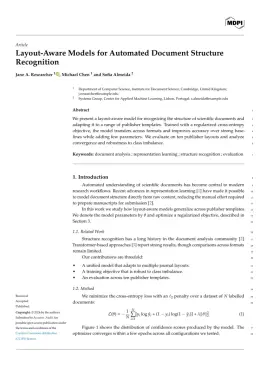
Macromol—A Journal of Macromolecular Research template — frequently asked questions

How do I write a paper in the Macromol—A Journal of Macromolecular Research format?
In DocuGuru you write your manuscript in a normal editor — no LaTeX setup required — and select the Macromol—A Journal of Macromolecular Research template. When you export, DocuGuru compiles the paper into the official MDPI format and hands you a submission-ready PDF along with the editable LaTeX source.
What reference style does Macromol—A Journal of Macromolecular Research use?
Macromol—A Journal of Macromolecular Research uses Numbered (MDPI) references, shown as numbered [1], [2] markers in the text. DocuGuru formats every in-text citation and the reference list in this exact style automatically. A reference appears like this: 1. Smith, A.; Jones, B.; Lee, C. A Representative Article Title. Macromol—A Journal of Macromolecular Research 2023, 12, 45–58.
Do I need to know LaTeX to submit to Macromol—A Journal of Macromolecular Research?
No. DocuGuru generates the mdpi LaTeX class and compiles the PDF for you in the background, so you get a MDPI-ready Macromol—A Journal of Macromolecular Research document without writing any LaTeX. If you do want it, the LaTeX source is included in the export.
Can I import an existing draft into the Macromol—A Journal of Macromolecular Research template?
Yes. Paste or upload your current manuscript — Word, LaTeX, Markdown, or plain text — and DocuGuru reflows it into the Macromol—A Journal of Macromolecular Research format with correct headings, figures, tables, and numbered citations.
Who publishes Macromol—A Journal of Macromolecular Research?
Macromol—A Journal of Macromolecular Research is a multidisciplinary journal published by MDPI. DocuGuru's Macromol—A Journal of Macromolecular Research template matches MDPI's official submission format.
Can I export a submission-ready Macromol—A Journal of Macromolecular Research PDF?
Yes — DocuGuru produces a PDF built with the official Macromol—A Journal of Macromolecular Research template (the mdpi class) that is ready to submit to MDPI, together with the matching LaTeX source files.
How much does the Macromol—A Journal of Macromolecular Research template cost?
You can start writing in the Macromol—A Journal of Macromolecular Research template for free. Exporting the final submission-ready Macromol—A Journal of Macromolecular Research PDF and LaTeX source is part of DocuGuru's paid plans — see the app for current pricing.
Use the Macromol—A Journal of Macromolecular Research template