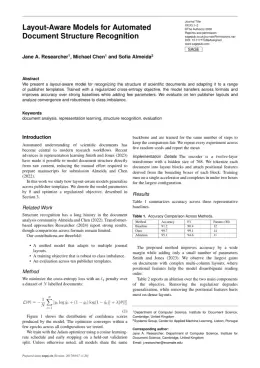
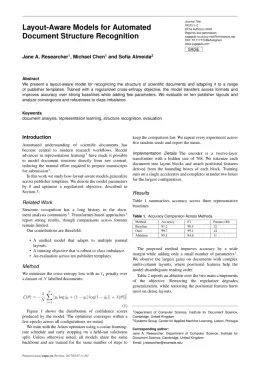
MDPI

Insects Template

Write in a clean editor, then format for Insects in one click — DocuGuru applies the official MDPI template with numbered references and exports a submission-ready PDF plus the editable LaTeX source. Free to start.

About the Insects format

Insects is a peer-reviewed journal published by MDPI, covering Insect-Plant Interactions and Control, Insect and Pesticide Research, Plant and animal studies. Over its lifetime it has published 8,418 papers, which have received 118,434 citations.

PublisherMDPI
Reference styleNumbered (MDPI)
Numbered — [1], [2] in the text
1. Smith, A.; Jones, B.; Lee, C. A Representative Article Title. Insects 2023, 12, 45–58.

Formats any DOI in Insects style. No sign-up.

Publishes research inInsect-Plant Interactions and Control Insect and Pesticide Research Plant and animal studies Insect and Arachnid Ecology and Behavior Insect Pest Control Strategies
ISSN2075-4450
Citation impact (2-yr)2.72
h-index104
i10-index3,412
Article processing charge$1,949
Open accessYes — indexed in DOAJ
Top institutions publishing hereInstitute of Plant Protection
Journal websitewww.mdpi.com
You getA submission-ready PDF and the editable LaTeX source — ready to submit.

Papers published in Insects per year

62
2014
62
2015
81
2016
128
2017
197
2018
489
2019
884
2020
1.2K
2021
1.2K
2022
938
2023
1K
2024
1.3K
2025

Citation impact of Insects by publication year

1.6K
2014
3.1K
2015
3.4K
2016
4.8K
2017
5.9K
2018
13.7K
2019
20.8K
2020
23.4K
2021
16.1K
2022
9.1K
2023
5.2K
2024
2.5K
2025

Citations each year’s papers have accumulated so far — the most recent years are still building up.

Most-cited papers in Insects

The Impact of Climate Change on Agricultural Insect Pests

Sandra Skendžić, Monika Zovko, Ivana Pajač Živković et al. · 12 May 2021

levels, and changing precipitation patterns have significant impacts on agricultural production and on agricultural insect pests. Changes in climate can affect insect pests in several ways. They can result in an expansion of their geographic distribution, increased survival during overwintering, increased number of generations, altered synchrony between plants and pests, altered interspecific interaction, increased risk…

1,373 citations Cite SaveGo to paper →
Action on the Surface: Entomopathogenic Fungi versus the Insect Cuticle

Almudena Ortiz‐Urquiza, Nemat O. Keyhani · 16 Jul 2013

Infections mediated by broad host range entomopathogenic fungi represent seminal observations that led to one of the first germ theories of disease and are a classic example of a co-evolutionary arms race between a pathogen and target hosts. These fungi are able to parasitize susceptible hosts via direct penetration of the cuticle with the initial…

Overview of Bee Pollination and Its Economic Value for Crop Production

Shaden A. M. Khalifa, Esraa H. Elshafiey, Aya A. Shetaia et al. · 31 Jul 2021

Pollination plays a significant role in the agriculture sector and serves as a basic pillar for crop production. Plants depend on vectors to move pollen, which can include water, wind, and animal pollinators like bats, moths, hoverflies, birds, bees, butterflies, wasps, thrips, and beetles. Cultivated plants are typically pollinated by animals. Animal-based pollination contributes to…

Integrated Pest Management for Sustainable Intensification of Agriculture in Asia and Africa

Jules Pretty, Zareen Pervez Bharucha · 5 Mar 2015

Integrated Pest Management (IPM) is a leading complement and alternative to synthetic pesticides and a form of sustainable intensification with particular importance for tropical smallholders. Global pesticide use has grown over the past 20 years to 3.5 billion kg/year, amounting to a global market worth $45 billion. The external costs of pesticides are $4-$19 (€3-15)…

Effects of the Environmental Temperature on Aedes aegypti and Aedes albopictus Mosquitoes: A Review

Joanna M. Reinhold, Cláudio R. Lazzari, Chloé Lahondère · 6 Nov 2018

The temperature of the environment is one of the most important abiotic factors affecting the life of insects. As poikilotherms, their body temperature is not constant, and they rely on various strategies to minimize the risk of thermal stress. They have been thus able to colonize a large spectrum of habitats. Mosquitoes, such as Ae.…


Insects template — frequently asked questions

How do I write a paper in the Insects format?
In DocuGuru you write your manuscript in a normal editor — no LaTeX setup required — and select the Insects template. When you export, DocuGuru compiles the paper into the official MDPI format and hands you a submission-ready PDF along with the editable LaTeX source.
What reference style does Insects use?
Insects uses Numbered (MDPI) references, shown as numbered [1], [2] markers in the text. DocuGuru formats every in-text citation and the reference list in this exact style automatically. A reference appears like this: 1. Smith, A.; Jones, B.; Lee, C. A Representative Article Title. Insects 2023, 12, 45–58.
Do I need to know LaTeX to submit to Insects?
No. DocuGuru generates the mdpi LaTeX class and compiles the PDF for you in the background, so you get a MDPI-ready Insects document without writing any LaTeX. If you do want it, the LaTeX source is included in the export.
Can I import an existing draft into the Insects template?
Yes. Paste or upload your current manuscript — Word, LaTeX, Markdown, or plain text — and DocuGuru reflows it into the Insects format with correct headings, figures, tables, and numbered citations.
What is Insects?
Insects - MDPI Journal. It is a multidisciplinary journal, published by MDPI.
Can I export a submission-ready Insects PDF?
Yes — DocuGuru produces a PDF built with the official Insects template (the mdpi class) that is ready to submit to MDPI, together with the matching LaTeX source files.
How much does the Insects template cost?
You can start writing in the Insects template for free. Exporting the final submission-ready Insects PDF and LaTeX source is part of DocuGuru's paid plans — see the app for current pricing.
Use the Insects template