MDPI

Grasses Template

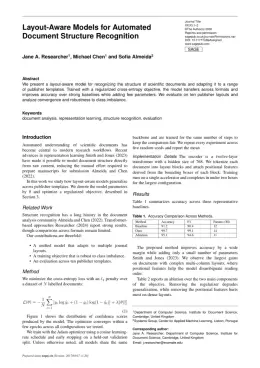
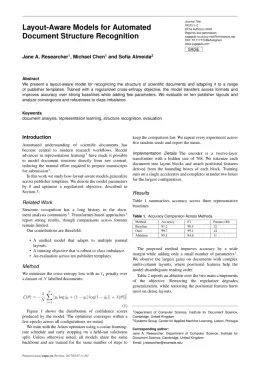
Write in a clean editor, then format for Grasses in one click — DocuGuru applies the official MDPI template with numbered references and exports a submission-ready PDF plus the editable LaTeX source. Free to start.

About the Grasses format

Grasses is a peer-reviewed journal published by MDPI, covering Ruminant Nutrition and Digestive Physiology, Agroforestry and silvopastoral systems, Turfgrass Adaptation and Management. Over its lifetime it has published 150 papers, which have received 363 citations.

PublisherMDPI
Reference styleNumbered (MDPI)
Numbered — [1], [2] in the text
1. Smith, A.; Jones, B.; Lee, C. A Representative Article Title. Grasses 2023, 12, 45–58.

Formats any DOI in Grasses style. No sign-up.

Publishes research inRuminant Nutrition and Digestive Physiology Agroforestry and silvopastoral systems Turfgrass Adaptation and Management Soil Management and Crop Yield Rangeland and Wildlife Management
ISSN2813-3463
Citation impact (2-yr)1.78
h-index8
i10-index6
Open accessYes — indexed in DOAJ
Top institutions publishing hereBrazilian Agricultural Research Corporation
You getA submission-ready PDF and the editable LaTeX source — ready to submit.

Papers published in Grasses per year

20
2019
5
2022
20
2023
26
2024
53
2025

Citation impact of Grasses by publication year

2
2019
21
2022
147
2023
95
2024
78
2025

Citations each year’s papers have accumulated so far — the most recent years are still building up.

Most-cited papers in Grasses

Alpine Grassland Degradation and Its Restoration in the Qinghai–Tibet Plateau

Huakun Zhou, Xiaoyuan Yang, Chenyu Zhou et al. · 3 Mar 2023

The alpine grasslands of the Qinghai–Tibet Plateau are one of the most famous grazing ecosystems in the world, providing a variety of ecosystem functions and services. The rate of grassland degradation has been slowed by the implementation of national grassland restoration projects, but the degradation of grasslands on the Qinghai–Tibet Plateau has not yet been…

Impact of Salt and Alkali Stress on Forage Biomass Yield, Nutritive Value, and Animal Growth Performance: A Comprehensive Review

Hunegnaw Abebe, Yan Tu · 11 Dec 2024

This review investigates the impact of saline and alkaline soils on forage biomass yield, nutritive value, and their subsequent effects on animal growth performance, which are critical for sustainable livestock production. Soil salinity and alkalinity, driven by environmental factors and human activities, significantly affect forage yield and quality, with notable consequences for ruminant nutrition. While…

Using Unmanned Aerial Vehicles and Multispectral Sensors to Model Forage Yield for Grasses of Semiarid Landscapes

Alexander J. Hernández, Kevin B. Jensen, Steve Larson et al. · 17 May 2024

Forage yield estimates provide relevant information to manage and quantify ecosystem services in grasslands. We fitted and validated prediction models of forage yield for several prominent grasses used in restoration projects in semiarid areas. We used field forage harvests from three different sites in Northern Utah and Southern California, USA, in conjunction with multispectral, high-resolution…

Forage Seed Systems to Close the Ruminant Feed Deficit in Eastern Africa

Stefan Burkart, Solomon W. Mwendia · 4 Dec 2024

This study examines key challenges and opportunities for improving ruminant productivity in East Africa, with a focus on enhancing access to forage seeds critical for livestock systems in Ethiopia, Tanzania, Kenya, Uganda, Rwanda, and Burundi. Despite high potential for increased livestock production, the region faces a significant feed deficit—nearly 40% of annual feed demand remains…

Sustainable Warm-Climate Forage Legumes: Versatile Products and Services

James P. Muir, José Carlos Batista Dubeux, Mércia Virgínia Ferreira dos Santos et al. · 18 Apr 2025

Forage legumes, besides their use as ruminant feed supplements, contribute to other agricultural, forestry and natural ecosystems’ sustainability around the world. Our objective in this summary is to emphasize that versatility in the face of biotic, abiotic and socio-economic variability is among the most important traits that forage legumes contribute to sustaining human populations in…


Grasses template — frequently asked questions

How do I write a paper in the Grasses format?
In DocuGuru you write your manuscript in a normal editor — no LaTeX setup required — and select the Grasses template. When you export, DocuGuru compiles the paper into the official MDPI format and hands you a submission-ready PDF along with the editable LaTeX source.
What reference style does Grasses use?
Grasses uses Numbered (MDPI) references, shown as numbered [1], [2] markers in the text. DocuGuru formats every in-text citation and the reference list in this exact style automatically. A reference appears like this: 1. Smith, A.; Jones, B.; Lee, C. A Representative Article Title. Grasses 2023, 12, 45–58.
Do I need to know LaTeX to submit to Grasses?
No. DocuGuru generates the mdpi LaTeX class and compiles the PDF for you in the background, so you get a MDPI-ready Grasses document without writing any LaTeX. If you do want it, the LaTeX source is included in the export.
Can I import an existing draft into the Grasses template?
Yes. Paste or upload your current manuscript — Word, LaTeX, Markdown, or plain text — and DocuGuru reflows it into the Grasses format with correct headings, figures, tables, and numbered citations.
What is Grasses?
Grasses - MDPI Journal. It is a multidisciplinary journal, published by MDPI.
Can I export a submission-ready Grasses PDF?
Yes — DocuGuru produces a PDF built with the official Grasses template (the mdpi class) that is ready to submit to MDPI, together with the matching LaTeX source files.
How much does the Grasses template cost?
You can start writing in the Grasses template for free. Exporting the final submission-ready Grasses PDF and LaTeX source is part of DocuGuru's paid plans — see the app for current pricing.
Use the Grasses template