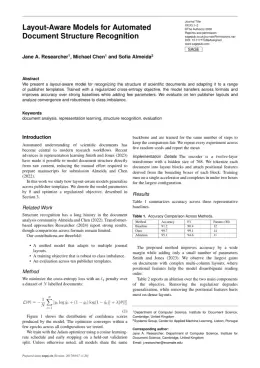
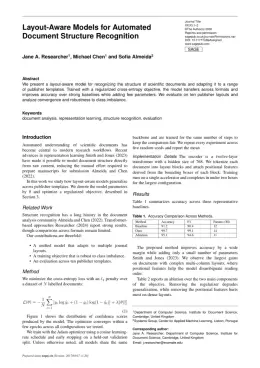
About the Genealogy format
Genealogy is a peer-reviewed journal published by MDPI, covering Indigenous Health, Education, and Rights, Migration, Refugees, and Integration, Migration and Labor Dynamics. Over its lifetime it has published 970 papers, which have received 3,798 citations.
| Publisher | MDPI |
|---|
| Reference style | Numbered (MDPI) Numbered — [1], [2] in the text
1. Smith, A.; Jones, B.; Lee, C. A Representative Article Title. Genealogy 2023, 12, 45–58.
Formats any DOI in Genealogy style. No sign-up.
|
|---|
| Publishes research in | Indigenous Health, Education, and Rights Migration, Refugees, and Integration Migration and Labor Dynamics Child Welfare and Adoption Racial and Ethnic Identity Research |
|---|
| ISSN | 2313-5778 |
|---|
| Citation impact (2-yr) | 1.02 |
|---|
| h-index | 24 |
|---|
| i10-index | 95 |
|---|
| Article processing charge | $1,299 |
|---|
| Open access | Yes — indexed in DOAJ |
|---|
| Top institutions publishing here | University of Auckland |
|---|
| Journal website | www.mdpi.com |
|---|
| You get | A submission-ready PDF and the editable LaTeX source — ready to submit. |
|---|
Papers published in Genealogy per year
Citation impact of Genealogy by publication year
Citations each year’s papers have accumulated so far — the most recent years are still building up.
Most-cited papers in Genealogy
Indigenous Relationality: Women, Kinship and the Law
Pat Dudgeon, Abigail Bray · 26 Apr 2019
Strong female governance has always been central to one of the world’s oldest existing culturally diverse, harmonious, sustainable, and democratic societies. Aboriginal and Torres Strait Islander women’s governance of a country twice the size of Europe is based on complex laws which regulate relationships to country, family, community, culture and spirituality. These laws are passed…
The Colonial Project of Gender (and Everything Else)
Sandy O’Sullivan · 16 Jul 2021
The gender binary, like many colonial acts, remains trapped within socio-religious ideals of colonisation that then frame ongoing relationships and restrict the existence of Indigenous peoples. In this article, the colonial project of denying difference in gender and gender diversity within Indigenous peoples is explored as a complex erasure casting aside every aspect of identity…
Miskâsowin: Indigenous Science, Technology, and Society
Jessica Kolopenuk · 27 Feb 2020
Indigeneity has been a site of relationally produced knowledge deemed scientific and political. In this article, I offer an experimental description of Miskâsowin—an Ininiw/Cree theory of science, technology, and society. This methodological piece is part of an overall project that seeks to understand how changes in technoscience often correlate with changes in the relationships and…
Returning to Our Roots: Tribal Health and Wellness through Land-Based Healing
Michelle Johnson-Jennings, Shanondora Billiot, Karina L. Walters · 3 Sep 2020
(1) Background: Settler colonialism has severely disrupted Indigenous ancestral ways of healing and being, contributing to an onslaught of health disparities. In particular, the United Houma Nation (UHN) has faced large land loss and trauma, dispossession, and marginalization. Given the paucity of research addressing health for Indigenous individuals living in Louisiana, this study sought to…
Critical Family History: An Introduction
Christine E. Sleeter · 13 Jun 2020
Critical family history challenges historians to ask about their ancestors. Who else (what other groups) was around, what were the power relationships among groups, how were these relationships maintained or challenged over time, and what does all this have to do with our lives now? These are different questions from the questions most family historians…