MDPI

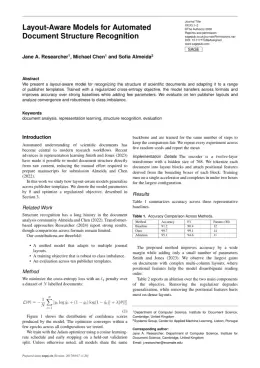
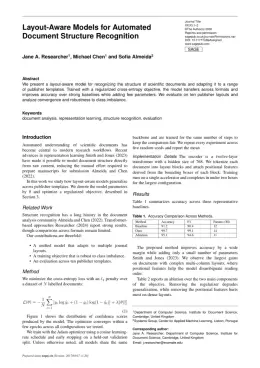
Future Pharmacology Template

Write in a clean editor, then format for Future Pharmacology in one click — DocuGuru applies the official MDPI template with numbered references and exports a submission-ready PDF plus the editable LaTeX source. Free to start.

About the Future Pharmacology format

Future Pharmacology is a peer-reviewed journal published by MDPI, covering Computational Drug Discovery Methods, Essential Oils and Antimicrobial Activity, Neuroscience and Neuropharmacology Research. Over its lifetime it has published 263 papers, which have received 1,576 citations.

PublisherMDPI
Reference styleNumbered (MDPI)
Numbered — [1], [2] in the text
1. Smith, A.; Jones, B.; Lee, C. A Representative Article Title. Future Pharmacology 2023, 12, 45–58.

Formats any DOI in Future Pharmacology style. No sign-up.

Abbreviation (ISO-4)Future Pharmacol.
Publishes research inComputational Drug Discovery Methods Essential Oils and Antimicrobial Activity Neuroscience and Neuropharmacology Research Pharmacogenetics and Drug Metabolism Phytochemicals and Antioxidant Activities
ISSN2673-9879
Citation impact (2-yr)2.82
h-index19
i10-index42
Open accessYes — indexed in DOAJ
Top institutions publishing hereUniversidade do Porto
You getA submission-ready PDF and the editable LaTeX source — ready to submit.

Papers published in Future Pharmacology per year

7
2021
42
2022
57
2023
50
2024
74
2025

Citation impact of Future Pharmacology by publication year

71
2021
576
2022
486
2023
261
2024
176
2025

Citations each year’s papers have accumulated so far — the most recent years are still building up.

Most-cited papers in Future Pharmacology

Preventing Microbial Infections with Natural Phenolic Compounds

Kardelen Ecevi̇t, Alexandre A. Barros, Joana M. Silva et al. · 2 Nov 2022

The struggle between humans and pathogens has taken and is continuing to take countless lives every year. As the misusage of conventional antibiotics increases, the complexity associated with the resistance mechanisms of pathogens has been evolving into gradually more clever mechanisms, diminishing the effectiveness of antibiotics. Hence, there is a growing interest in discovering novel…

Plant-Derived Metal Nanoparticles (PDMNPs): Synthesis, Characterization, and Oxidative Stress-Mediated Therapeutic Actions

Mohammad Faheem Khan, Mohammad Faheem Khan, Mohd Aamish Khan et al. · 1 Mar 2023

In the 21st century, plant-derived metal nanoparticles (PDMNPs) have gained considerable interest because of their tremendous and remarkable potential as therapeutic agents as well as development of less expensive, safer, and easier biomedical equipment. PDMNPs are synthesized from metal salts or oxides by using plant extracts because plants have diversified bioactive compounds that can act…

In Silico ADME Profiling of Salubrinal and Its Analogues

Pavlo V. Zadorozhnii, Vadym V. Kiselev, Александр В. Харченко · 16 Jun 2022

This work reports on a complex in silico assessment of the ADME properties of Salubrinal (S1) and 54 of its structural analogues containing a cinnamic acid residue (S2–S40) or a quinoline ring (S41–S55). In the work for (Q)SAR forecast, the online servers SwissADME, ADMETlab, admetSAR 2.0, Molinspiration, ALOGPS 2.1, pkCSM, SuperCYPsPred, and Vienna LiverTox were…

Unlocking the Therapeutic Potential of Medicinal Plants for Alzheimer’s Disease: Preclinical to Clinical Trial Insights

Kushagra Nagori, Kartik T. Nakhate, Krishna Yadav et al. · 13 Nov 2023

Alzheimer’s disease (AD) is a progressive, multifactorial, and unremitting neurodegenerative disease characterized by memory loss, personality changes, and cognitive impairment. It has become more prevalent in recent years. Therefore, understanding the pathophysiology of AD and developing efficient therapeutic strategies are essential. Moreover, the progression of the disease is unaffected by the pharmaceutical approaches discovered to…

Exploring the Pharmacological Potential of Glycyrrhizic Acid: From Therapeutic Applications to Trends in Nanomedicine

Mônica Helena Monteiro do Nascimento, Daniele Ribeiro de Araújo · 4 Jan 2022

Glycyrrhizic acid (GA) is the main active component of the licorice root, which has been known in traditional medicine since the ancient times. It is a molecule composed of a hydrophilic part, two glucuronic acid molecules, and a hydrophobic part, glycyrrhetinic acid. GA, when subjected to acid hydrolysis, releases 18β- and 18α-glycyrrhetinic acids. Glycyrrhetinic acid…


Future Pharmacology template — frequently asked questions

How do I write a paper in the Future Pharmacology format?
In DocuGuru you write your manuscript in a normal editor — no LaTeX setup required — and select the Future Pharmacology template. When you export, DocuGuru compiles the paper into the official MDPI format and hands you a submission-ready PDF along with the editable LaTeX source.
What reference style does Future Pharmacology use?
Future Pharmacology uses Numbered (MDPI) references, shown as numbered [1], [2] markers in the text. DocuGuru formats every in-text citation and the reference list in this exact style automatically. A reference appears like this: 1. Smith, A.; Jones, B.; Lee, C. A Representative Article Title. Future Pharmacology 2023, 12, 45–58.
Do I need to know LaTeX to submit to Future Pharmacology?
No. DocuGuru generates the mdpi LaTeX class and compiles the PDF for you in the background, so you get a MDPI-ready Future Pharmacology document without writing any LaTeX. If you do want it, the LaTeX source is included in the export.
Can I import an existing draft into the Future Pharmacology template?
Yes. Paste or upload your current manuscript — Word, LaTeX, Markdown, or plain text — and DocuGuru reflows it into the Future Pharmacology format with correct headings, figures, tables, and numbered citations.
What is Future Pharmacology?
Future Pharmacology (Future Pharmacol.) - MDPI Journal. It is a multidisciplinary journal, published by MDPI.
Can I export a submission-ready Future Pharmacology PDF?
Yes — DocuGuru produces a PDF built with the official Future Pharmacology template (the mdpi class) that is ready to submit to MDPI, together with the matching LaTeX source files.
How much does the Future Pharmacology template cost?
You can start writing in the Future Pharmacology template for free. Exporting the final submission-ready Future Pharmacology PDF and LaTeX source is part of DocuGuru's paid plans — see the app for current pricing.
Use the Future Pharmacology template