MDPI

Anatomia Template

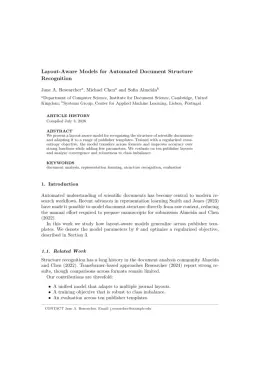
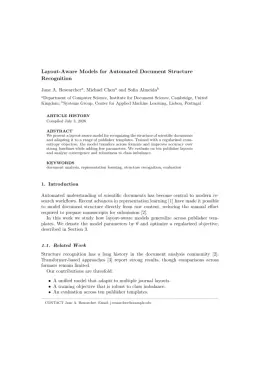
Write in a clean editor, then format for Anatomia in one click — DocuGuru applies the official MDPI template with numbered references and exports a submission-ready PDF plus the editable LaTeX source. Free to start.

About the Anatomia format

Anatomia is a peer-reviewed journal published by MDPI, covering Anatomy and Medical Technology, Nerve Injury and Rehabilitation, Peripheral Nerve Disorders. Over its lifetime it has published 117 papers, which have received 267 citations.

PublisherMDPI
Reference styleNumbered (MDPI)
Numbered — [1], [2] in the text
1. Smith, A.; Jones, B.; Lee, C. A Representative Article Title. Anatomia 2023, 12, 45–58.

Formats any DOI in Anatomia style. No sign-up.

Publishes research inAnatomy and Medical Technology Nerve Injury and Rehabilitation Peripheral Nerve Disorders Vascular anomalies and interventions Surgical Simulation and Training
ISSN2813-0545
Citation impact (2-yr)0.9
h-index8
i10-index6
Open accessYes — indexed in DOAJ
Top institutions publishing hereUniformed Services University of the Health Sciences
You getA submission-ready PDF and the editable LaTeX source — ready to submit.

Papers published in Anatomia per year

1
2021
21
2022
33
2023
24
2024
21
2025

Citation impact of Anatomia by publication year

1
2021
97
2022
111
2023
23
2024
27
2025

Citations each year’s papers have accumulated so far — the most recent years are still building up.

Most-cited papers in Anatomia

Pheromone Sensing in Mammals: A Review of the Vomeronasal System

Mateo V. Torres, Irene Ortiz‐Leal, Pablo Sánchez‐Quinteiro · 9 Nov 2023

This review addresses the role of chemical communication in mammals, giving special attention to the vomeronasal system in pheromone-mediated interactions. The vomeronasal system influences many social and sexual behaviors, from reproduction to species recognition. Interestingly, this system shows greater evolutionary variability compared to the olfactory system, emphasizing its complex nature and the need for thorough…

Common Anatomical Variations of Neurovascular Canals and Foramina Relevant to Oral Surgeons: A Review

Laura Sferlazza, F Zaccheo, Maria Elisabetta Campogrande et al. · 8 Aug 2022

(1) Background: The anatomical variations of neurovascular canals that are encountered in oral surgery are often overlooked by anatomy textbooks or provided with insufficient information. The aim of this study is to analyze the most common variations, describing their morphology, prevalence and clinical implications. (2) Methods: A review of published literature from the 20th century…

The Microbiota Is Not an Organ: Introducing the Muco-Microbiotic Layer as a Novel Morphofunctional Structure

Alberto Fucarino, Stefano Burgio, Letizia Paladino et al. · 14 Nov 2022

In this paper, we want to refute the notion that the microbiota should be considered an organ, given that an organ comprises tissue of similar or different embryological origin, while the microbiota is a pool of different microbial species originating individually from single replications and not from a common ancestral cellular element. Hence, we would…

Lobe X of the Cerebellum: A Natural Neuro-Resistant Region

Carlos Hernández-Pérez, Eduardo Weruaga, David Díaz · 23 Jan 2023

The cerebellum is an encephalic region classically known for its central role in the control of movement, although recent research has revealed its involvement in other cognitive and affective tasks. Several different pathologies are known to affect this structure, causing a wide range of behavioral and gait impairments. Intriguingly, although the neurodegenerative factors affect all…

Evolving Anatomy Education: Bridging Dissection, Traditional Methods, and Technological Innovation for Clinical Excellence

Luis Alfonso Arráez‐Aybar · 3 Jun 2025

Anatomy education has long served as a cornerstone of medical training, equipping healthcare professionals with the foundational knowledge necessary for clinical practice. However, the discipline has undergone significant transformations in response to evolving curricula, ethical considerations, and technological advancements. This paper explores the historical development, current state, and future trajectory of anatomy education, focusing on…


Anatomia template — frequently asked questions

How do I write a paper in the Anatomia format?
In DocuGuru you write your manuscript in a normal editor — no LaTeX setup required — and select the Anatomia template. When you export, DocuGuru compiles the paper into the official MDPI format and hands you a submission-ready PDF along with the editable LaTeX source.
What reference style does Anatomia use?
Anatomia uses Numbered (MDPI) references, shown as numbered [1], [2] markers in the text. DocuGuru formats every in-text citation and the reference list in this exact style automatically. A reference appears like this: 1. Smith, A.; Jones, B.; Lee, C. A Representative Article Title. Anatomia 2023, 12, 45–58.
Do I need to know LaTeX to submit to Anatomia?
No. DocuGuru generates the mdpi LaTeX class and compiles the PDF for you in the background, so you get a MDPI-ready Anatomia document without writing any LaTeX. If you do want it, the LaTeX source is included in the export.
Can I import an existing draft into the Anatomia template?
Yes. Paste or upload your current manuscript — Word, LaTeX, Markdown, or plain text — and DocuGuru reflows it into the Anatomia format with correct headings, figures, tables, and numbered citations.
What is Anatomia?
Anatomia - MDPI Journal. It is a multidisciplinary journal, published by MDPI.
Can I export a submission-ready Anatomia PDF?
Yes — DocuGuru produces a PDF built with the official Anatomia template (the mdpi class) that is ready to submit to MDPI, together with the matching LaTeX source files.
How much does the Anatomia template cost?
You can start writing in the Anatomia template for free. Exporting the final submission-ready Anatomia PDF and LaTeX source is part of DocuGuru's paid plans — see the app for current pricing.
Use the Anatomia template