MDPI

Inorganics Template

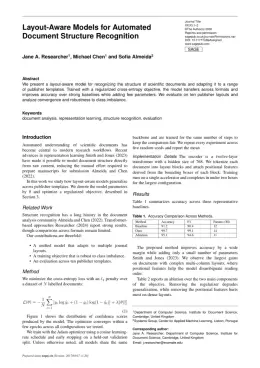
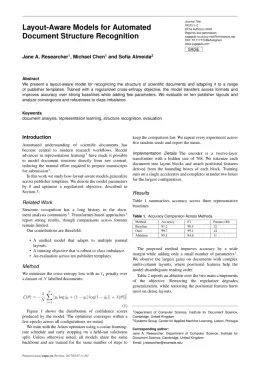
Write in a clean editor, then format for Inorganics in one click — DocuGuru applies the official MDPI template with numbered references and exports a submission-ready PDF plus the editable LaTeX source. Free to start.

About the Inorganics format

Inorganics is a peer-reviewed journal published by MDPI, covering Metal complexes synthesis and properties, Magnetism in coordination complexes, Metal-Organic Frameworks: Synthesis and Applications. Over its lifetime it has published 2,350 papers, which have received 23,774 citations.

PublisherMDPI
Reference styleNumbered (MDPI)
Numbered — [1], [2] in the text
1. Smith, A.; Jones, B.; Lee, C. A Representative Article Title. Inorganics 2023, 12, 45–58.

Formats any DOI in Inorganics style. No sign-up.

Publishes research inMetal complexes synthesis and properties Magnetism in coordination complexes Metal-Organic Frameworks: Synthesis and Applications Advanced Photocatalysis Techniques Organometallic Complex Synthesis and Catalysis
ISSN2304-6740
Citation impact (2-yr)3.79
h-index54
i10-index720
Article processing charge$2,165
Open accessYes — indexed in DOAJ
Top institutions publishing hereCentre National de la Recherche Scientifique
Journal websitewww.mdpi.com
You getA submission-ready PDF and the editable LaTeX source — ready to submit.

Papers published in Inorganics per year

43
2014
39
2015
44
2016
96
2017
130
2018
146
2019
67
2020
96
2021
278
2022
485
2023
326
2024
424
2025

Citation impact of Inorganics by publication year

1.4K
2014
545
2015
542
2016
1.9K
2017
2.2K
2018
2.7K
2019
1.1K
2020
1.5K
2021
3.4K
2022
4.7K
2023
2K
2024
1.2K
2025

Citations each year’s papers have accumulated so far — the most recent years are still building up.

Most-cited papers in Inorganics

Comparative Issues of Cathode Materials for Li-Ion Batteries

C. Julien, A. Mauger, Karim Zaghib et al. · 25 Mar 2014

After an introduction to lithium insertion compounds and the principles of Li-ion cells, we present a comparative study of the physical and electrochemical properties of positive electrodes used in lithium-ion batteries (LIBs). Electrode materials include three different classes of lattices according to the dimensionality of the Li+ ion motion in them: olivine, layered transition-metal oxides…

Concise Review of Nickel Human Health Toxicology and Ecotoxicology

Samuel Buxton, Emily Garman, Katherine E. Heim et al. · 12 Jul 2019

Nickel (Ni) metal and Ni compounds are widely used in applications like stainless steel, alloys, and batteries. Nickel is a naturally occurring element in water, soil, air, and living organisms, and is essential to microorganisms and plants. Thus, human and environmental nickel exposures are ubiquitous. Production and use of nickel and its compounds can, however,…

Carbon Quantum Dots: The Role of Surface Functional Groups and Proposed Mechanisms for Metal Ion Sensing

Hasan Shabbir, Edit Csapó, Marek Wojnicki · 20 Jun 2023

Carbon dots (CDs) are zero-dimensional nanomaterials composed of carbon and surface groups attached to their surface. CDs have a size smaller than 10 nm and have potential applications in different fields such as metal ion detection, photodegradation of pollutants, and bio-imaging, in this review, the capabilities of CDs in metal ion detection will be described.…

Layered Double Hydroxide Materials: A Review on Their Preparation, Characterization, and Applications

Jitendra Kameliya, Aazad Verma, Partha Dutta et al. · 14 Mar 2023

Layered double hydroxides (LDHs), a type of synthetic clay with assorted potential applications, are deliberated upon in view of their specific properties, such as adsorbent-specific behavior, biocompatibility, fire-retardant capacity, and catalytic and anion exchange properties, among others. LDHs are materials with two-dimensional morphology, high porosity, and exceptionally tunable and exchangeable anionic particles with sensible interlayer…

Halogen Bonding: A Halogen-Centered Noncovalent Interaction Yet to Be Understood

Pradeep R. Varadwaj, Arpita Varadwaj, Helder M. Marques · 12 Mar 2019

In addition to the underlying basic concepts and early recognition of halogen bonding, this paper reviews the conflicting views that consistently appear in the area of noncovalent interactions and the ability of covalently bonded halogen atoms in molecules to participate in noncovalent interactions that contribute to packing in the solid-state. It may be relatively straightforward…


Inorganics template — frequently asked questions

How do I write a paper in the Inorganics format?
In DocuGuru you write your manuscript in a normal editor — no LaTeX setup required — and select the Inorganics template. When you export, DocuGuru compiles the paper into the official MDPI format and hands you a submission-ready PDF along with the editable LaTeX source.
What reference style does Inorganics use?
Inorganics uses Numbered (MDPI) references, shown as numbered [1], [2] markers in the text. DocuGuru formats every in-text citation and the reference list in this exact style automatically. A reference appears like this: 1. Smith, A.; Jones, B.; Lee, C. A Representative Article Title. Inorganics 2023, 12, 45–58.
Do I need to know LaTeX to submit to Inorganics?
No. DocuGuru generates the mdpi LaTeX class and compiles the PDF for you in the background, so you get a MDPI-ready Inorganics document without writing any LaTeX. If you do want it, the LaTeX source is included in the export.
Can I import an existing draft into the Inorganics template?
Yes. Paste or upload your current manuscript — Word, LaTeX, Markdown, or plain text — and DocuGuru reflows it into the Inorganics format with correct headings, figures, tables, and numbered citations.
What is Inorganics?
Inorganics - MDPI Journal. It is a multidisciplinary journal, published by MDPI.
Can I export a submission-ready Inorganics PDF?
Yes — DocuGuru produces a PDF built with the official Inorganics template (the mdpi class) that is ready to submit to MDPI, together with the matching LaTeX source files.
How much does the Inorganics template cost?
You can start writing in the Inorganics template for free. Exporting the final submission-ready Inorganics PDF and LaTeX source is part of DocuGuru's paid plans — see the app for current pricing.
Use the Inorganics template