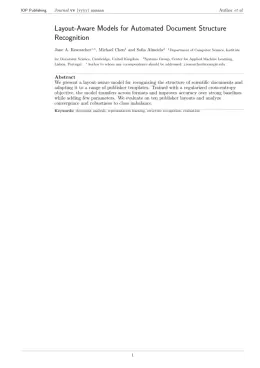
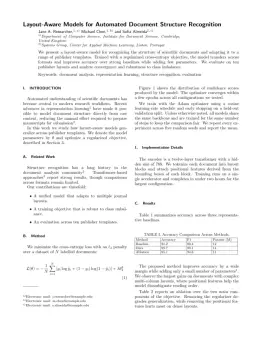
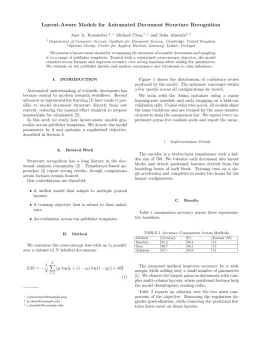
About the Machine Learning: Science and Technology format
Machine Learning: Science and Technology is a peer-reviewed journal published by IOP Publishing, covering Machine Learning in Materials Science, Model Reduction and Neural Networks, Quantum Computing Algorithms and Architecture. Over its lifetime it has published 1,408 papers, which have received 14,234 citations.
| Publisher | IOP Publishing |
|---|
| Reference style | Numbered (IOP) Numbered — [1], [2] in the text
[1] Smith A, Jones B and Lee C 2023 A representative article title Machine Learning: Science and Technology 12 45–58
Formats any DOI in Machine Learning: Science and Technology style. No sign-up.
|
|---|
| Publishes research in | Machine Learning in Materials Science Model Reduction and Neural Networks Quantum Computing Algorithms and Architecture Neural Networks and Applications Computational Drug Discovery Methods |
|---|
| ISSN | 2632-2153 |
|---|
| Citation impact (2-yr) | 3.59 |
|---|
| h-index | 49 |
|---|
| i10-index | 377 |
|---|
| Article processing charge | $1,962 |
|---|
| Open access | Yes — indexed in DOAJ |
|---|
| Top institutions publishing here | Massachusetts Institute of Technology |
|---|
| Journal website | iopscience.iop.org |
|---|
| You get | A submission-ready PDF and the editable LaTeX source — ready to submit. |
|---|
Papers published in Machine Learning: Science and Technology per year
Citation impact of Machine Learning: Science and Technology by publication year
Citations each year’s papers have accumulated so far — the most recent years are still building up.
Most-cited papers in Machine Learning: Science and Technology
Self-referencing embedded strings (SELFIES): A 100% robust molecular string representation
Mario Krenn, Florian Häse, AkshatKumar Nigam et al. · 27 Jul 2020
Abstract The discovery of novel materials and functional molecules can help to solve some of society’s most urgent challenges, ranging from efficient energy harvesting and storage to uncovering novel pharmaceutical drug candidates. Traditionally matter engineering–generally denoted as inverse design–was based massively on human intuition and high-throughput virtual screening. The last few years have seen the…
Chemformer: a pre-trained transformer for computational chemistry
Ross Irwin, Spyridon Dimitriadis, Jiazhen He et al. · 7 Dec 2021
Abstract Transformer models coupled with a simplified molecular line entry system (SMILES) have recently proven to be a powerful combination for solving challenges in cheminformatics. These models, however, are often developed specifically for a single application and can be very resource-intensive to train. In this work we present the Chemformer model—a Transformer-based model which can…
Prediction of chemical reaction yields using deep learning
Philippe Schwaller, Alain C. Vaucher, Teodoro Laino et al. · 1 Mar 2021
Abstract Artificial intelligence is driving one of the most important revolutions in organic chemistry. Multiple platforms, including tools for reaction prediction and synthesis planning based on machine learning, have successfully become part of the organic chemists’ daily laboratory, assisting in domain-specific synthetic problems. Unlike reaction prediction and retrosynthetic models, the prediction of reaction yields has…
Unified representation of molecules and crystals for machine learning
Haoyan Huo, Matthias Rupp · 3 Nov 2022
Abstract Accurate simulations of atomistic systems from first principles are limited by computational cost. In high-throughput settings, machine learning can reduce these costs significantly by accurately interpolating between reference calculations. For this, kernel learning approaches crucially require a representation that accommodates arbitrary atomistic systems. We introduce a many-body tensor representation that is invariant to translations,…
Graph neural networks in particle physics
Jonathan Shlomi, Peter Battaglia, Jean-Roch Vlimant · 8 Oct 2020
Particle physics is a branch of science aiming at discovering the fundamental laws of matter and forces. Graph neural networks are trainable functions which operate on graphs-sets of elements and their pairwise relations-and are a central method within the broader field of geometric deep learning. They are very expressive and have demonstrated superior performance to…