IOP Publishing

Environmental Research: Food Systems Template

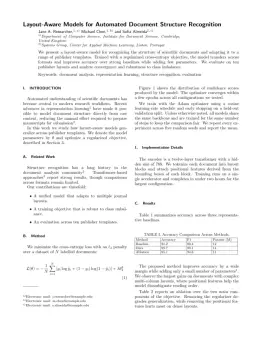
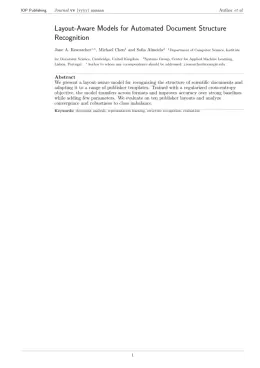
Write in a clean editor, then format for Environmental Research: Food Systems in one click — DocuGuru applies the official IOP Publishing template with numbered references and exports a submission-ready PDF plus the editable LaTeX source. Free to start.

About the Environmental Research: Food Systems format

Environmental Research: Food Systems is a peer-reviewed journal published by IOP Publishing, covering Agriculture Sustainability and Environmental Impact, Climate change impacts on agriculture, Organic Food and Agriculture. Over its lifetime it has published 137 papers, which have received 220 citations.

PublisherIOP Publishing
Reference styleNumbered (IOP)
Numbered — [1], [2] in the text
[1] Smith A, Jones B and Lee C 2023 A representative article title Environmental Research: Food Systems 12 45–58

Formats any DOI in Environmental Research: Food Systems style. No sign-up.

Publishes research inAgriculture Sustainability and Environmental Impact Climate change impacts on agriculture Organic Food and Agriculture Food Waste Reduction and Sustainability Marine Bivalve and Aquaculture Studies
ISSN2976-601X
Citation impact (2-yr)1.61
h-index8
i10-index4
Open accessYes — indexed in DOAJ
Top institutions publishing hereCornell University
You getA submission-ready PDF and the editable LaTeX source — ready to submit.

Papers published in Environmental Research: Food Systems per year

37
2024
51
2025
49
2026

Citation impact of Environmental Research: Food Systems by publication year

146
2024
68
2025
6
2026

Citations each year’s papers have accumulated so far — the most recent years are still building up.

Most-cited papers in Environmental Research: Food Systems

Impacts of sand and dust storms on food production

Nick Middleton · 16 Jul 2024

Abstract Sand and dust storms (SDS) are common in the world’s drylands, regions that are also critically important for global food production. Agriculture is the most prevalent land use resulting in anthropogenic SDS sources, resulting in impacts on cropland and rangeland, but food production is also affected by impacts from natural SDS sources. This review…

Drivers of agrivoltaic perception in California and North Carolina

Rosa Isabella Cuppari, Angel Santiago Fernandez‐Bou, Gregory W. Characklis et al. · 5 Jun 2024

Abstract The last decade has seen dramatic growth in solar power. In some regions, the most favorable land for solar panels is farmland, which is often flat and exposed to high levels of irradiance. At the same time, the agricultural sector is faced with growing challenges, notably changing water availability and increasingly frequent extreme weather…

Mitigating agricultural residue burning: challenges and solutions across land classes in Punjab, India

P P Krishnapriya, Subhrendu K. Pattanayak, E. Somanathan et al. · 7 Feb 2024

Abstract India faces significant air quality challenges, contributing to local health and global climate concerns. Despite a national ban on agricultural residue burning and various incentive schemes, farmers in northern India continue to face difficulties in curbing open-field burning. Using data from 1021 farming households in rural Punjab in India, we examine the patterns and…

Estimating methane emissions from manure: a suitable case for treatment?

Neil Ward, Andrew Atkins, Penny Atkins · 18 Jul 2024

Abstract Methane from livestock is a significant source of greenhouse gas emissions. Under the UN Framework Convention on Climate Change (UNFCCC), Annex I countries’ National Inventories report emissions from cattle as enteric or from manure management at ratios of between 3:1 and 9:1 depending on country and cattle type. Field research generally supports the inventories’…

Agroecological innovation to scale livestock agriculture for positive economic, environmental, and social outcomes

Claudio Gratton, John Strauser, Nicholas R. Jordan et al. · 27 Mar 2024

Abstract Livestock agriculture must change to meet demand for food production while building soil, reducing flooding, retaining nutrients, enhancing biodiversity, and supporting thriving communities. Technological innovations, including those in digital and precision agriculture, are unlikely by themselves to create the magnitude and directionality of transformation of livestock production systems that are needed. We begin by…

Environmental Research: Food Systems template — frequently asked questions

How do I write a paper in the Environmental Research: Food Systems format?
In DocuGuru you write your manuscript in a normal editor — no LaTeX setup required — and select the Environmental Research: Food Systems template. When you export, DocuGuru compiles the paper into the official IOP Publishing format and hands you a submission-ready PDF along with the editable LaTeX source.
What reference style does Environmental Research: Food Systems use?
Environmental Research: Food Systems uses Numbered (IOP) references, shown as numbered [1], [2] markers in the text. DocuGuru formats every in-text citation and the reference list in this exact style automatically. A reference appears like this: [1] Smith A, Jones B and Lee C 2023 A representative article title Environmental Research: Food Systems 12 45–58
Do I need to know LaTeX to submit to Environmental Research: Food Systems?
No. DocuGuru generates the iopjournal LaTeX class and compiles the PDF for you in the background, so you get a IOP Publishing-ready Environmental Research: Food Systems document without writing any LaTeX. If you do want it, the LaTeX source is included in the export.
Can I import an existing draft into the Environmental Research: Food Systems template?
Yes. Paste or upload your current manuscript — Word, LaTeX, Markdown, or plain text — and DocuGuru reflows it into the Environmental Research: Food Systems format with correct headings, figures, tables, and numbered citations.
What is Environmental Research: Food Systems?
IOP Publishing journal. It is a physics journal, published by IOP Publishing.
Can I export a submission-ready Environmental Research: Food Systems PDF?
Yes — DocuGuru produces a PDF built with the official Environmental Research: Food Systems template (the iopjournal class) that is ready to submit to IOP Publishing, together with the matching LaTeX source files.
How much does the Environmental Research: Food Systems template cost?
You can start writing in the Environmental Research: Food Systems template for free. Exporting the final submission-ready Environmental Research: Food Systems PDF and LaTeX source is part of DocuGuru's paid plans — see the app for current pricing.
Use the Environmental Research: Food Systems template