IOP Publishing

Environmental Research Communications Template

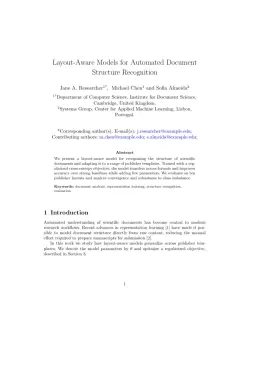
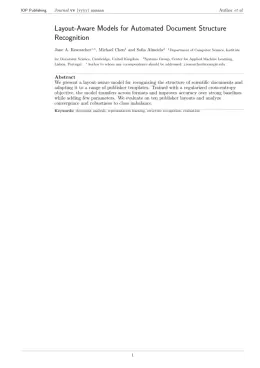
Write in a clean editor, then format for Environmental Research Communications in one click — DocuGuru applies the official IOP Publishing template with numbered references and exports a submission-ready PDF plus the editable LaTeX source. Free to start.

About the Environmental Research Communications format

Environmental Research Communications is a peer-reviewed journal published by IOP Publishing, covering Climate variability and models, Air Quality and Health Impacts, Land Use and Ecosystem Services. Over its lifetime it has published 2,145 papers, which have received 15,454 citations.

PublisherIOP Publishing
Reference styleNumbered (IOP)
Numbered — [1], [2] in the text
[1] Smith A, Jones B and Lee C 2023 A representative article title Environmental Research Communications 12 45–58

Formats any DOI in Environmental Research Communications style. No sign-up.

Publishes research inClimate variability and models Air Quality and Health Impacts Land Use and Ecosystem Services Energy, Environment, Economic Growth Meteorological Phenomena and Simulations
ISSN2515-7620
Citation impact (2-yr)2.26
h-index45
i10-index471
Article processing charge$1,349
Open accessYes — indexed in DOAJ
Top institutions publishing hereChinese Academy of Sciences
Journal websiteiopscience.iop.org
You getA submission-ready PDF and the editable LaTeX source — ready to submit.

Papers published in Environmental Research Communications per year

112
2019
94
2020
129
2021
161
2022
240
2023
457
2024
534
2025

Citation impact of Environmental Research Communications by publication year

3.4K
2019
2.1K
2020
2K
2021
2.3K
2022
2.4K
2023
2.1K
2024
852
2025

Citations each year’s papers have accumulated so far — the most recent years are still building up.

Most-cited papers in Environmental Research Communications

Applying IPCC 2014 framework for hazard-specific vulnerability assessment under climate change

Jagmohan Sharma, N. H. Ravindranath · 28 May 2019

Abstract The Intergovernmental Panel on Climate Change (IPCC), Working Group II Report (2014) presents vulnerability as a pre-existing characteristic property of a system. Accordingly, indicators for ‘sensitivity’ and ‘adaptive capacity’, which are internal properties of a system, are employed to assess it. Comparatively, the IPCC 2007 report includes ‘exposure’, an external factor, as the third…

Technical potentials and costs for reducing global anthropogenic methane emissions in the 2050 timeframe –results from the GAINS model

Lena Höglund-Isaksson, Adriana Gómez-Sanabria, Zbigniew Klimont et al. · 1 Feb 2020

Abstract Methane is the second most important greenhouse gas after carbon dioxide contributing to human-made global warming. Keeping to the Paris Agreement of staying well below two degrees warming will require a concerted effort to curb methane emissions in addition to necessary decarbonization of the energy systems. The fastest way to achieve emission reductions in…

Generic adaptation pathways for coastal archetypes under uncertain sea-level rise

Marjolijn Haasnoot, Sally Brown, Paolo Scussolini et al. · 11 Apr 2019

Abstract Adaptation to coastal flood risk is hampered by high uncertainty in the rate and magnitude of sea-level rise. Subsequently, adaptation decisions carry strong risks of under- or over-investment, and could lead to costly retrofitting or unnecessary high margins. To better allocate resources timely and effectively, and achieve long-term sustainability, planners could utilise adaptation pathways,…

Increased frequency of and population exposure to extreme heat index days in the United States during the 21st century

Kristina Dahl, Rachel Licker, John T. Abatzoglou et al. · 16 Jul 2019

Abstract The National Weather Service of the United States uses the heat index—a combined measure of temperature and relative humidity—to define risk thresholds warranting the issuance of public heat alerts. We use statistically downscaled climate models to project the frequency of and population exposure to days exceeding these thresholds in the contiguous US for the…

Groundwater extraction may drown mega-delta: projections of extraction-induced subsidence and elevation of the Mekong delta for the 21st century

Philip S. J. Minderhoud, H. Middelkoop, Gilles Erkens et al. · 12 Dec 2019

Abstract The low-lying and populous Vietnamese Mekong delta is rapidly losing elevation due to accelerating subsidence rates, primarily caused by increasing groundwater extraction. This strongly increases the delta’s vulnerability to flooding, salinization, coastal erosion and, ultimately, threatens its nearly 18 million inhabitants with permanent inundation. We present projections of extraction-induced subsidence and consequent delta elevation…

Environmental Research Communications template — frequently asked questions

How do I write a paper in the Environmental Research Communications format?
In DocuGuru you write your manuscript in a normal editor — no LaTeX setup required — and select the Environmental Research Communications template. When you export, DocuGuru compiles the paper into the official IOP Publishing format and hands you a submission-ready PDF along with the editable LaTeX source.
What reference style does Environmental Research Communications use?
Environmental Research Communications uses Numbered (IOP) references, shown as numbered [1], [2] markers in the text. DocuGuru formats every in-text citation and the reference list in this exact style automatically. A reference appears like this: [1] Smith A, Jones B and Lee C 2023 A representative article title Environmental Research Communications 12 45–58
Do I need to know LaTeX to submit to Environmental Research Communications?
No. DocuGuru generates the iopjournal LaTeX class and compiles the PDF for you in the background, so you get a IOP Publishing-ready Environmental Research Communications document without writing any LaTeX. If you do want it, the LaTeX source is included in the export.
Can I import an existing draft into the Environmental Research Communications template?
Yes. Paste or upload your current manuscript — Word, LaTeX, Markdown, or plain text — and DocuGuru reflows it into the Environmental Research Communications format with correct headings, figures, tables, and numbered citations.
What is Environmental Research Communications?
IOP Publishing journal. It is a physics journal, published by IOP Publishing.
Can I export a submission-ready Environmental Research Communications PDF?
Yes — DocuGuru produces a PDF built with the official Environmental Research Communications template (the iopjournal class) that is ready to submit to IOP Publishing, together with the matching LaTeX source files.
How much does the Environmental Research Communications template cost?
You can start writing in the Environmental Research Communications template for free. Exporting the final submission-ready Environmental Research Communications PDF and LaTeX source is part of DocuGuru's paid plans — see the app for current pricing.
Use the Environmental Research Communications template