
867 citations
Cite
SaveGo to paper →
IEEE
Journal of the A.I.E.E. Template
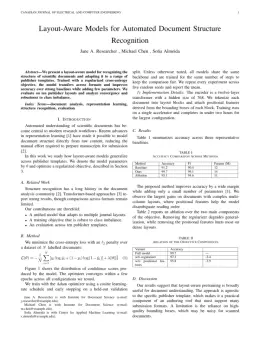
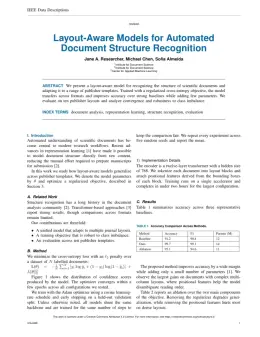
Write in a clean editor, then format for Journal of the A.I.E.E. in one click — DocuGuru applies the official IEEE template with numbered references and exports a submission-ready PDF plus the editable LaTeX source. Free to start.
About the Journal of the A.I.E.E. format
Journal of the A.I.E.E. is a peer-reviewed journal published by IEEE, covering Diverse Scientific and Economic Studies, Earthquake and Disaster Impact Studies, Legal case studies and regulations.
| Publisher | IEEE |
|---|---|
| Reference style | Numbered (IEEE) Numbered — [1], [2] in the text [1] A. Smith, B. Jones, and C. Lee, "A representative article title," Journal of the A.I.E.E., vol. 12, no. 3, pp. 45–58, 2023.
Formats any DOI in Journal of the A.I.E.E. style. No sign-up. |
| Publishes research in | Diverse Scientific and Economic Studies Earthquake and Disaster Impact Studies Legal case studies and regulations Educational Robotics and Engineering Electrical and Electromagnetic Research |
| ISSN | 0095-9804 |
| h-index | 15 |
| i10-index | 35 |
| Total citations | 2,903 |
| Top institutions publishing here | Westinghouse Electric (United States) |
| Journal website | catalog.hathitrust.org |
| You get | A submission-ready PDF and the editable LaTeX source — ready to submit. |
Papers published in Journal of the A.I.E.E. per year
Citation impact of Journal of the A.I.E.E. by publication year
Citations each year’s papers have accumulated so far — the most recent years are still building up.
Most-cited papers in Journal of the A.I.E.E.
This paper describes a printing telegraph cipher system developed during the World War for the use of the Signal Corps, U. S. Army. This system is so designed that the messages are in secret form from the time they leave the sender until they are deciphered automatically at the office of the addressee. If copied…
177 citations
Cite
SaveGo to paper →
W. F. Dawson: I can endorse one point which Mr. Alger made, namely that shaft currents are often associated with high saturation in the stationary armature cores of synchronous generators.
74 citations
Cite
SaveGo to paper →
SO far as the tasks of the inventor and the engineer in improving systems of electric transmission of intelligence are concerned there is a difference in the problems of the “wire” and the “wireless” engineer.
57 citations
Cite
SaveGo to paper →
In considering methods for increasing the speed of telegraph circuits, the engineer is confronted by the problem of transmitting over a circuit the maximum amount of intelligence using a given frequency range, without causing undue interference, either in the circuit being considered or from that circuit to other circuits. In this paper the following two…
51 citations
Cite
SaveGo to paper →
Related journal templates
 IEEE Journal on Selected Areas in Communications
IEEE Microwave and Wireless Technology Letters
IEEE Journal on Selected Areas in Communications
IEEE Microwave and Wireless Technology Letters
 IEEE Open Access Journal of Power and Energy
IEEE Open Journal of Instrumentation & Measurement
IEEE Open Journal of the Communications Society
IEEE Open Journal on Immersive Displays
IEEE Power Electronics Magazine
IEEE Robotics & Automation Practice
IEEE Open Access Journal of Power and Energy
IEEE Open Journal of Instrumentation & Measurement
IEEE Open Journal of the Communications Society
IEEE Open Journal on Immersive Displays
IEEE Power Electronics Magazine
IEEE Robotics & Automation Practice
Journal of the A.I.E.E. template — frequently asked questions
How do I write a paper in the Journal of the A.I.E.E. format?
In DocuGuru you write your manuscript in a normal editor — no LaTeX setup required — and select the Journal of the A.I.E.E. template. When you export, DocuGuru compiles the paper into the official IEEE format and hands you a submission-ready PDF along with the editable LaTeX source.
What reference style does Journal of the A.I.E.E. use?
Journal of the A.I.E.E. uses Numbered (IEEE) references, shown as numbered [1], [2] markers in the text. DocuGuru formats every in-text citation and the reference list in this exact style automatically. A reference appears like this: [1] A. Smith, B. Jones, and C. Lee, "A representative article title," Journal of the A.I.E.E., vol. 12, no. 3, pp. 45–58, 2023.
Do I need to know LaTeX to submit to Journal of the A.I.E.E.?
No. DocuGuru generates the IEEEtran LaTeX class and compiles the PDF for you in the background, so you get a IEEE-ready Journal of the A.I.E.E. document without writing any LaTeX. If you do want it, the LaTeX source is included in the export.
Can I import an existing draft into the Journal of the A.I.E.E. template?
Yes. Paste or upload your current manuscript — Word, LaTeX, Markdown, or plain text — and DocuGuru reflows it into the Journal of the A.I.E.E. format with correct headings, figures, tables, and numbered citations.
Who publishes Journal of the A.I.E.E.?
Journal of the A.I.E.E. is a engineering and computer science journal published by IEEE. DocuGuru's Journal of the A.I.E.E. template matches IEEE's official submission format.
Can I export a submission-ready Journal of the A.I.E.E. PDF?
Yes — DocuGuru produces a PDF built with the official Journal of the A.I.E.E. template (the IEEEtran class) that is ready to submit to IEEE, together with the matching LaTeX source files.
How much does the Journal of the A.I.E.E. template cost?
You can start writing in the Journal of the A.I.E.E. template for free. Exporting the final submission-ready Journal of the A.I.E.E. PDF and LaTeX source is part of DocuGuru's paid plans — see the app for current pricing.