IEEE

IEEE Transactions on Audio and Electroacoustics Template

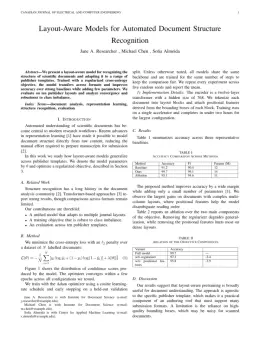
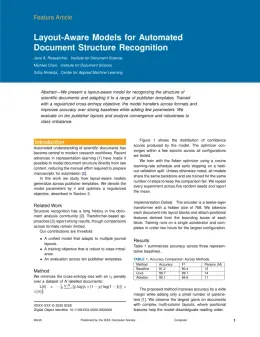
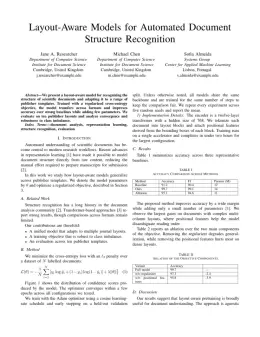
Write in a clean editor, then format for IEEE Transactions on Audio and Electroacoustics in one click — DocuGuru applies the official IEEE template with numbered references and exports a submission-ready PDF plus the editable LaTeX source. Free to start.

About the IEEE Transactions on Audio and Electroacoustics format

IEEE Transactions on Audio and Electroacoustics is a peer-reviewed journal published by IEEE, covering Digital Filter Design and Implementation, Speech and Audio Processing, Image and Signal Denoising Methods.

PublisherIEEE
Reference styleNumbered (IEEE)
Numbered — [1], [2] in the text
[1] A. Smith, B. Jones, and C. Lee, "A representative article title," IEEE Transactions on Audio and Electroacoustics, vol. 12, no. 3, pp. 45–58, 2023.

Formats any DOI in IEEE Transactions on Audio and Electroacoustics style. No sign-up.

Publishes research inDigital Filter Design and Implementation Speech and Audio Processing Image and Signal Denoising Methods Advanced Adaptive Filtering Techniques Numerical Methods and Algorithms
ISSN0018-9278
h-index72
i10-index233
Total citations33,082
Top institutions publishing hereMassachusetts Institute of Technology
You getA submission-ready PDF and the editable LaTeX source — ready to submit.

Papers published in IEEE Transactions on Audio and Electroacoustics per year

49
1966
46
1967
81
1968
53
1969
78
1970
62
1971
88
1972
108
1973
1
2017

Citation impact of IEEE Transactions on Audio and Electroacoustics by publication year

275
1966
13.7K
1967
2.4K
1968
3.7K
1969
2.1K
1970
2K
1971
3.5K
1972
5.1K
1973
93
2017

Citations each year’s papers have accumulated so far — the most recent years are still building up.

Most-cited papers in IEEE Transactions on Audio and Electroacoustics

The use of fast Fourier transform for the estimation of power spectra: A method based on time averaging over short, modified periodograms

P. D. Welch · 1 Jun 1967

The use of the fast Fourier transform in power spectrum analysis is described. Principal advantages of this method are a reduction in the number of computations and in required core storage, and convenient application in nonstationarity tests. The method involves sectioning the record and averaging modified periodograms of the sections.

12,077 citations Cite SaveGo to paper →
IEEE Recommended Practice for Speech Quality Measurements

1 Sep 1969

The IEEE Recommended Practice for Speech Quality Measurement is the product of roughly six years of study, discussion, writing, and rewriting by a diligent team of scientists representing a broad range of disciplines and research institutions. We will attempt to recognize here all those who participated, ranging from the dogged individuals who were with the…

1,239 citations Cite SaveGo to paper →
A computer program for designing optimum FIR linear phase digital filters

James H. McClellan, T.W. Parks, L. R. Rabiner · 1 Dec 1973

This paper presents a general-purpose computer program which is capable of designing a large Class of optimum (in the minimax sense) FIR linear phase digital filters. The program has options for designing such standard filters as low-pass, high-pass, bandpass, and bandstop filters, as well as multipassband-stopband filters, differentiators, and Hilbert transformers. The program can also…

1,143 citations Cite SaveGo to paper →
A digital frequency synthesizer

J. Tierney, Charles M. Rader, Ben Gold · 1 Mar 1971

A digital frequency synthesizer has been designed and constructed based on generating digital samples of <tex xmlns:mml="http://www.w3.org/1998/Math/MathML" xmlns:xlink="http://www.w3.org/1999/xlink">\exp [j(2^{\pi}nk/N)]</tex> at time <tex xmlns:mml="http://www.w3.org/1998/Math/MathML" xmlns:xlink="http://www.w3.org/1999/xlink">nT</tex> . The real and imaginary parts of this exponential form samples of quadrature sinusoids where the frequency index <tex xmlns:mml="http://www.w3.org/1998/Math/MathML" xmlns:xlink="http://www.w3.org/1999/xlink">k</tex> is allowed to vary <tex xmlns:mml="http://www.w3.org/1998/Math/MathML" xmlns:xlink="http://www.w3.org/1999/xlink">(-N/4) \leq K &lt;…

The chirp z-transform algorithm

L. R. Rabiner, Ronald W. Schafer, Charles M. Rader · 1 Jun 1969

A computational algorithm for numerically evaluating the <tex xmlns:mml="http://www.w3.org/1998/Math/MathML" xmlns:xlink="http://www.w3.org/1999/xlink">z</tex> -transform of a sequence of <tex xmlns:mml="http://www.w3.org/1998/Math/MathML" xmlns:xlink="http://www.w3.org/1999/xlink">N</tex> samples is discussed. This algorithm has been named the chirp <tex xmlns:mml="http://www.w3.org/1998/Math/MathML" xmlns:xlink="http://www.w3.org/1999/xlink">z</tex> -transform (CZT) algorithm. Using the CZT algorithm one can efficiently evaluate the <tex xmlns:mml="http://www.w3.org/1998/Math/MathML" xmlns:xlink="http://www.w3.org/1999/xlink">z</tex> -transform at <tex xmlns:mml="http://www.w3.org/1998/Math/MathML" xmlns:xlink="http://www.w3.org/1999/xlink">M</tex> points in the <tex…

IEEE Transactions on Audio and Electroacoustics template — frequently asked questions

How do I write a paper in the IEEE Transactions on Audio and Electroacoustics format?
In DocuGuru you write your manuscript in a normal editor — no LaTeX setup required — and select the IEEE Transactions on Audio and Electroacoustics template. When you export, DocuGuru compiles the paper into the official IEEE format and hands you a submission-ready PDF along with the editable LaTeX source.
What reference style does IEEE Transactions on Audio and Electroacoustics use?
IEEE Transactions on Audio and Electroacoustics uses Numbered (IEEE) references, shown as numbered [1], [2] markers in the text. DocuGuru formats every in-text citation and the reference list in this exact style automatically. A reference appears like this: [1] A. Smith, B. Jones, and C. Lee, "A representative article title," IEEE Transactions on Audio and Electroacoustics, vol. 12, no. 3, pp. 45–58, 2023.
Do I need to know LaTeX to submit to IEEE Transactions on Audio and Electroacoustics?
No. DocuGuru generates the IEEEtran LaTeX class and compiles the PDF for you in the background, so you get a IEEE-ready IEEE Transactions on Audio and Electroacoustics document without writing any LaTeX. If you do want it, the LaTeX source is included in the export.
Can I import an existing draft into the IEEE Transactions on Audio and Electroacoustics template?
Yes. Paste or upload your current manuscript — Word, LaTeX, Markdown, or plain text — and DocuGuru reflows it into the IEEE Transactions on Audio and Electroacoustics format with correct headings, figures, tables, and numbered citations.
Who publishes IEEE Transactions on Audio and Electroacoustics?
IEEE Transactions on Audio and Electroacoustics is a engineering and computer science journal published by IEEE. DocuGuru's IEEE Transactions on Audio and Electroacoustics template matches IEEE's official submission format.
Can I export a submission-ready IEEE Transactions on Audio and Electroacoustics PDF?
Yes — DocuGuru produces a PDF built with the official IEEE Transactions on Audio and Electroacoustics template (the IEEEtran class) that is ready to submit to IEEE, together with the matching LaTeX source files.
How much does the IEEE Transactions on Audio and Electroacoustics template cost?
You can start writing in the IEEE Transactions on Audio and Electroacoustics template for free. Exporting the final submission-ready IEEE Transactions on Audio and Electroacoustics PDF and LaTeX source is part of DocuGuru's paid plans — see the app for current pricing.

Use the IEEE Transactions on Audio and Electroacoustics template