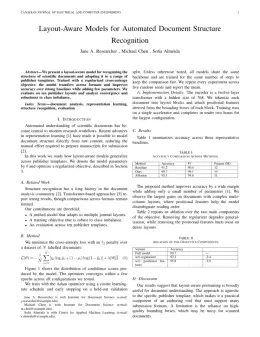
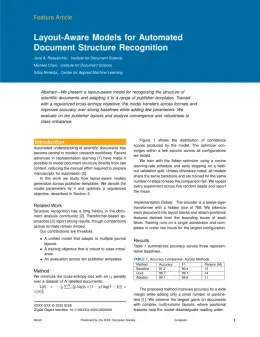
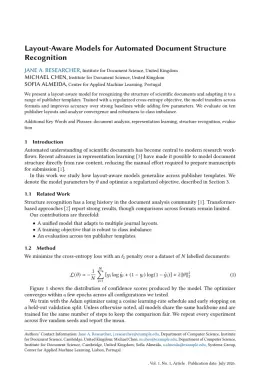
About the IEEE Journal of Oceanic Engineering format
IEEE Journal of Oceanic Engineering is a peer-reviewed journal published by IEEE, covering Underwater Acoustics Research, Underwater Vehicles and Communication Systems, Oceanographic and Atmospheric Processes. Over its lifetime it has published 4,065 papers, which have received 132,675 citations.
| Publisher | IEEE |
|---|
| Reference style | Numbered (IEEE) Numbered — [1], [2] in the text
[1] A. Smith, B. Jones, and C. Lee, "A representative article title," IEEE Journal of Oceanic Engineering, vol. 12, no. 3, pp. 45–58, 2023.
Formats any DOI in IEEE Journal of Oceanic Engineering style. No sign-up.
|
|---|
| Abbreviation (ISO-4) | JOE |
|---|
| Publishes research in | Underwater Acoustics Research Underwater Vehicles and Communication Systems Oceanographic and Atmospheric Processes Ocean Waves and Remote Sensing Geophysical Methods and Applications |
|---|
| ISSN | 0364-9059 |
|---|
| Citation impact (2-yr) | 3.34 |
|---|
| h-index | 144 |
|---|
| i10-index | 2,147 |
|---|
| Top institutions publishing here | Woods Hole Oceanographic Institution |
|---|
| Journal website | ieeexplore.ieee.org |
|---|
| You get | A submission-ready PDF and the editable LaTeX source — ready to submit. |
|---|
Papers published in IEEE Journal of Oceanic Engineering per year
Citation impact of IEEE Journal of Oceanic Engineering by publication year
Citations each year’s papers have accumulated so far — the most recent years are still building up.
Most-cited papers in IEEE Journal of Oceanic Engineering
Review of fish swimming modes for aquatic locomotion
Michael Sfakiotakis, David M. Lane, J.B.C. Davies · 1 Apr 1999
Several physico-mechanical designs evolved in fish are currently inspiring robotic devices for propulsion and maneuvering purposes in underwater vehicles. Considering the potential benefits involved, this paper presents an overview of the swimming mechanisms employed by fish. The motivation is to provide a relevant and useful introduction to the existing literature for engineers with an interest…
Human-Visual-System-Inspired Underwater Image Quality Measures
Karen Panetta, Chen Gao, Sos С. Agaian · 26 Oct 2015
Underwater images suffer from blurring effects, low contrast, and grayed out colors due to the absorption and scattering effects under the water. Many image enhancement algorithms for improving the visual quality of underwater images have been developed. Unfortunately, no well-accepted objective measure exists that can evaluate the quality of underwater images similar to human perception.…
AUV Navigation and Localization: A Review
Liam Paull, Sajad Saeedi, Mae Seto et al. · 1 Jan 2014
Autonomous underwater vehicle (AUV) navigation and localization in underwater environments is particularly challenging due to the rapid attenuation of Global Positioning System (GPS) and radio-frequency signals. Underwater communications are low bandwidth and unreliable, and there is no access to a global positioning system. Past approaches to solve the AUV localization problem have employed expensive inertial…
Sonar tracking of multiple targets using joint probabilistic data association
Thomas Fortmann, Yaakov Bar‐Shalom, Molly M. Scheffe · 1 Jul 1983
The problem of associating data with targets in a cluttered multi-target environment is discussed and applied to passive sonar tracking. The probabilistic data association (PDA) method, which is based on computing the posterior probability of each candidate measurement found in a validation gate, assumes that only one real target is present and all other measurements…
Stable adaptive teleoperation
G. Niemeyer, J.-J.E. Slotine · 1 Jan 1991
A study is made of how the existence of transmission time delays affects the application of advanced robot control schemes to effective force-reflecting telerobotic systems. This application best exploits the presence of the human operator while making full use of available robot control technology and computing power. A physically motivated, passivity-based formalism is used to…