Elsevier

Tropical Cyclone Research and Review Template

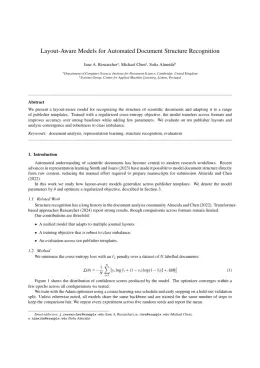
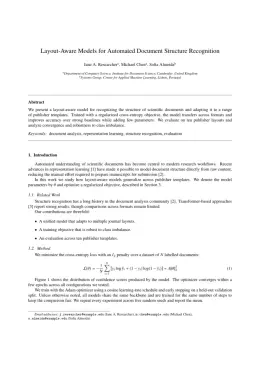
Write in a clean editor, then format for Tropical Cyclone Research and Review in one click — DocuGuru applies the official Elsevier template with author–year references and exports a submission-ready PDF plus the editable LaTeX source. Free to start.

About the Tropical Cyclone Research and Review format

Tropical Cyclone Research and Review is a peer-reviewed journal published by Elsevier, covering Tropical and Extratropical Cyclones Research, Climate variability and models, Meteorological Phenomena and Simulations.

PublisherElsevier
Reference styleAuthor–year (Harvard)
Author–year — (Smith, 2023) in the text
Smith, A., Jones, B. and Lee, C. (2023) 'A representative article title', Tropical Cyclone Research and Review, 12(3), pp. 45–58.

Formats any DOI in Tropical Cyclone Research and Review style. No sign-up.

Publishes research inTropical and Extratropical Cyclones Research Climate variability and models Meteorological Phenomena and Simulations Ocean Waves and Remote Sensing Flood Risk Assessment and Management
ISSN2225-6032
Citation impact (2-yr)2.05
h-index26
i10-index66
Total citations2,398
Open accessYes
Top institutions publishing hereChina Meteorological Administration
Journal websitetcrr.typhoon.gov.cn
You getA submission-ready PDF and the editable LaTeX source — ready to submit.

Papers published in Tropical Cyclone Research and Review per year

1
2012
2
2016
1
2017
5
2018
19
2019
22
2020
21
2021
18
2022
22
2023
27
2024
40
2025

Citation impact of Tropical Cyclone Research and Review by publication year

18
2012
0
2016
0
2017
2
2018
630
2019
433
2020
458
2021
179
2022
464
2023
98
2024
78
2025

Citations each year’s papers have accumulated so far — the most recent years are still building up.

Most-cited papers in Tropical Cyclone Research and Review

Tropical cyclones and climate change

Kevin Walsh, Suzana J. Camargo, Thomas R. Knutson et al. · 1 Dec 2019

Since the Eighth International Workshop on Tropical Cyclones (IWTC-8), held in December 2014, progress has been made in our understanding of the relationship between tropical cyclone (TC) characteristics, climate and climate change. New analysis of observations has revealed trends in the latitude of maximum TC intensity and in TC translation speed. Climate models are demonstrating…

Estimating tropical cyclone surface winds: Current status, emerging technologies, historical evolution, and a look to the future

John A. Knaff, Charles R. Sampson, Matthew E. Kucas et al. · 1 Sep 2021

This article provides a review of tropical cyclone (TC) surface wind estimation from an operational forecasting perspective. First, we provide a summary of operational forecast center practices and historical databases. Next, we discuss current and emerging objective estimates of TC surface winds, including algorithms, archive datasets, and individual algorithm strengths and weaknesses as applied to…

Third assessment on impacts of climate change on tropical cyclones in the Typhoon Committee Region – Part II: Future projections

Eun Jeong, Thomas R. Knutson, Tsz‐Cheung Lee et al. · 8 May 2020

This paper assesses published findings on projections of future tropical cyclone (TC) activity in the ESCAP/WMO Typhoon Committee Region under climate change scenarios. This assessment also estimates the projected changes of key TC metrics for a 2 °C anthropogenic global warming scenario for the western North Pacific (WNP) following the approach of a WMO Task…

Seasonal Tropical Cyclone Forecasting

Philip J. Klotzbach, Eric S. Blake, Joanne Camp et al. · 1 Sep 2019

This paper summarizes the forecast methods, outputs and skill offered by twelve agencies for seasonal tropical cyclone (TC) activity around the world. These agencies use a variety of techniques ranging from statistical models to dynamical models to predict basinwide activity and regional activity. In addition, several dynamical and hybrid statistical/dynamical models now predict TC track…

2020 tropical cyclones in the Philippines: A review

Gemma Dela Cruz Santos · 1 Sep 2021

The official website of the Philippine Atmospheric Geophysical and Astronomical Services Administration (PAGASA) said more tropical cyclones (TCs) enter the Philippine Area of Responsibility (PAR) than anywhere else in the world. With the average of 20 TCs per year, about eight (8) or nine (9) of them are crossing the Philippines. The peak of the…

Tropical Cyclone Research and Review template — frequently asked questions

How do I write a paper in the Tropical Cyclone Research and Review format?
In DocuGuru you write your manuscript in a normal editor — no LaTeX setup required — and select the Tropical Cyclone Research and Review template. When you export, DocuGuru compiles the paper into the official Elsevier format and hands you a submission-ready PDF along with the editable LaTeX source.
What reference style does Tropical Cyclone Research and Review use?
Tropical Cyclone Research and Review uses Author–year (Harvard) references, shown as author–year markers such as (Smith, 2023) in the text. DocuGuru formats every in-text citation and the reference list in this exact style automatically. A reference appears like this: Smith, A., Jones, B. and Lee, C. (2023) 'A representative article title', Tropical Cyclone Research and Review, 12(3), pp. 45–58.
Do I need to know LaTeX to submit to Tropical Cyclone Research and Review?
No. DocuGuru generates the elsarticle LaTeX class and compiles the PDF for you in the background, so you get a Elsevier-ready Tropical Cyclone Research and Review document without writing any LaTeX. If you do want it, the LaTeX source is included in the export.
Can I import an existing draft into the Tropical Cyclone Research and Review template?
Yes. Paste or upload your current manuscript — Word, LaTeX, Markdown, or plain text — and DocuGuru reflows it into the Tropical Cyclone Research and Review format with correct headings, figures, tables, and author–year citations.
Who publishes Tropical Cyclone Research and Review?
Tropical Cyclone Research and Review is a multidisciplinary journal published by Elsevier. DocuGuru's Tropical Cyclone Research and Review template matches Elsevier's official submission format.
Can I export a submission-ready Tropical Cyclone Research and Review PDF?
Yes — DocuGuru produces a PDF built with the official Tropical Cyclone Research and Review template (the elsarticle class) that is ready to submit to Elsevier, together with the matching LaTeX source files.
How much does the Tropical Cyclone Research and Review template cost?
You can start writing in the Tropical Cyclone Research and Review template for free. Exporting the final submission-ready Tropical Cyclone Research and Review PDF and LaTeX source is part of DocuGuru's paid plans — see the app for current pricing.

Use the Tropical Cyclone Research and Review template