Elsevier

South African Journal of Botany Template

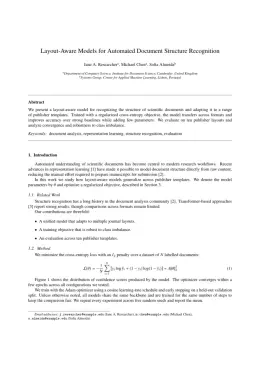
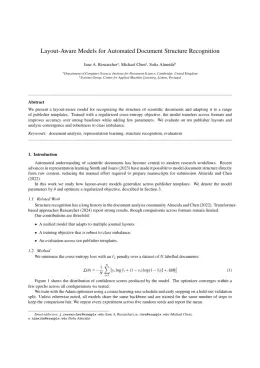
Write in a clean editor, then format for South African Journal of Botany in one click — DocuGuru applies the official Elsevier template with author–year references and exports a submission-ready PDF plus the editable LaTeX source. Free to start.

About the South African Journal of Botany format

South African Journal of Botany is a peer-reviewed journal published by Elsevier, covering Ecology and Vegetation Dynamics Studies, Essential Oils and Antimicrobial Activity, Plant Diversity and Evolution.

PublisherElsevier
Reference styleAuthor–year (Harvard)
Author–year — (Smith, 2023) in the text
Smith, A., Jones, B. and Lee, C. (2023) 'A representative article title', South African Journal of Botany, 12(3), pp. 45–58.

Formats any DOI in South African Journal of Botany style. No sign-up.

Publishes research inEcology and Vegetation Dynamics Studies Essential Oils and Antimicrobial Activity Plant Diversity and Evolution Ethnobotanical and Medicinal Plants Studies Plant and animal studies
ISSN0254-6299
Citation impact (2-yr)3
h-index115
i10-index4,042
Total citations151,626
Article processing charge$2,750
Top institutions publishing hereUniversity of KwaZulu-Natal
Journal websitewww.journals.elsevier.com
You getA submission-ready PDF and the editable LaTeX source — ready to submit.

Papers published in South African Journal of Botany per year

164
2014
385
2015
423
2016
454
2017
514
2018
423
2019
426
2020
492
2021
626
2022
691
2023
706
2024
632
2025

Citation impact of South African Journal of Botany by publication year

4.8K
2014
6.1K
2015
8.5K
2016
7.1K
2017
8.9K
2018
11.9K
2019
9.8K
2020
8.9K
2021
7.9K
2022
6.6K
2023
3.8K
2024
907
2025

Citations each year’s papers have accumulated so far — the most recent years are still building up.

Most-cited papers in South African Journal of Botany

Heavy metals toxicity in plants: An overview on the role of glutathione and phytochelatins in heavy metal stress tolerance of plants

Sudesh Kumar Yadav · 14 Nov 2009

Plants experience oxidative stress upon exposure to heavy metals that leads to cellular damage. In addition, plants accumulate metal ions that disturb cellular ionic homeostasis. To minimize the detrimental effects of heavy metal exposure and their accumulation, plants have evolved detoxification mechanisms. Such mechanisms are mainly based on chelation and subcellular compartmentalization. Chelation of heavy…

1,583 citations Cite SaveGo to paper →
Origins, roles and fate of organic acids in soils: A review

Rasheed Adeleke, Cyril C. Nwangburuka, Bilainu Oboirien · 22 Sep 2016

There is increasing evidence that the origins of organic acids (OAs) are as important as their roles and pathways of production. This review focuses on information about challenges associated with various aspects of OA production and release in the soil with the primary intention of harmonising different views to enable better understanding of this topic.…

Effect of salt stress on growth, chlorophyll content, lipid peroxidation and antioxidant defence systems in Phaseolus vulgaris L.

Khaled Taïbi, Fadhila Taïbi, Leila Aït Abderrahim et al. · 14 May 2016

Salinity is one of the major abiotic stresses which affects plant cell metabolism and reduces plant productivity. Variations in the antioxidant defence systems under salinity among two bean genotypes were investigated. Our results indicate that the difference between the genotypes in response to salinity is a quantitative trait rather than qualitative since they develop the…

Geraniol — A review of a commercially important fragrance material

W. Chen, Alvaro Viljoen · 10 Jun 2010

Geraniol is a commercially important terpene alcohol occurring in the essential oils of several aromatic plants. It is one of the most important molecules in the flavour and fragrance industries and is a common ingredient in consumer products produced by these industries. In addition to its pleasant odour, geraniol is known to exhibit insecticidal and…

Effect of seaweed extract on the growth, yield and nutrient uptake of soybean (Glycine max) under rainfed conditions

S.S. Rathore, Doongar R. Chaudhary, Girish Boricha et al. · 1 Dec 2008

A field experiment was conducted during the rainy ( kharif ) season in Indian in 2006 to study the effects of foliar applications of different concentrations of seaweed extract (prepared from Kappaphycus alvarezii ) on nutrient uptake, growth and yield of soybean [ Glycine max (L.) Merr.] grown under rainfed conditions without the application of…

South African Journal of Botany template — frequently asked questions

How do I write a paper in the South African Journal of Botany format?
In DocuGuru you write your manuscript in a normal editor — no LaTeX setup required — and select the South African Journal of Botany template. When you export, DocuGuru compiles the paper into the official Elsevier format and hands you a submission-ready PDF along with the editable LaTeX source.
What reference style does South African Journal of Botany use?
South African Journal of Botany uses Author–year (Harvard) references, shown as author–year markers such as (Smith, 2023) in the text. DocuGuru formats every in-text citation and the reference list in this exact style automatically. A reference appears like this: Smith, A., Jones, B. and Lee, C. (2023) 'A representative article title', South African Journal of Botany, 12(3), pp. 45–58.
Do I need to know LaTeX to submit to South African Journal of Botany?
No. DocuGuru generates the elsarticle LaTeX class and compiles the PDF for you in the background, so you get a Elsevier-ready South African Journal of Botany document without writing any LaTeX. If you do want it, the LaTeX source is included in the export.
Can I import an existing draft into the South African Journal of Botany template?
Yes. Paste or upload your current manuscript — Word, LaTeX, Markdown, or plain text — and DocuGuru reflows it into the South African Journal of Botany format with correct headings, figures, tables, and author–year citations.
Who publishes South African Journal of Botany?
South African Journal of Botany is a multidisciplinary journal published by Elsevier. DocuGuru's South African Journal of Botany template matches Elsevier's official submission format.
Can I export a submission-ready South African Journal of Botany PDF?
Yes — DocuGuru produces a PDF built with the official South African Journal of Botany template (the elsarticle class) that is ready to submit to Elsevier, together with the matching LaTeX source files.
How much does the South African Journal of Botany template cost?
You can start writing in the South African Journal of Botany template for free. Exporting the final submission-ready South African Journal of Botany PDF and LaTeX source is part of DocuGuru's paid plans — see the app for current pricing.

Use the South African Journal of Botany template