Elsevier

Smart Materials in Manufacturing Template

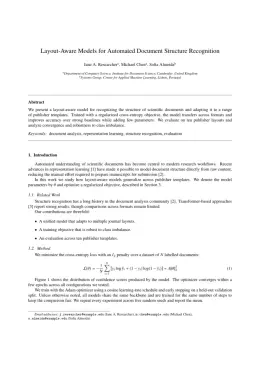
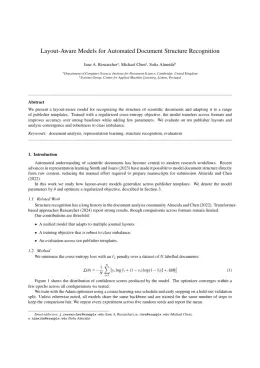
Write in a clean editor, then format for Smart Materials in Manufacturing in one click — DocuGuru applies the official Elsevier template with numbered references and exports a submission-ready PDF plus the editable LaTeX source. Free to start.

About the Smart Materials in Manufacturing format

Smart Materials in Manufacturing is a peer-reviewed journal published by Elsevier, covering Bone Tissue Engineering Materials, Magnesium Alloys: Properties and Applications, Additive Manufacturing Materials and Processes.

PublisherElsevier
Reference styleNumbered (Elsevier)
Numbered — [1], [2] in the text
[1] A. Smith, B. Jones, C. Lee, A representative article title, Smart Materials in Manufacturing 12 (2023) 45–58.

Formats any DOI in Smart Materials in Manufacturing style. No sign-up.

Publishes research inBone Tissue Engineering Materials Magnesium Alloys: Properties and Applications Additive Manufacturing Materials and Processes Additive Manufacturing and 3D Printing Technologies High Entropy Alloys Studies
ISSN2772-8102
Citation impact (2-yr)4.29
h-index19
i10-index27
Total citations1,266
Open accessYes
Top institutions publishing hereRMIT University
You getA submission-ready PDF and the editable LaTeX source — ready to submit.

Papers published in Smart Materials in Manufacturing per year

12
2022
15
2023
18
2024
37
2025

Citation impact of Smart Materials in Manufacturing by publication year

663
2022
238
2023
238
2024
95
2025

Citations each year’s papers have accumulated so far — the most recent years are still building up.

Most-cited papers in Smart Materials in Manufacturing

Various manufacturing methods and ideal properties of scaffolds for tissue engineering applications

Laldinthari Suamte, Akriti Tirkey, Jugal Barman et al. · 18 Nov 2022

The precision in the design and manufacturing of scaffolds with ideal properties such as biocompatibility, biodegradability, mechanical and surface characteristics is very crucial for applications in tissue engineering. Furthermore, these techniques should be able to translate manufactured scaffolds from bench to potential applications. Numerous fabrication technologies have been employed to design ideal three-dimensional scaffolds with…

Biodegradable PLA-ZnO nanocomposite biomaterials with antibacterial properties, tissue engineering viability, and enhanced biocompatibility

Wei Juene Chong, Shirley Shen, Yuncang Li et al. · 3 Jun 2022

Polylactic acid (PLA) is a well-known biomaterial on account of its biocompatibility and biodegradability. Zinc oxide (ZnO) nanofillers may endow PLA with advantageous antibacterial and tissue regenerative properties, but may also compromise the biocompatibility of PLA. Several strategies have been developed to improve the biomedical practicality of such composites. The importance of surface properties on…

High entropy alloy coatings for biomedical applications: A review

Azin Rashidy Ahmady, Aryan Ekhlasi, Alireza Nouri et al. · 28 Sep 2022

Metallic biomaterials are widely used as short and long-term implantable devices by virtue of their outstanding mechanical properties, such as high load-bearing capacity and fatigue resistance. Due to their inherent bioinertness, potential corrosion, and some inferior surface properties, metallic biomaterials generally require coating and surface modification to improve their function and extend their lifespan in…

Feasibility, challenges and future prospects of biodegradable zinc alloys as orthopedic internal fixation implants

Kai Chen, Xuenan Gu, Yufeng Zheng · 3 Nov 2023

Compared to biodegradable Mg-based and Fe-based alloys, Zn-based alloys offer distinct advantages as orthopedic internal fixation implants due to their tunable mechanical strength, moderate corrosion rate, pleasant cytocompatibility, dose-dependent osteoinductivity, intrinsic bacteriostatic activity. Therefore, recent attention has been paid on the design, fabrication, and clinical translation of Zn-based alloys. The purpose of this research was…

Surface modification of additively manufactured metallic biomaterials with active antipathogenic properties

Alireza Nouri, Anahita Rohani Shirvan, Yuncang Li et al. · 30 May 2022

Bacterial infection is one of the most common complications following the implantation of biomaterials and can lead to aseptic loosening, prosthesis failure, and even morbidity or mortality. Some physicochemical surface properties of metallic implants such as surface topography , roughness, pore size, and degree of porosity, play key roles in bone formation. However, highly porous…

Smart Materials in Manufacturing template — frequently asked questions

How do I write a paper in the Smart Materials in Manufacturing format?
In DocuGuru you write your manuscript in a normal editor — no LaTeX setup required — and select the Smart Materials in Manufacturing template. When you export, DocuGuru compiles the paper into the official Elsevier format and hands you a submission-ready PDF along with the editable LaTeX source.
What reference style does Smart Materials in Manufacturing use?
Smart Materials in Manufacturing uses Numbered (Elsevier) references, shown as numbered [1], [2] markers in the text. DocuGuru formats every in-text citation and the reference list in this exact style automatically. A reference appears like this: [1] A. Smith, B. Jones, C. Lee, A representative article title, Smart Materials in Manufacturing 12 (2023) 45–58.
Do I need to know LaTeX to submit to Smart Materials in Manufacturing?
No. DocuGuru generates the elsarticle LaTeX class and compiles the PDF for you in the background, so you get a Elsevier-ready Smart Materials in Manufacturing document without writing any LaTeX. If you do want it, the LaTeX source is included in the export.
Can I import an existing draft into the Smart Materials in Manufacturing template?
Yes. Paste or upload your current manuscript — Word, LaTeX, Markdown, or plain text — and DocuGuru reflows it into the Smart Materials in Manufacturing format with correct headings, figures, tables, and numbered citations.
Who publishes Smart Materials in Manufacturing?
Smart Materials in Manufacturing is a multidisciplinary journal published by Elsevier. DocuGuru's Smart Materials in Manufacturing template matches Elsevier's official submission format.
Can I export a submission-ready Smart Materials in Manufacturing PDF?
Yes — DocuGuru produces a PDF built with the official Smart Materials in Manufacturing template (the elsarticle class) that is ready to submit to Elsevier, together with the matching LaTeX source files.
How much does the Smart Materials in Manufacturing template cost?
You can start writing in the Smart Materials in Manufacturing template for free. Exporting the final submission-ready Smart Materials in Manufacturing PDF and LaTeX source is part of DocuGuru's paid plans — see the app for current pricing.
Use the Smart Materials in Manufacturing template