Elsevier

Rare Template

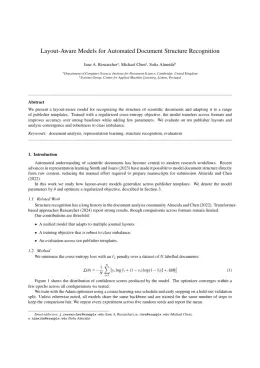
Write in a clean editor, then format for Rare in one click — DocuGuru applies the official Elsevier template with numbered references and exports a submission-ready PDF plus the editable LaTeX source. Free to start.

About the Rare format

Rare is a peer-reviewed journal published by Elsevier, covering Genomics and Rare Diseases, Genetics and Neurodevelopmental Disorders, Autism Spectrum Disorder Research.

PublisherElsevier
Reference styleNumbered (Elsevier)
Numbered — [1], [2] in the text
[1] A. Smith, B. Jones, C. Lee, A representative article title, Rare 12 (2023) 45–58.

Formats any DOI in Rare style. No sign-up.

Publishes research inGenomics and Rare Diseases Genetics and Neurodevelopmental Disorders Autism Spectrum Disorder Research Genomic variations and chromosomal abnormalities BRCA gene mutations in cancer
ISSN2950-0087
Citation impact (2-yr)1.41
h-index7
i10-index2
Total citations193
Open accessYes
Top institutions publishing hereAga Khan University
You getA submission-ready PDF and the editable LaTeX source — ready to submit.

Papers published in Rare per year

1
2015
8
2016
1
2018
2
2019
1
2020
1
2021
19
2023
38
2024
54
2025

Citation impact of Rare by publication year

0
2015
0
2016
0
2018
0
2019
0
2020
0
2021
45
2023
111
2024
27
2025

Citations each year’s papers have accumulated so far — the most recent years are still building up.

Most-cited papers in Rare

Rare disease care in Europe – Gaping unmet needs

Philippe Pakter · 1 Jan 2024

In Europe, which provides its citizens with the highest level of social protection in the world, the needs of rare disease patients remain fundamentally unmet. The overwhelming majority of rare diseases still have no treatment or cure; infant mortality is unspeakably high; and when a safe and effective rare disease treatment is developed, patient access…

Measuring health-related quality of life in solid rare cancer patients: A study protocol

Catarina S. Padilla, Margot Tesselaar, Winette T.A. van der Graaf et al. · 4 Dec 2023

Rare cancer patients often face delayed diagnosis and lack of expert care which are a challenge to clinical practice. Patients diagnosed with a rare tumour report poorer psychosocial outcomes and impaired health-related quality of life (HRQoL). The impairment might be explained by the challenges patients with rare cancer face during their disease trajectory. Specific HRQoL…

Realising the potential impact of artificial intelligence for rare diseases – A framework

Tudor Groza, Chun‐Hung Chan, David A. Pearce et al. · 19 Dec 2024

Rare diseases (RD) are conditions affecting fewer than 1 in 2000 persons, with over 7000 largely genetic RDs affecting 3.5 %-5.9 % of the global population, or approximately 262.9–446.2 million people. The substantial healthcare burden and costs, such as the $1 trillion annual expense in the USA, highlight the urgent need for improved RD management.…

Noma (Cancrum oris) in Africa: A newly added neglected tropical disease

Ridwan Olamilekan Adesola, Favour Akinfemi Ajibade, Mahmud Ibrahim Agaie · 1 Jan 2024

Noma is an overwhelming orofacial necrotizing disease and most cases occur in malnourished people, especially children. It is most common in tropical and subtropical regions of sub-Saharan Africa. Its high death rate, serious physical and psychological morbidity, stigmatization, and social discrimination are all contributing factors. Common public health interventions could prevent, control, and even eradicate…

Snyder-Robinson syndrome presenting with learning disability, epilepsy, and osteoporosis: A novel SMS gene variant

Megumi Leung, Meredith Sanchez‐Castillo, Newell Belnap et al. · 12 Dec 2023

Snyder-Robinson syndrome (SRS) is a rare X-linked recessive disorder characterized by a collection of clinical features including mild to severe intellectual disability, hypertonia, marfanoid habitus, facial asymmetry, osteoporosis, developmental delay and seizures. Whole genome sequencing (WGS) identified a mutation in the spermine synthase (SMS) gene (c.746 A>G, p.Tyr249Cys) in a male with kyphosis, seizures, and…

Rare template — frequently asked questions

How do I write a paper in the Rare format?
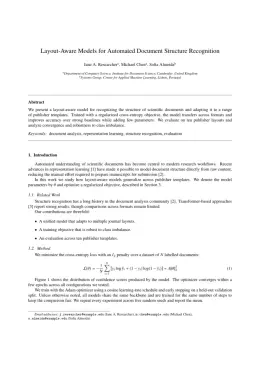
In DocuGuru you write your manuscript in a normal editor — no LaTeX setup required — and select the Rare template. When you export, DocuGuru compiles the paper into the official Elsevier format and hands you a submission-ready PDF along with the editable LaTeX source.
What reference style does Rare use?
Rare uses Numbered (Elsevier) references, shown as numbered [1], [2] markers in the text. DocuGuru formats every in-text citation and the reference list in this exact style automatically. A reference appears like this: [1] A. Smith, B. Jones, C. Lee, A representative article title, Rare 12 (2023) 45–58.
Do I need to know LaTeX to submit to Rare?
No. DocuGuru generates the elsarticle LaTeX class and compiles the PDF for you in the background, so you get a Elsevier-ready Rare document without writing any LaTeX. If you do want it, the LaTeX source is included in the export.
Can I import an existing draft into the Rare template?
Yes. Paste or upload your current manuscript — Word, LaTeX, Markdown, or plain text — and DocuGuru reflows it into the Rare format with correct headings, figures, tables, and numbered citations.
Who publishes Rare?
Rare is a multidisciplinary journal published by Elsevier. DocuGuru's Rare template matches Elsevier's official submission format.
Can I export a submission-ready Rare PDF?
Yes — DocuGuru produces a PDF built with the official Rare template (the elsarticle class) that is ready to submit to Elsevier, together with the matching LaTeX source files.
How much does the Rare template cost?
You can start writing in the Rare template for free. Exporting the final submission-ready Rare PDF and LaTeX source is part of DocuGuru's paid plans — see the app for current pricing.
Use the Rare template