Elsevier

Plant Stress Template

Write in a clean editor, then format for Plant Stress in one click — DocuGuru applies the official Elsevier template with numbered references and exports a submission-ready PDF plus the editable LaTeX source. Free to start.

About the Plant Stress format

Plant Stress is a peer-reviewed journal published by Elsevier, covering Plant Stress Responses and Tolerance, Plant-Microbe Interactions and Immunity, Plant Molecular Biology Research.

PublisherElsevier
Reference styleNumbered (Elsevier)
Numbered — [1], [2] in the text
[1] A. Smith, B. Jones, C. Lee, A representative article title, Plant Stress 12 (2023) 45–58.

Formats any DOI in Plant Stress style. No sign-up.

Publishes research inPlant Stress Responses and Tolerance Plant-Microbe Interactions and Immunity Plant Molecular Biology Research Plant responses to water stress Photosynthetic Processes and Mechanisms
ISSN2667-064X
Citation impact (2-yr)6.97
h-index59
i10-index483
Total citations18,524
Article processing charge$1,400
Open accessYes
Top institutions publishing hereChinese Academy of Agricultural Sciences
Journal websitewww.journals.elsevier.com
You getA submission-ready PDF and the editable LaTeX source — ready to submit.

Papers published in Plant Stress per year

1
2008
1
2020
51
2021
74
2022
208
2023
380
2024
482
2025

Citation impact of Plant Stress by publication year

2
2008
0
2020
2.1K
2021
2.8K
2022
5.6K
2023
5.3K
2024
1.9K
2025

Citations each year’s papers have accumulated so far — the most recent years are still building up.

Most-cited papers in Plant Stress

Role of plant secondary metabolites in defence and transcriptional regulation in response to biotic stress

Anjali, Sumit Kumar, Tulasi Korra et al. · 3 Apr 2023

Secondary metabolites in plants have been recognized as a novel basis of potential bio-pesticides, paving the way for their use in sustainable agriculture. Plant secondary metabolites have pivotal roles in plant-pathogen interactions. Some important secondary metabolites of plants are terpenoids, flavanols, flavones, etc., are stress-inducible phytochemicals playing an important role in plant immune response development.…

Iron homeostasis in plants and its crosstalk with copper, zinc, and manganese

Snigdha Rai, Prashant Kumar Singh, Samriti Mankotia et al. · 1 Jan 2021

Micronutrients like copper (Cu), manganese (Mn), Iron (Fe), and Zinc (Zn) are essential for plants, and their functions are tightly linked for vital metabolism. The normal concentration range for each of these metals in the plant is narrow, with both deficiencies and excesses causing severe physiological implications. Maintaining an optimum level of these redox-active metals…

Impact of plant growth-promoting rhizobacteria (PGPR) on plant nutrition and root characteristics: Current perspective

Muneer Ahmed Khoso, Sindho Wagan, Intikhab Álam et al. · 28 Dec 2023

Through a variety of mechanisms, including increasing the amount of readily available mineral nutrients, regulating phytohormone levels, and biocontrol of phytopathogens, plant growth-promoting rhizobacteria (PGPR) associated with the plant rhizosphere either directly or indirectly stimulates plant growth and development. The establishment, survival, and persistence of PGPR inoculants are widely acknowledged to be contingent upon these…

Soil salinity and drought tolerance: An evaluation of plant growth, productivity, microbial diversity, and amelioration strategies

Murad Muhammad, Abdul Waheed, Abdul Wahab et al. · 9 Dec 2023

Global climate change affects weather patterns, affecting soil salinity and drought tolerance. Crop resilience and agriculture sustainability can be enhanced by exploring soil salinity, plant drought tolerance, microbial diversity, and remediation techniques. This review examines the morpho-physiological, molecular, and genetic mechanisms underlying plant adaptation to soil salinity and drought stress. It highlights their impact on…

Crosstalk of nanoparticles and phytohormones regulate plant growth and metabolism under abiotic and biotic stress

Deepika Tripathi, Mithilesh Singh, Shashi Pandey‐Rai · 27 Jul 2022

In the era of climate change, plants are facing various and unprecedented environmental stresses. Both biotic and abiotic stress factors are very important constraints that adversely affect the plants’ developmental and metabolic processes. In order to cope with the environmental challenges, plants have evolved a variety of defense mechanisms at various levels by modifying their…

Plant Stress template — frequently asked questions

How do I write a paper in the Plant Stress format?
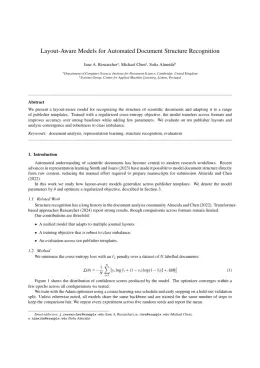
In DocuGuru you write your manuscript in a normal editor — no LaTeX setup required — and select the Plant Stress template. When you export, DocuGuru compiles the paper into the official Elsevier format and hands you a submission-ready PDF along with the editable LaTeX source.
What reference style does Plant Stress use?
Plant Stress uses Numbered (Elsevier) references, shown as numbered [1], [2] markers in the text. DocuGuru formats every in-text citation and the reference list in this exact style automatically. A reference appears like this: [1] A. Smith, B. Jones, C. Lee, A representative article title, Plant Stress 12 (2023) 45–58.
Do I need to know LaTeX to submit to Plant Stress?
No. DocuGuru generates the elsarticle LaTeX class and compiles the PDF for you in the background, so you get a Elsevier-ready Plant Stress document without writing any LaTeX. If you do want it, the LaTeX source is included in the export.
Can I import an existing draft into the Plant Stress template?
Yes. Paste or upload your current manuscript — Word, LaTeX, Markdown, or plain text — and DocuGuru reflows it into the Plant Stress format with correct headings, figures, tables, and numbered citations.
Who publishes Plant Stress?
Plant Stress is a multidisciplinary journal published by Elsevier. DocuGuru's Plant Stress template matches Elsevier's official submission format.
Can I export a submission-ready Plant Stress PDF?
Yes — DocuGuru produces a PDF built with the official Plant Stress template (the elsarticle class) that is ready to submit to Elsevier, together with the matching LaTeX source files.
How much does the Plant Stress template cost?
You can start writing in the Plant Stress template for free. Exporting the final submission-ready Plant Stress PDF and LaTeX source is part of DocuGuru's paid plans — see the app for current pricing.
Use the Plant Stress template